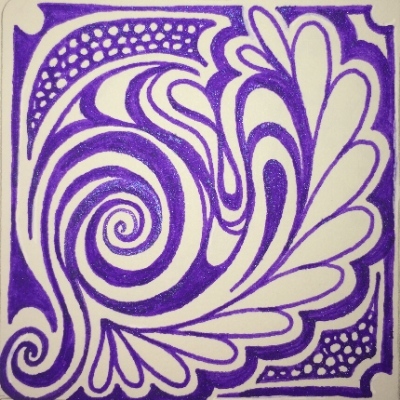
@lettosprey @flesh @eniko
Well, the Zen brushstrokes thing is an interesting example because it really only takes a matter of seconds to lay down a few truly stunning brushstrokes. A lot of the best artwork looks almost effortless when the artist is really in the groove. And uniqueness is to some degree unavoidable, even when a person is actually trying to copy a thing it's hard to NOT show your own style.
Of course, that's not counting the many many many thousands of attempts that didn't turn out as cool, or the many many years it took to get to where the genius started to show at all. But that effort is not shown or contained in one of the successful artworks-- that can be just one smear on the paper.
Art is ineffable. There's no formula. Sometimes additional effort, doing things the longer painstaking way, is really worth it and builds in a richness that can't be acheived with any other technique. Sometimes it's just a foolish avoidable grind. Part of that is in the eye of the beholder, too.
As a digital artist, I used plenty of computer tools-- I spent loads of time tweaking procedural textures, for example, and would like to learn to write my own algorithms for such things. I've seen huge knock down drag out debates about what counts as using reference vs what's copying, the old fight over what counts as transformative vs derivative (and you get those jerks who try to claim ALL art is "theft" as if inspiration is no different than stealing). When we're throwing physical OR digital paint on the canvas a lot of what we do is quite accidental, not every fiber in the paper or pixel on the screen is a conscious or deliberate choice, but we decide which accidents to keep and highlight and so on.
It will always be intangible and hard to define.
 Aug 5, 2026, 9:44 AM