⏚ Antoine Chambert-Loirantoinechambertloir@mathstodon.xyz
Oct 11, 2026, 6:45 PM19. Dakar #JohnColtrane100
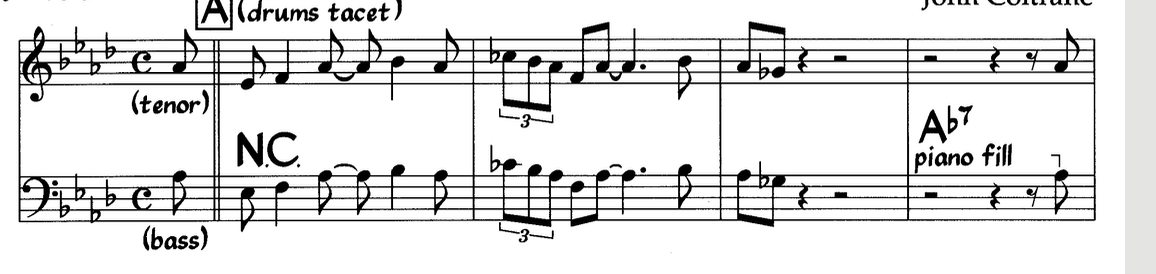
Further exploration of rhythms that depart from the traditional jazz form. This tune, “Dakar”, is a composition by Teddy Charles, recorded in 1957 with Cecil Payne on baritone saxophone, Pepper Adams on baritone saxophone, Mal Waldron on piano, Doug Watkins on bass and Art Taylor on drums. It was first released in 1958 in an album *Baritones and French Horns* under the names of Papper Adams, Cecil Payne (baritone players), Julius Watkins and David Amram (french horn players), but was reissued in 1963 under the name of John Coltrane, to capitalize on his fame.
As most afro/cuban pieces (some music sheets indicate “jazz rumba”), its form alternates between latin and swing, and the choruses are played in swing style.