 Nov 7, 2026, 10:59 AM
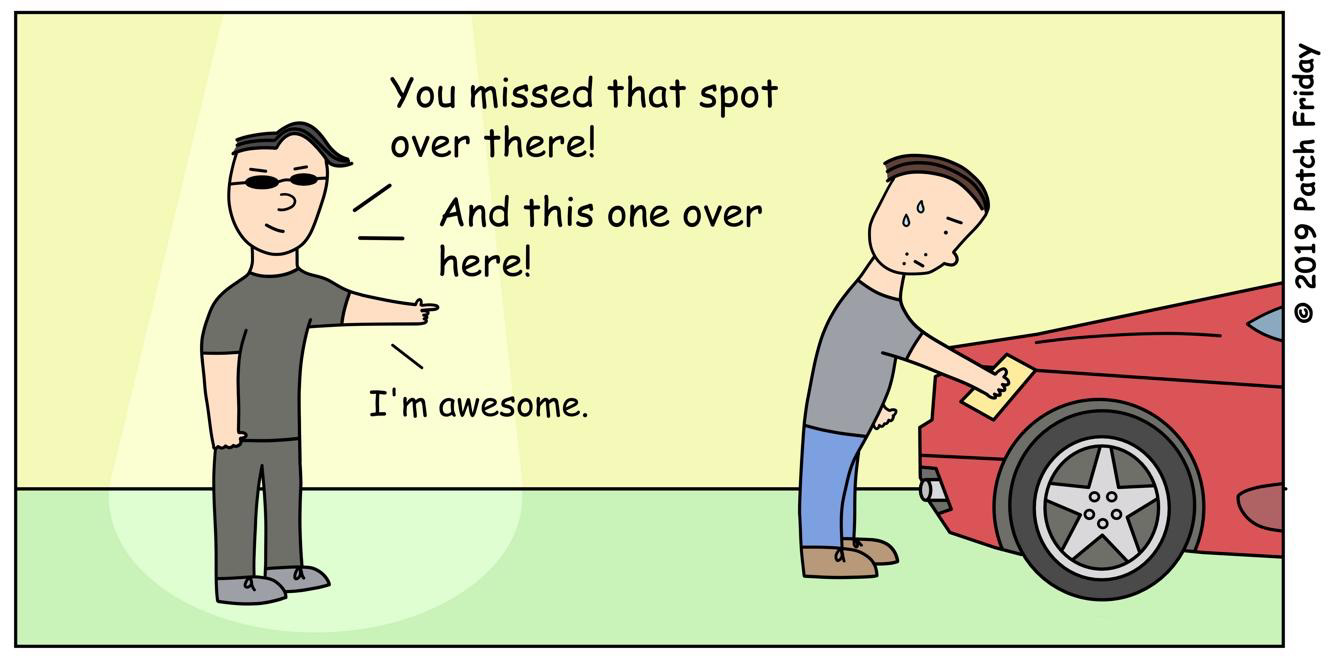
The trillion dollar monsters are all focusing on *finding* issues at high speed in large volumes. Hardly any of them care about *fixing* these problems with any sense of quality.
Nov 7, 2026, 10:59 AMThe trillion dollar monsters are all focusing on *finding* issues at high speed in large volumes. Hardly any of them care about *fixing* these problems with any sense of quality.

@bagder they feel the urge to show spectacular results. Side effects do not really count.

@bagder They don't care about any of that, they just want credit (at the bank). These two are mostly inversely related btw. in this and other fields. The best they can do is clap if you fix things.
 Nov 7, 2026, 11:04 AM
@bagder they do the easy 10% of the job ..

 Nov 7, 2026, 11:45 AM
LLM-generated issues are a bit annoying because they’re usually ten times longer than they need to be to convey the issue, use the same obnoxious structure, and may or may not report a real issue.
LLM-generated PRs are the absolute worst. They often have rationale for the change that is close to what the actual change does. They fix the specific test case in the bug, but often in a subtly wrong way that introduces another variant of the bug that’s harder to trigger and harder to debug. Finding the precise way in which they’re subtly wrong is much more effort than writing the code myself. And completely destroys my motivation.

@david_chisnall @bagder 💯 the motivation drain is the most critical issue for me.

@vanitasvitae @david_chisnall @bagder same I’ve actually hit a complete burnout block

@david_chisnall @bagder although most LLM generated vulnerability reports come with a patch, I try to avoid looking at the patch. It usually patches the symptom and not the root cause, and trying to prove or disprove whether they are correct or not can send you down the entirely wrong path, and make you miss more obvious ways to fix it. E.g. a fix earlier in the call graph might provide a more general fix for this class of problems, not for just this instance of the bug. (Not sure what to call this, confirmation bias?)
Fixing the bug usually requires reading different areas of the code that are not even present in the patch context.
Having said that, sometimes the quickest way to figure out what the vulnerability is about, is to look at the proposed patch. Not with the intention of using it, but to see where the affected code is and what kind of vulnerability it even is.

I recently had a positive experience with an LLM that generates review comments on PRs.
At work I had filed a bug. The developer responsible for fixing it had this LLM tool configured to comment on his PRs.
In the bug report I had originally pointed out a security consideration that needed to be taken into account in the solution. The developer had missed that. The LLM inspected just the code and not the bug report and spotted the vulnerability.
I replied to that comment saying there was an easy fix and what that code would need to look like. To which the LLM then pointed out that my suggestion needed a minor change in order to work due to a quirk of some code in a completely different place in the file.
But I still think the good LLM responses are the minority. So in order to make good use of it, one has to be able to find the gems hidden among the many poor comments it produces. And this doesn’t even address all the other issues with LLMs. I certainly wouldn’t actively choose to enable such a tool myself.
 Nov 7, 2026, 11:47 AM
@bagder exactly what one expects from the "number must go up" people.

@bagder To find can be done easily with machines. To fix is hard.
 Nov 7, 2026, 12:13 PM
@bagder Denial of Software attacks... Lines up with the comments about RAM etc. They are trying to break everything that isn't running out of an AI hyperscaler.


@noplasticshower @bagder from time to time I dream of updating that book to current software development.
 Nov 8, 2026, 12:50 AM
@vicash @rogersm @bagder you might try writing a book before you funny...lol
More like..."ship it...it's fucking good enough"
Some of these were certainly better than others
https://garymcgraw.com/technology/books/
@noplasticshower @vicash @bagder oh! I didn’t realise you’re McGraw…
…and that you have a follow up book.
I’ll check it, it probably already covers many of the things I wanted to update in your original book.

@bagder agreed! 👏
All the credit for the problem, none for the solution. Financial credit or otherwise. Capital continuously collapsing commons. ✌️💙

@bagder if youve always just hired someone else to buy everything, you dont realize that quality is worth anything

@bagder @petrillic the words "fixing these problems with any" are completely redundant.

@bagder Yea, for marketing & stonks go less down.
As if any of them really care about security.
They only security thry care about is to not be defaced, and for no legal trouble to come their way.

@bagder isntb that in part because folks use sub optimal prompts. "Find me a vulnerability" and the outstanding pattern matching that AI is today does that. A better prompt might ask for a simple fix. That said, i would almost never trust the solution, without careful review and testing

@bagder Would you agree, that with a finite amount of important software, there are a finite number of outstanding bugs?
If so, if we look at this in cumulative terms of the percentage of AI-findable bugs found, while it looks exponential now, it will asymptotically approach 100% once we pass the inflection point?
In other words, the bugpocalypse is a myth, spread by you know who to sell more tokens and infect your workflows? Or can someone point out the flaw in my reasoning?

@bbuk @bagder
Not quite: machine learning algorithms are just oversized statistical models, so at best they'll only ever approach the false positive rate, never zero.
Additionally, again because they're statistical models, they'll tend to make more mistakes with non-boilerplate code. So the more difficult the code, the larger that false positive rate gets; script kiddies will tend to have fewer problems, but that was never a pain point to begin with.
@australopithecus @bagder To your first point, that's part of why I said asymptotically, the other part is the long tail. My broader point is there is no bugpocalypse, what's your take on that?
To your second, this is a spam issue, not a security issue. I thought @badger was more concerned about the long-term security of the situation rather than the current spam issue. Once we're passed the inflection point and well in the asymptotic, the spam can be muted without much concern for security.
@australopithecus @bagder Again, my point is not reaching 100%, it's the fact that the rate of bugs found by clankers on genuine projects will not continue to increase in an exponential way. The bugpocalypse is fake news.
Obviously projects that use slop themselves will remain screwed.
@australopithecus @bagder Once there's not a flood of genuine bugs reported just restrict PRs to a whitelisted group. If your project is solid it will be fine, if it was fundamentally broken (see php knowing about their issue for years) then it should die.
Nov 7, 2026, 9:10 PM@australopithecus @bbuk news for you: they find heaps and heaps of *real* bugs
@bagder @australopithecus Yes, but that will tend towards all outstanding, ai-findable bugs being found. It's not a permanent issue, just a one-off, technical debt cleanup period. Sucks to be in charge of an important project of course.

@shelldozer @bagder Yeah, any slop project won't survive, and nothing of value was lost. The only thing that's important is that genuine projects get the advantages of this fad of slop reporting to bolster their project security by fixing their technical debt, then they can lock PRs down to a whitelist and just take extra care from that point on.
Stop rushing development, work in small teams. It seems like a nothingburger to me.

@bagder
Since when do you get huge investment of funds with the anticipation of reward in t he future?
That's a scam to get more money. Like gambling. Like trickle down economics and tarrifs. You're going to win big. We'll have a booming economy....

@bagder they cannot deliver quality before their IPO.

@bagder Are you talking about big tech and big pharma? And the oligarchs?

 Nov 7, 2026, 2:54 PM
@bagder
Fixing them takes actual intelligence.
Finding them is more of a pattern recognition job.

@bagder when prompting for fixes, people keep forgetting to add "MAKE NO MISTAKES" and "DON'T TALK ABOUT GREMLINS" to their prompts

@bagder fully-automated-move-fast-and-break-as-much-as-possible (to grab as much short term profit as they can) 🤖

@bagder That's because they can't and will never be able to. Slop machines can only produce slop.

@bagder yeah dont know if you have seen mythos, but it essentially asks 150 bucks for a threat model that scans a snapshot. We internally had LLM generated threat models at the same quality for 2 bucks.
Its all marketing scheme to upsell security to business who lack the right people to drive a security program.

The scientific community has become largely the same so it's the natural consequence 🤷♂️

@bagder this this this this!
 Nov 7, 2026, 8:47 PM
@bagder Spot on.

 Nov 7, 2026, 10:54 PM
@bagder They did promise "move fast and break things," and they've always been pretty clear on whose things they mean...

@bagder Because you get much more money for finding 0-day-exploits then for fixing them.
 Nov 8, 2026, 11:23 AM
@bagder …but, but that would make everyone realize the tools can’t handle the implicitness, the nuance. A binary "target crashes or not" is too good of a verifier to pass up 😐

@bagder
They seek only destruction

@bagder The stance on not accepting AI generated fixes does put a damper on things…
Nov 9, 2026, 5:49 PM@TheCodeLorax The AIs are not good enough to produce fixes for these reports.
@bagder Imagine you did an inspection of a home and saw many of the nails pounded in crookedly or bent over. Many of them miss their mark and the support plates are not properly anchored. Does it matter if they used a hammer or a nail gun? Either way, it is the fault of the carpenter, not the hammer.
The problem you’re experiencing is that AI allows people who have no business trying to submit patches to do so. That makes garbage for you. Even people who might be able to create a patch without AI are rushing and often creating trash for you.
You are an engineer and you did not sign up to work in trash picking at a recycling center. I do not blame you for associating AI-generated patches with slop because the vast majority of them are. That doesn’t mean the models aren’t capable of generating good code. It means that they have been poorly supervised and not reviewed.
 Nov 10, 2026, 10:15 AM
@bagder I think what we see is mainly marketing campaigns at work.
 Nov 10, 2026, 11:49 AM
@bagder Let me push internally more on this. I think we need to do better in high quality fixes and better classification if they are low / medium / high vulns without wasting maintainer time
Nov 10, 2026, 11:49 AM@bagder can I assume you have a direct contact at Anthropic atm to give feedback to? If not happy to help build that