Login
You're viewing the mstdn.social public feed.
  • Jun 12, 2026, 10:09 PM

    "Latin letters do not hold hands. Arabic letters do.

    To understand why every machine since Gutenberg has wrestled this script and mostly lost, you need one structural fact: Arabic is cursive always."

    This piece is an exhilarating, eye-opening, outrageous, and very funny tale of the difference between latin letters and Arabic letters, and why printing presses and screen renderers have such a hard time with it.

    lr0.org/blog/p/arabic/

    💬 16🔄 286⭐ 324

Replies

  • Jun 13, 2026, 11:25 AM

    I wish / hope the author is on the fediverse. Their whole website is a rabbit hole of fascinating stuff. If anyone knows who they are, please let me know.

    lr0.org

    💬 1🔄 1⭐ 7
  • Jun 13, 2026, 12:08 PM

    Apropos of @edgeofeurope's comment:

    Asian kanji (e.g. Chinese, Japanese) were written top to bottom, with the sentences written right to left, so you flip pages of books from left to right.

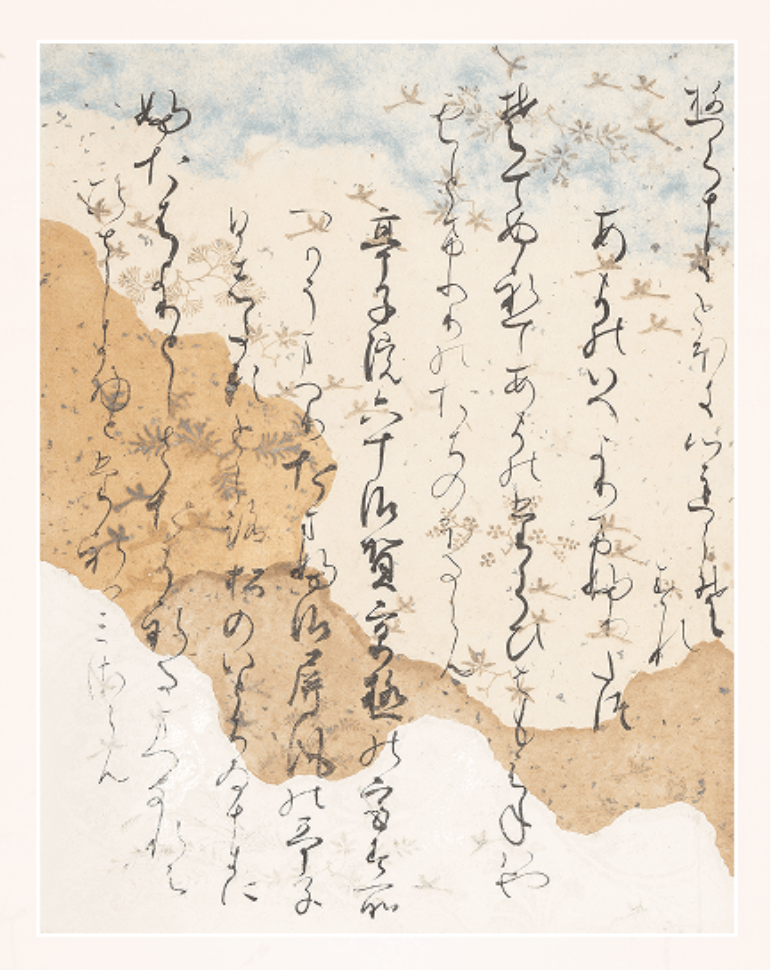
    While kanji are freestanding and don't' "hold hands", I was surprised to find that Japanese phonetic kana *can* be written in cursive, and beautifully so.

    miho.jp/en/exhibition/spring20

    Sample of Japanese kana calligraphy
    💬 0🔄 2⭐ 16
  • 💬 1🔄 0⭐ 4
  • Jun 12, 2026, 11:23 PM

    @briankung

    Right?
    This person can WRITE!
    Such a juicy story.

    And this one:

    "The text you store is its input, not its output. The word is performed fresh every time you look at it, like music from a score."

    OhhHHH

    💬 0🔄 3⭐ 16
  • 💬 0🔄 0⭐ 1
  • Jun 13, 2026, 1:08 AM

    @CelloMomOnCars #TIL

    "… languages were written on a tablet of stone using a chisel. Since most people are naturally right-handed, they would hold a hammer with the right hand and a chisel with the left. … That’s why you find most older languages (such as Arabic, Hebrew and Farsi) written from right to left.

    When ink was invented, … writing from left to right became more preferable in many parts of the world since this method avoided smudging ink."

    Source: writingbeginner.com/are-arabic

    💬 1🔄 3⭐ 17
  • Jun 13, 2026, 7:16 AM

    @deborahh that phrase feels off

    the oldest writing system, cuneiform, was written first and foremost by pressing a stylus on clay, with carving in stone reserved for exceptionally important documents.

    Hieroglyphs followed soon afterwards, and indeed some of the earliest examples are carved in stone, but they are also small bits of text in the middle of a decorative design, and there are also similar examples that are painted on pottery, which would only require one hand.

    Chinese oracle bone script were, like the name says, carved in softer material (bone).

    And I don't know whether we know on what surface Maya script started, and I suspect that if it was done on perishable materials we'll never know, because the climate there is quite different from that of Egypt.

    And the direction of writing of those early examples varied wildly, even in the same script, with left to right, right to left, top to bottom and even boustrophedon.

    💬 1🔄 2⭐ 0
  • Jun 13, 2026, 11:18 AM

    @valhalla @deborahh

    The Sumerians, then the Egyptians, but it's the Phoenicians or the Etruscans who first had an alphabet* as we know it, and they wrote right to left. Then the Greeks adopted the letters but wrote them backwards, left to right.

    superprof.com/blog/why-are-sem

    Romans (much later) also wrote on wax tablets for everyday notes. I mean, who had time to carve everything in stone?

    *The word 'alphabet' is from their first two letters, aleph or alif (cow), and beth (house)

    💬 2🔄 0⭐ 0
  • Jun 13, 2026, 12:11 PM

    @CelloMomOnCars @deborahh afaik the proto-sinaitic script was still written in both directions (including changing direction on alternate lines), and so were the early greek and italic (including etruscan) texts, settling on a standard direction happened a bit later, and it ended up being the opposite direction between Semitic languages and Greek + the linguistic mess that was Italy.

    I'm not sure whether there has been any research on why it happened this way, or if it was a random chance (which sounds pretty likely, considering that the writing mediums were pretty similar in both places).

    boustrophedic and right-to-left inscriptions from the pre-roman iron age are quite common in the museums of northern Italy, even if the alphabet they were using was definitely derived from the Greek one (probably after going through the Etruscans, as they were the local prestige civilization at the time)

    💬 2🔄 1⭐ 0
  • Jun 13, 2026, 12:39 PM

    @valhalla @deborahh

    In both directions on alternate lines!

    It shows you there's more than one way to skin this cat.

    Also, seems there was a lot of experimentation going on before somebody banged on the table and prescribed a standard.

    💬 1🔄 0⭐ 0
  • 💬 0🔄 0⭐ 0
  • 💬 0🔄 0⭐ 0
  • Jun 13, 2026, 12:29 PM

    @CelloMomOnCars @deborahh also, wikipedia tells me that the oldest find of a probably-wax-tablet was in a shipwreck of the coast of contemporary Turkey from the 14th century BC, which is pretty cool!

    en.wikipedia.org/wiki/Uluburun…

    (probably. after a few millennia in the sea I think there was no wax left on the tablet, and I have no access to the article to read the details and see how confident they are that it was actually one)

    💬 0🔄 0⭐ 0
  • Jun 13, 2026, 9:59 AM

    @CelloMomOnCars The amount of graphics I encounter irl with the Arabic messed up and disconnected, is incredible.
    They get a good text from their translator, human or otherwise, and that then gets fed into an Adobe graphics program, and that *still* doesn't know how to handle Arabic.

    The other day I saw a sign where even the Chinese was messed up, with two characters replaced by 'missing character' symbols.

    Nobody does a final check of the results.

    💬 1🔄 2⭐ 4
  • Jun 13, 2026, 11:09 AM

    @edgeofeurope

    Somebody needs to tell Adobe about the several options for doing it right!

    Chinese (and Japanese) kanji must be really tricky, too. I once saw an ASCII chart for Japanese, the entries were 3mm boxes and the chart was more than a meter wide.

    BTW Those are written up to down, with the sentences arranged right to left - that's why translating manga is so tricky. The good translations into English *don't* print the graphics in mirror image.

    💬 0🔄 0⭐ 2
  • 💬 1🔄 0⭐ 3
  • Jun 13, 2026, 11:03 AM

    @sntx

    They're mentioned in the article:

    "The first computer ever to display Arabic in ROM, the Sakhr AX-170 of around 1984 (a Saudi-Kuwaiti MSX), shipped with a children's typing tutor and a built-in BASIC dialect that accepted Arabic identifiers, written right-to-left, in source code."

    💬 1🔄 0⭐ 3
  • 💬 0🔄 0⭐ 3
  • Jun 13, 2026, 11:22 AM

    @CelloMomOnCars It's weird how moving I find that article, because I'm blind and can't see the script, and couldn't read it if I could. And yet... the history of how much care was put to do the write thing to arrange the characters...

    💬 1🔄 0⭐ 0
  • Jun 13, 2026, 11:27 AM

    @modulux

    Right? It makes me want to give Urdu another go. I heard it has the best poetry, and you can't translate poetry, at least not without creating a new poem.

    Also I heard that if you hear the Koran read aloud as it was meant to be, the language is transporting. No English translation has ever come close to doing that, even as technically the translation is "correct".

    💬 1🔄 0⭐ 1
  • Jun 13, 2026, 2:19 PM

    @CelloMomOnCars @modulux You always lose something in translation. I just put up a blog about my attempt at translating a song from Turkish, and I've taken liberties to try to convey the meaning; the sheer force of the chorus is still lost.

    And yes, the Qu'ran has much more of a lyrical flow in the Arabic, partially as rhymes come more naturally in the grammar. Becoming a "hafiz", or someone who's memorised the Qu'ran, is still a prized qualification in many parts of the world.

    💬 0🔄 1⭐ 4
  • Jun 13, 2026, 11:32 AM

    @CelloMomOnCars
    Not on list
    2007: Kindle ships and only supports Latin-Roman (which includes some Greek and many Scandi). No publisher or user font support. About 3 years! No Arabic, Asians, Hebrew, Cyrillic, full Greek etc.

    It runs Linux and the ebooks are internally HTML3, yet it's presentation / screen is 16 years out of date.

    Amazon had bought Mobipocket in 2005.

    The 1st ereader using a predecessor of epub 2 was about 1998 and open source maybe 1999. I don't know if it supported Arabic.

    💬 1🔄 0⭐ 2
  • Jun 13, 2026, 11:39 AM

    @CelloMomOnCars
    The first widely available ereader used mini-CDs, which was a problem for individual novels. Sony in 1990. It certainly supported Latin-Roman and Japanese. I don't know if anything else. I have one working on built in screen and early one on Video & have created discs from ISO image files.
    Earliest browser disks I have are from 1994 (Mosaic) are unreadable, so I can't test.

    Irish monks probably invented cursive or miniscule Roman alphabet. ONLY CAPITALS before that in Latin.

    💬 0🔄 0⭐ 1
  • 💬 0🔄 0⭐ 0
  • 💬 0🔄 0⭐ 1
  • Jun 13, 2026, 6:47 PM

    @CelloMomOnCars At some vague base level in my ignorance I figured that handling any non-latin text would be "hard" but now I understand enough to rate it as "what the f---? hard". This was a delight to read.

    💬 0🔄 0⭐ 2
  • Jun 14, 2026, 1:11 AM

    @CelloMomOnCars
    "So in the late 1950s Kamel Mrowa, publisher of the Beirut daily al-Hayat, worked with Linotype on the obvious surgery: merge the initial form into the medial, the final into the isolated, drop the ligatures, and the whole script collapses to two shapes per letter and fits the machine. They called it Simplified Arabic, and it conquered the world's Arabic newsrooms inside a generation, because it was cheap and fast and the alternative was not being a daily newspaper."

    💬 0🔄 0⭐ 3
  • 💬 0🔄 0⭐ 1
  • 💬 0🔄 0⭐ 1
  • 💬 1🔄 0⭐ 1
  • 💬 0🔄 0⭐ 1
  • Jun 15, 2026, 7:23 AM

    @CelloMomOnCars
    This shows some reasons why no layout program or typesetting system reaches the requirements for Qu’ran typesetting – except ConTeXt, since the OrientalTeX project (lead: Prof. Idris Samawi Hamid, Colorado State University; main programmers: Taco Hoekwater & Hans Hagen) ~10-15 years ago.
    (Maybe the situation has changed since.)

    * colostate.academia.edu/IdrisSa

    💬 0🔄 2⭐ 3