Login
You're viewing the functional.cafe public feed.
  • Nov 15, 2026, 11:33 AM

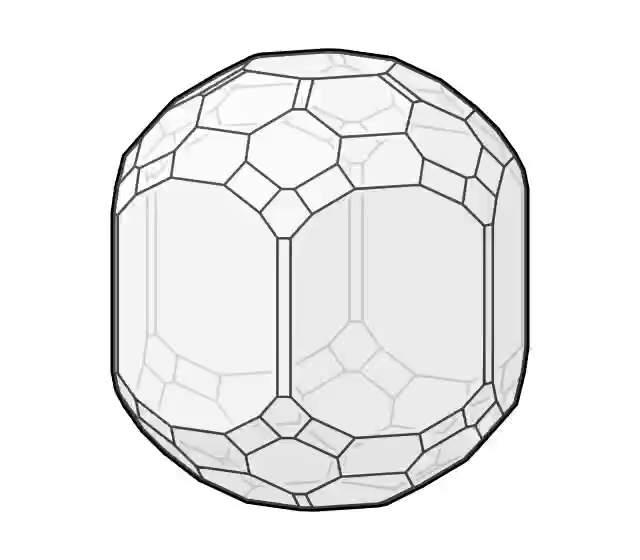
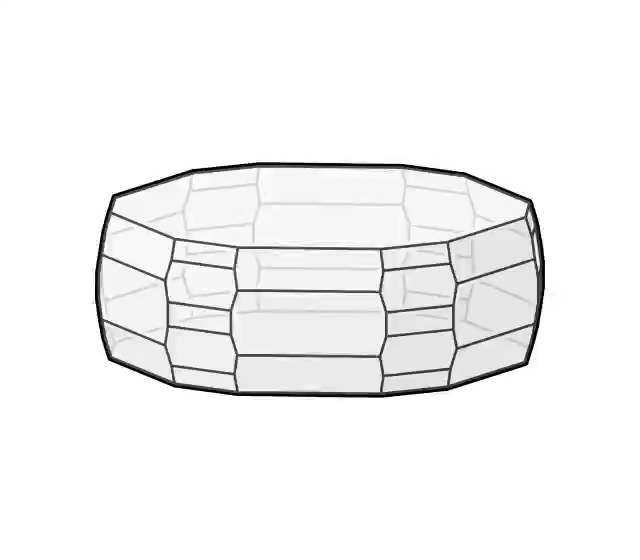
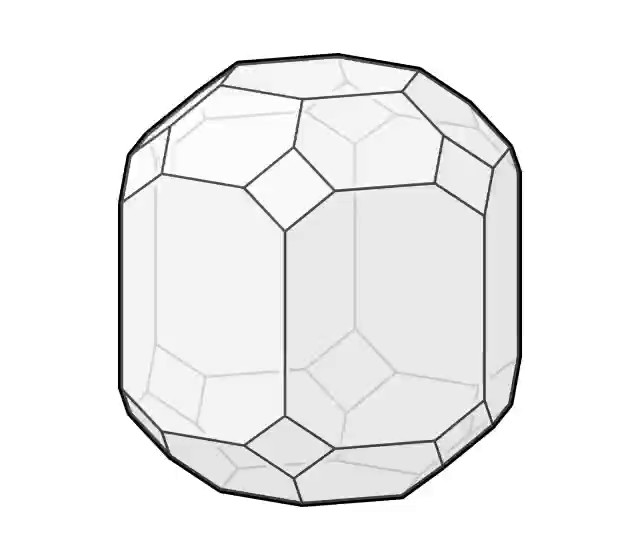
    The depicted polyhedra are rare specimen.

    First, they are inscribed, which means their vertices lie on a sphere.

    Second, they are zonotopes, which means their faces are centrally symmetric (they are symmetric under 180° rotation around their center).

    It turns out to be surprisingly hard to find such. Sure, there is the cube and other prisms. These are the boring ones. Maybe you also know the permutahedron and its siblings from other reflection groups. But there are at least a few more. Besides prisms we know of exactly 17 different combinatorial types. All are obtained as projections from higher-dimensional permutahedra.

    The list of all 17 is shown in Figure 3 in Manecke-Sanyal "Inscribed Fans II"
    arxiv.org/abs/2203.11062.

    Image attached toot
    Image attached toot
    💬 2🔄 20⭐ 37

Replies

  • Nov 15, 2026, 12:19 PM

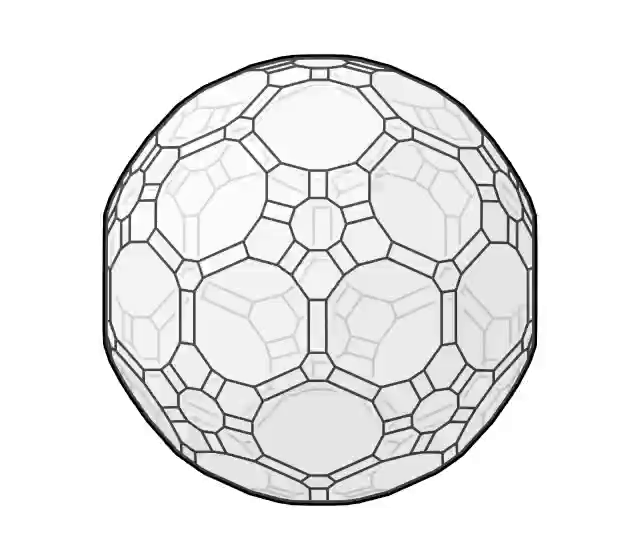
    Quite a few have degrees of freedom.

    Others are really round. The shown one is the roundest/biggest one we have.

    Image attached toot
    Image attached toot
    💬 1🔄 0⭐ 6
  • 💬 1🔄 0⭐ 0
  • Nov 15, 2026, 5:22 PM

    @RefurioAnachro

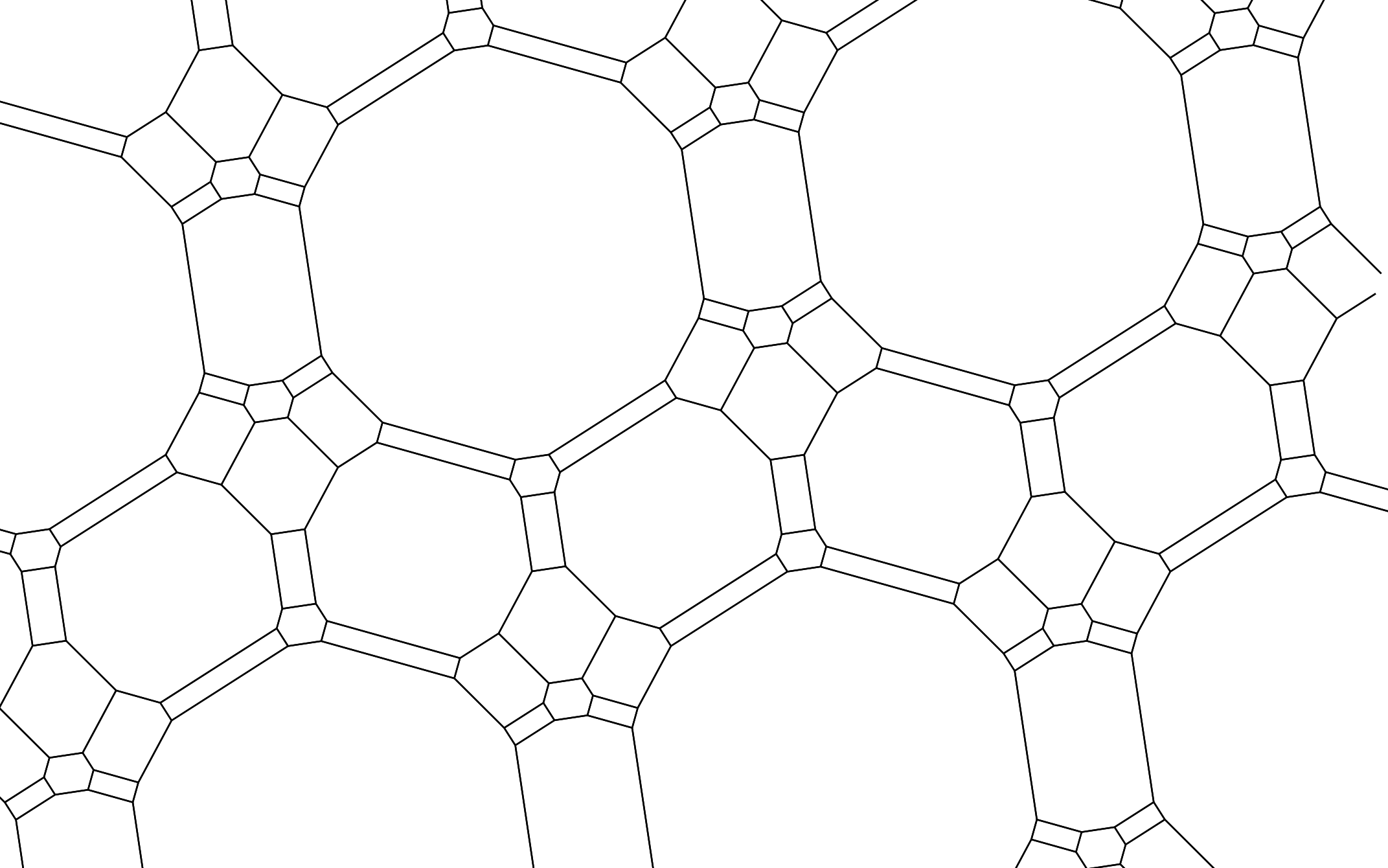
    Totally! The planar counterparts are tilings with polygons that are both inscribed and centrally-symmetric. It was a surprise to me how non-tivial it is to construct such. Already playing with just hexagons is interesting. The difficulty probably has the same source as for zonotopes.

    Such tilings are dual to (inscribable) simplicial line arrangements. You get some interesting ones from restricting higher-dimensional reflection arrangements.

    Still, the planar setting seems not quite as restricted as the spherical one:

    mathoverflow.net/questions/451

    💬 1🔄 1⭐ 1
  • Nov 15, 2026, 6:15 PM

    Thanks! I have no intuition about the obstructions, does it get even easier for hyperbolic arrangements? I tend to guess it doesn't, but I can't tell why.

    @MWinter

    💬 1🔄 0⭐ 0
  • Nov 15, 2026, 6:32 PM

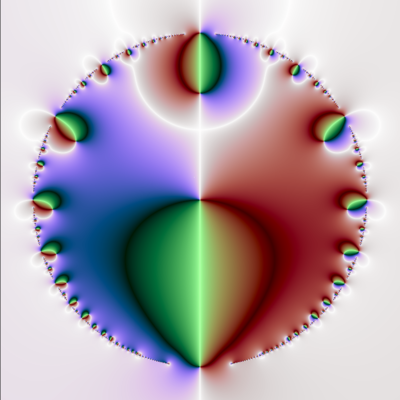
    @RefurioAnachro It does, actually. The reason is that there is an infinite zoo of reflection groups in hyperbolic space. Each gives a simplicial line arrangement, which in turn is dual to such a tiling with inscribed centrally-symmetric polygons. The sphere and plane are the hard case.

    💬 0🔄 0⭐ 0
  • 💬 0🔄 0⭐ 0