Vale Margaret Hamilton.
She was a Software Engineer.
She was the _first_ Software Engineer because she defined the term, Software Engineering:
"When I first came up with the term, no one had heard of it before, at least in our world. It was an ongoing joke for a long time. They liked to kid me about my radical ideas. It was a memorable day when one of the most respected hardware gurus explained to everyone in a meeting that he agreed with me that the process of building software should also be considered an engineering discipline, just like with hardware. Not because of his acceptance of the new 'term' per se, but because we had earned his and the acceptance of the others in the room as being in an engineering field in its own right."
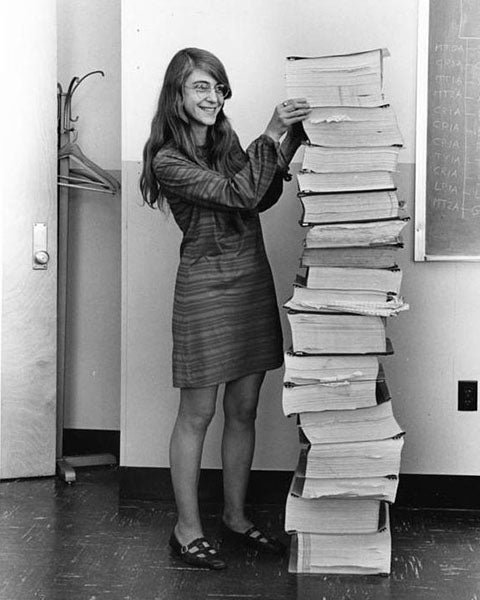
Margaret Hamilton led the Software Engineering team at MIT that created the software that ran NASA's Apollo Guidance Computer. The photo of her standing next to a stack of source code printouts — that's her work, and she was essential to NASA's mission of landing people on the Moon for the first time ever and getting them back to Earth again safely.
Margaret Hamilton, computing pioneer who led software development for the Apollo program, dies at 90
https://news.mit.edu/2026/margaret-hamilton-computing-pioneer-dies-1007
#MargaretHamilton #SoftwareEngineer #SoftwareEngineering #ComputerScience #NASA #MIT #Apollo #MoonLanding