Login
You're viewing the ruby.social public feed.
  • Nov 4, 2026, 7:56 AM

    "When a machine writes the code, the human's job is to say precisely what the code should do, in a form that can be checked automatically," says Dave Farley, synthesizing the emerging consensus among many Agile-associated guru types. youtu.be/EkH_uoybj8k?is=aesZiH

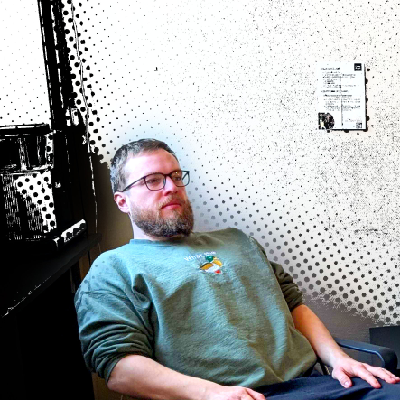
    My guy, that's code. You're describing code.

    💬 8🔄 32⭐ 49

Replies

  • Nov 4, 2026, 8:03 AM

    In a bygone age, when I was more aligned with these folks (and I'm not the one who drifted), they all had takes on code generation that still apply to "AI"-supported or -driven software development. The verdict wasn't good, I'll say more about why in a second.

    They all seem (and I've evaluated most of their points in detail, I'm not making a sweeping, unfounded generalization here) to be reasoning backwards from a sense of inevitable "AI" adoption.

    They also all *know* this kind of reasoning is bogus and unscientific.

    It leaves this uncomfortable sense when engaging with their recent content (esp Beck and Farley) where they make a point holed like swiss cheese, and seemingly cannot look at the holes, like some cosmic horror thing, where the flaws in their reasoning would break them if they looked at them. And the best counterpoints out there, to this flawed reasoning, is their own content from 5-10 years ago. They do not acknowledge their past arguments, they are wiped from memory.

    💬 1🔄 1⭐ 6
  • Nov 4, 2026, 8:09 AM

    If any of these folks ever seriously engaged with the question "how is 'AI' code gen different from code gen of yore, in the ways that affect our critique of it?" that would be worth seriously engaging with.

    As long as they keep talking vaguely around the key problems, you, developers, have my express permission to ignore their bs.

    💬 1🔄 0⭐ 8
  • Nov 4, 2026, 8:11 AM

    In the past, they would note that lines of code are a terrible measure of value, now Farley quotes Steve Yegge (!!!!) on how many lines he produces to say, producing the code isn't the hard part.

    My guy, you *know* that more code (complexity, verbosity) doing the same thing is worse, not better, you've said so before! You can't just ignore the quality parameter and blindly report lines of code changed, like you're Microsoft in the 2000s, as if that says anything about a bottleneck having been removed!!!

    💬 1🔄 0⭐ 9
  • Nov 4, 2026, 8:15 AM

    A final aside: I have so many notes on Kent Beck's terrible pro-"AI" podcast "Still Burning" but I honestly find myself reeling apathetic wrt turning it into something. Who would it convince? I am of little faith in mass comnunication these days, hopefully that will change.

    But Still Burning is great if you want to kill some heroes. He brings on loads of industry heavy weights who used to or still have a lot of cultural sway, and they just absolutely embarrass themselves with ridiculous, seemingly deliberate bkind spots. It hurts, but it's probably good to excise that trust in gurus and executives.

    💬 1🔄 2⭐ 9
  • Nov 4, 2026, 8:20 AM

    Now for the main point:

    Farley et al are converging around an idea of "just specify precisely what you want the program to do, and have the machine build it". My counter is, "that specification is what we call code, and if it is sufficiently precise, it is also executable - no 'AI' required".

    A lot of time and energy in the industry and academy have been spent on modeling why writing code makes sense as an exploratory and iterative approach, rather than an up front, perfectly precise specification. I'll point out a few key items, any one of which fully disqualifies the use of "AI" code gen.

    💬 2🔄 6⭐ 17
  • Nov 4, 2026, 8:28 AM

    1. Writing code is not just typing. Naur called it theory building in 1985, a framing that has some issues, but gets at the point. pages.cs.wisc.edu/~remzi/Naur.

    As we write code, we also refine our understanding of (i) the current state of the program, how it can change, how changes cascade through the structure, etc; and (ii) our desired outcome.

    Much like writing fiction, essays, anything else, writing is not just writing, but an exercise in making our ideas more concrete and precise, and as each idea becomes more well-described we learn more precisely how it fits with other parts. Or that it doesn't, so we have to move into more abstract territory again and reevaluate our approach.

    💬 1🔄 8⭐ 16
  • Nov 4, 2026, 8:29 AM

    Programming is making more and more concrete, precise decisions, until it executes. If those decisions weren't important, we would have a framework or library already doing what we want.

    That is, we already had a solution to the abstraction problem: package unimportant decisions in generic code, share the maintenance and conceptualization burden across more people. That's open source. Or standard libraries.

    The reason we rarely got more higher level generic abstractions, or the reason not everything is Wordpress and plugins, or Ruby on Rails apps, or whatever, is that *those decisions actually often matter*.

    Offloading these decisions to a machine—that, at best, makes average decisions—makes no sense if those *decisions matter*. And if they didn't matter, we should make a library for it.

    Nobody knows their exact desired outcome when they start writing the code. We used to know this. It fully disqualifies formal up-front specification.
    💬 1🔄 2⭐ 7
  • Nov 4, 2026, 8:35 AM

    2. There has already been tons of work into formal specification of programs.

    The main limiting factor is that sufficiently formal specification to avoid issues trends towards formal proofs.

    When I was at uni doing my MSc, I did some work with F* (FStar), a F#-derivative that makes the type system a fully formal proof. It was cool, and made tests obsolete, because you had a stronger guarantee.

    The problem with FStar or any other formsl verification (which to be clear, has been used in conjunction with LLMs as stochastic code fuzzers to produce mesningful results) is that writing the correct specification takes longer than just writing the program.

    Thst might be worth it for the guarantees it gives us, in some cases. Byt not for most software, and certsinly not for software where precision is explicitly—by thevuse of "AI"—devalued in favor of speed.*

    * Speed here, embarrasingly, being speed of code gen, not speed of value delivery.

    💬 2🔄 0⭐ 5
  • Nov 4, 2026, 8:40 AM

    The danger of using LLMs with imperfect specifications (anything not provable, basically) is the slot machine effect. You pull the lever and the machine one-shots 80%, 90%, 95% of what you want. It really can't get the last bit right, so you update the specification. That moves the needle a percentage point higher.

    Either you keep going until you have a formal, executable proof, and spent much longer than pre-"AI" methods would have required to get to the goal; or you stop at some point you feel is "good enough" and hope the unknown errors in the code aren't too bad when they manifest.

    And when those errors manifest, cf. point 1, no human will have a theory of why the code works as it does, which means no changes can be easily made that retain what works and fixes what doesn't. Without such a theory, how do you trace an edge case to your imperfect specification and make the right changes there, so the machine can fix it?

    Not easily, that I promise you.

    💬 1🔄 1⭐ 5
  • Nov 4, 2026, 8:46 AM

    3. The folks now pushing this narrative on specification up front *literally made their names in industry* ranting about top-down planning. Namely, the Agile movement named the enemy "Waterfall", where decisions flow from stage to stage, with long feedback loops back to the designers if things don't work out during implementation. All the structural critiques of Waterfall transfer directly to "AI"-based coding.

    For example, we learned the hard way that interfaces could not fully capture the requirements of an implementation (c.f. pt. 2), that testing ideas and adapting to changing contexts and new knowledge were paramount (c.f. pt. 1).

    A large part of why a small team with full application ownership can move faster and more safely than huge architecturally orchestrated departments, is because they can make better, holistically informed decisions, and are empowered to use that knowledge.

    Removing code writing, removes a lot of that knowledge.

    💬 2🔄 2⭐ 7
  • Nov 4, 2026, 9:06 AM

    ---

    Now, these are structural problems with vibe coding/"AI" based coding. They are also borne out in every thusly created code base I have reviewed.

    To avoid these issues, the fundamental mechanisms of programming must be changed. LLM-based programming tools cannot help here. Better abstractions might, but so many people have stopped working on these, to get on the stochastic band wagon.

    The result, for teams adopting "AI"-based coding, is pushing an increasing amount of unknown bugs and difficult maintenance ahead of a team rapidly unlearning (through the very use of "AI" and lack of use of the skills) the exact skills required to solve those issues.

    Might better, imperfect specification affect the error rate? Certainly! But it does not structurally change the mechanism. The people specifying the way Farley et al suggest might go longer before the consequences hit. But there's no easy way out from under a tangled pile of shit.

    💬 1🔄 1⭐ 6
  • Nov 4, 2026, 9:31 AM

    Farley tries to preempt some criticism in the video, so let's explicitly dismsntle these points:

    - The machine doesn't understand what you intended, that forces your specification to be precise and is good, actually.

    - The waterfall critique doesn't apply, because the specification is written iteratively.

    Throughout the video, he also assumes that the specification is the only important contract, "the specification is the software [in this new approach]," he says. That's not the relationship in specification by example/other spec driven approaches. He says that code can be regenerated as long as it adheres to spec, that tests shouldn't be tied to UI because that constrains regeneration scope. Let's touch on that, too.

    💬 1🔄 0⭐ 1
  • Nov 4, 2026, 10:31 AM

    So, first: The machine doesn't understand what you intended, that forces your specification to be precise and is good, actually.

    This describes the feedback loop I covered in pt. 2: if the generated code obviously fails, the developer adjusts the specification to be more precise. Farley clearly doesn't suggest continuing to a formal proof, which means he takes the other branch, assuming the program is complete when it adheres to the spec and doesn't obviously fail.

    "Obviously" does a lot of work here. What about the mistakes you don't notice, Mr. Farley? After all, you agree the machine can't correctly fill in the blank, it doesn't understand your intent.

    💬 2🔄 0⭐ 4
  • Nov 4, 2026, 10:35 AM

    One strong argument that TDD gurus used to forward, before seemingly collectively becoming LLM-brained, wss that Test-Driven Development serves to check the work, by forcing a developer to approach a problem from two sides at once, both specification of behavior from the outside (the test) and implementation from the inside (code).

    Requiring a specification independent of code means checking that the implementation stays true to the intent, that the stated goal of some code does not drift. Great.

    But by dropping the *code writing* Farley forgets all the implicit things happening when implementing.

    After all, TDD is not just stringently following a test, the gurus used to say. Implementing the code may inform whether the test was correct, or if it missed something. Implementing the code also means considering minimally disruptive changes, cascading effects on flexibility of design, etc. See how TDD is exactly like my riff on Naur's theory building, with supporting structure?

    💬 1🔄 1⭐ 5
  • Nov 4, 2026, 10:38 AM

    To avoid mistakes normally caught by theory building while *implementing* in TDD, you'd need a full formal spec. That takes longer to write than just code with TDD.

    Notice: TDD was always a tradeoff in a complex system, trying to optimize both speed and correctness (among other things). It was never 100% on one factor, but a careful, informed balance that improved outcomes in a lot of cases.

    Removing implementation work from the specifier fundamentally breaks this balance, and Farley offers no mechanisms for restoring quality and completeness.

    💬 2🔄 1⭐ 2
  • Nov 4, 2026, 10:42 AM

    Second: The waterfall critique doesn't apply, because the specification is written iteratively.

    This assumes that the only structural critique made in describing "waterfall" is the lack of iteration. It's not, and Farley knows it. I can't shake how disingenuous this feels.

    Would he think waterfall was solved if an architect had to make iterative requests of a developer, but still communicating only through a spec, keeping the same hierarchical information flow controls in place? Of course not. But it's the structure he recommends for "AI"-based development, and even that comparison generously assumes "AI" capabilities not in evidence, namely that it is like an isolated developer. It is not.

    💬 2🔄 0⭐ 5
  • Nov 4, 2026, 10:48 AM

    Finally, Farley argues from a point of view where the specification is the *only* relevant contract, and e.g. the spec (the only thing the LLM code gen respects) should not be tied to concrete UI.

    Imagine if developers wrote code like this. Every deployment would entail significant UI changes when things are rewritten from scratch. Expert users can never learn and memorize advanced functionslity or build embodied habits of use, as buttons keep moving, menus reordering, etc. etc.

    UI is an example of an *informal* contract with users, that can of course change, but jarring changes are minimized by competent developers to keep users familiar with most things, while changing what can be improved. Software is not delivered in a vacuum.

    💬 1🔄 0⭐ 5
  • Nov 4, 2026, 10:51 AM

    And UI is far from the only such implicit contract, which no specification or testing approach formalizes, because it was never necessary!!! This happened implicitly through building developer expertise, theory building, pair programming or other osmosis, or even formal reviews, with all the pros and cons in all those processes.

    Regressing to only formalizable specifications, dropping the unspecifiable, complex, intuition- and expertise-based requirements, will affect software value markedly.

    Maybe not in a way you can get fired for, because who can pinpoint it? But if that's how far the bar of software quality has fallen, we are truly in trouble.

    💬 1🔄 0⭐ 2
  • Nov 4, 2026, 3:40 PM

    @nielsa [Typos]

    "buildibg" -> "building"

    "droppinng" -> "dropping"

    (And this is more subjective, but "pin-point" is normally done without the dash. IE: "pinpoint")

    💬 0🔄 0⭐ 1
  • Nov 4, 2026, 10:40 PM

    @nielsa And also, you could have always made the same argument about waterfall before LLMs?

    Like… are you saying it’s not waterfall if we schedule two separate meetings a day apart to talk about the spec? “We wrote the spec iteratively!” Was never a defense.

    The whole point is that each iteration of spec writing must receive input from actually “trying out” following it through.

    💬 0🔄 0⭐ 1
  • Nov 4, 2026, 3:35 PM

    @nielsa [Typo]

    "That takes longer to write thsn judt code with TDD."

    "thsn judt" -> "than just", or maybe "than to just" or something similar?

    💬 1🔄 0⭐ 1
  • Nov 6, 2026, 5:33 PM

    @JeffGrigg @nielsa

    I imagine this move into the "LLMs are just fine if you use them right!" space is a consequence of wanting to make money and not becoming irrelevant. I can't imagine they seriously believe what they are saying. Instead they are just becoming irrelevant to those who followed them for years.

    I admit there is a time and place for programs written this way - impossible to maintain over the long term, can fail for a myriad of reasons and "works on my machine" is all that's been guaranteed. It is not only faster to vibe if that's all you need but also blows open the field to many more people.

    The disconnect is the industry claiming all programs are just fine if written this way. This is just an extension of not allocating time for maintenance or testing, ignoring user feedback etc. chronic problems that were never resolved, and now LLMs add more, much more on top.

    I would have wished for a drive towards using LLMs as another tool without abdicating responsibility for the implementation.

    💬 0🔄 0⭐ 0
  • 💬 0🔄 0⭐ 0
  • Nov 4, 2026, 3:30 PM

    @nielsa [Typo]

    "Farley clearly doesn't syggest continuing to a formal proof, …"

    "syggest" -> "suggest"

    …

    (I hope I'm not being too annoying, or pedantic. But I do think the corrections are good, and add value. And this does show that I'm reading your posts.)

    💬 1🔄 0⭐ 1
  • Nov 4, 2026, 3:43 PM

    @JeffGrigg Haha yeah, no I appreciate it! I'm catching some when I see people fave posts in my notifications, too, surprised at my own capacity for typos tbh 😁

    💬 1🔄 0⭐ 1
  • 💬 1🔄 0⭐ 1
  • 💬 1🔄 0⭐ 2
  • 💬 0🔄 0⭐ 2
  • Nov 4, 2026, 1:58 PM

    @nielsa I've had to do some LLM training for work and after it was over my first comment was "so we're going back to waterfall/scrummerfall, huh?". It's all "have your qa agents, and your dev agents, and a po agent to pick out the finer points, and your release manager agent, and..." and it drives me nuts.

    💬 1🔄 0⭐ 2
  • 💬 0🔄 0⭐ 0
  • Nov 4, 2026, 1:36 PM

    @nielsa "made tests obsolete, because you had a stronger guarantee" I don't fully agree. I think tests are still useful for "testing" if your intuition about what your proof proves holds. The tests then become more like examples.

    But yes it definitely obsoletes (most) traditional tests

    💬 1🔄 1⭐ 1
  • Nov 4, 2026, 1:39 PM

    @reynir Right, makes sense. Because the proofs are code, too 😁

    Good point, don't know how to integrate it well, but will boost 😁

    💬 1🔄 0⭐ 1
  • Nov 4, 2026, 2:04 PM

    @nielsa yea exactly. Don't worry about integrating it - it's rather tangential to your (fine) points.

    💬 0🔄 0⭐ 1
  • Nov 4, 2026, 8:26 PM

    @nielsa The biggest failure I see from people who have never been programmers discovering that LLMs can "write apps" for them, is that they have no concept of non-functional requirements. The best they can imagine is "make it secure". If, instead of specifications.md-direct-to-x86 we could give them a well-constrained framework to execute in (i.e. NOT a general-purpose programming language) I think we'd be much better off, regardless of the source of the code.

    💬 0🔄 0⭐ 1
  • 💬 0🔄 1⭐ 2
  • 💬 1🔄 0⭐ 1
  • Nov 4, 2026, 11:47 AM

    @sanityinc Thank you, really appreciate the feedback! Makes it feel a bit less like shouting into the void 😁

    💬 1🔄 0⭐ 2
  • Nov 4, 2026, 12:10 PM

    @nielsa I feel like most of the industry made little progress in terms of abstracting problem spaces into DSLs and higher level tooling, in favour of lowest common denominator boilerplate and menial labour. No surprise that automating the latter has appeared very attractive, and in that world correctness and quality are as secondary as they turned out to be in the bigtech React factories. It's still worth pushing towards the actual good solutions, though, rather than fast-fashioning our way to the bottom at maximum velocity.

    💬 1🔄 2⭐ 1
  • Nov 4, 2026, 12:17 PM

    @sanityinc Yes! Couldn't have said it better, 100% aligned.

    I think a better conception of generations of languages—that would allow us to move beyond infinite DSLs—is based on information hiding, more specifically that a new generation of language should hide a whole class of problem from the developer, while offering pretty good/better than median performance on the problem it's hiding.

    The real 3rd generation of languages is hiding memory management. (1st: machine code; 2nd assemblys).

    A real 4th generation language would need to hide another class of problem, which then becomes an actually interesting thought experiment: what's our biggest problem in prog langs?

    (My best idea is the problem of data structure wrangling: translating between representations of data, choosing the correct one and the correct access patterns for good performance. Feels like something that could become a compile step given enough static analysis.)

    💬 1🔄 0⭐ 2
  • Nov 4, 2026, 2:17 PM

    @nielsa A long time in the Haskell and nix worlds has turned me on to declarative approaches, but that usually requires quite clever engineering in the executor or "compiler". It's qualitatively different to just building a simple DSL in most existing languages. From a purely technical point of view, I would be less offended if people were now writing declarative systems and using LLMs to generate the fiddly executors/compilers. Markdown specs to code is a terrible place to end up.

    💬 0🔄 0⭐ 2
  • Nov 4, 2026, 11:45 AM

    @nielsa I am an old, and I remember when 4th generation languages (and then 5th gen) were going to allow anyone to program using natural language.

    I always thought that was a very bad idea. Coding agents have shown that I was both right and wrong.

    💬 1🔄 0⭐ 1
  • Nov 4, 2026, 11:51 AM

    @kithrup haha, at least they were deterministically evaluated languages 😅

    I have a whole other rant about how the definition of 4/5GL is terrible and has,held us back from better programming language abstractions… but I'm not sure there's an audience for that 😁

    💬 0🔄 0⭐ 2
  • Nov 4, 2026, 12:19 PM

    @nielsa Yeah.. I agree with you wholeheartedly.. and also you’ve given me a tool I can take to my boss who has just told me I must use AI or else. So thanks? And.. I feel bad at the same time lol.

    💬 1🔄 0⭐ 0
  • Nov 4, 2026, 12:26 PM

    @stephen I'm very sorry to hear that!

    Remember to be safe and don't make any too rash decisions—it's a really shit job market these days, so remember to consider your full context when talking to people who might have power over your employment.

    I work in a lot of different contexts, in some outright refusal makes sense, in others it's better to try to slowly make "AI" adoption mistakes obvious to the people making decisions.

    Good luck, stay safe ❤️

    💬 2🔄 0⭐ 1
  • Nov 4, 2026, 12:29 PM

    @nielsa Thanks! I’m gonna share the video and request Mr Farley’s training course and try my best to make that approach work. Best I can do really. Boss man said my job was to make sure the ai generated correct code, so… this feels like it fits with how I have always behaved anyway.

    💬 0🔄 0⭐ 0
  • 💬 0🔄 0⭐ 0
  • Nov 4, 2026, 12:46 PM

    @stephen Genuinely interested in hearing how this plays out, as a data point for the industry, if you're interested in sharing what happens next 😁

    💬 0🔄 0⭐ 0
  • 💬 1🔄 12⭐ 18
  • Nov 4, 2026, 12:48 PM

    @thirstybear oh my god

    What have I become, some guy on the internet thoroughly making points already made more succinctly in popular web comics???

    Next up, I'll be like "here's a deep dive into how fragile the open source structure is because some key developer isn't funded, let alone known to the world" and you can break out the xkcd 🫠🫠

    💬 1🔄 0⭐ 4
  • Nov 4, 2026, 12:54 PM

    @nielsa Don’t feel bad. It’s the entire history of my career thanks to Dilbert in his heyday (before the author went a little odd) 🤣

    If you want more of that kind of thing, follow @workchronicles. So on-point it hurts!

    💬 0🔄 0⭐ 2
  • Nov 4, 2026, 1:15 PM

    @nielsa getting the specification right has always been the 2nd hardest part. The hardest is getting the requirements in the first place. "prompting" is just those two problems restated.

    💬 0🔄 0⭐ 0
  • 💬 1🔄 0⭐ 0
  • Nov 4, 2026, 1:49 PM

    @nielsa No. We're actually in agreement. The reason we moved to prototyping and "agile" is because requirements elicitation and specifications are hard problems. Vibe coders have rediscovered that, but don't understand why they're hard problems.

    💬 0🔄 0⭐ 0
  • Nov 4, 2026, 7:23 PM

    @nielsa Perhaps LLMs have a future replacing compilers with "well we left that bit out because it sounded woke, and we return the correct answers only when being run by the test suite, but in production? Heisenberg was right ..."

    💬 0🔄 0⭐ 0