Login
You're viewing the ruby.social public feed.
  • Oct 29, 2026, 7:08 AM

    Have you ever wondered something about soil life, but never had anyone to ask? Well, I literally wrote a book about it! Drop your question or thoughts in the comments and I'll get to work. Better yet, buy my new book 'The World Beneath our Feet' and find out the answer for yourself!

    P.S. This is me dipping my toe into making video posts, so be gentle with me!

    #TheWorldBeneathOurFeet #Book #Books #Soil #Nature

    Image attached toot
    💬 15🔄 18⭐ 0

Replies

  • 💬 1🔄 0⭐ 0
  • 💬 0🔄 0⭐ 0
  • 💬 1🔄 0⭐ 0
  • 💬 0🔄 0⭐ 0
  • Oct 29, 2026, 7:43 AM

    @frankashwood How does soil life differ in indoor pots & outdoor raised beds compared to ground? How much of those wrigglies come from the purchased soil vs migrated from elsewhere? What life would be helpful for our plants without being too gross for us as homeowners/gardeners? (Subjective, but e.g. tradeoffs between worms and other less wriggly things? How to avoid flying things inside? etc.)

    (Sorry if gardening tips is not what you're into; it's just the immediately pragmatic hook for me.)

    💬 0🔄 0⭐ 0
  • Oct 29, 2026, 7:53 AM

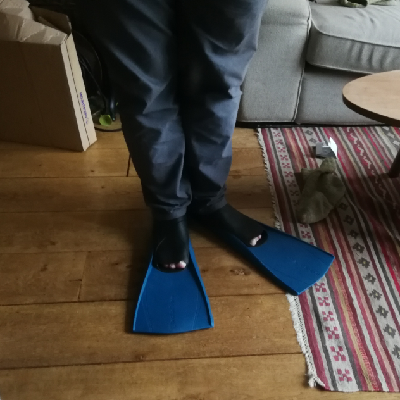
    @frankashwood mid-scroll and only seeing the top of the preview, I thought you were wearing a labcoat in the house and was confused 😅

    💬 1🔄 0⭐ 0
  • 💬 0🔄 0⭐ 0
  • 💬 1🔄 0⭐ 0
  • Oct 30, 2026, 12:29 AM

    @mellifluousbox Thanks for the congrats and also thank you for this lovely question! Hmmm... that's got me thinking! I think one of the things that blew me away was researching the sheer global diversity and sometimes national rarity of soil invertebrates, coupled with the fact that there's astonishingly little conservation protection on invertebrates anywhere in the world (and particularly soil ones). The only official terrestrial invertebrate conservation area in the world is a small sandy field in New Zealand, set up to protect the only known habitat of an endemic burrowing chafer beetle! We really need to step up and change our international laws around protection of soil invertebrates.

    💬 0🔄 0⭐ 0
  • Oct 29, 2026, 8:13 AM

    @frankashwood What poses the greater threat to topsoil? Is it erosion caused by heavy rainfall, or is it the modern use of pesticides? Are there now efforts to determine whether we humans can accelerate the natural formation of topsoil to counteract this? Do we now understand how important fungi are for topsoil?

    💬 1🔄 0⭐ 0
  • Oct 30, 2026, 6:54 AM

    @wackJackle Lots of questions there! Erosion is certainly one of the greatest threats, due to the loss of soil organic matter by intensive use of the soil for plant growth, leaving it vulnerable to wind and water erosion. There's increasing scientific work into the construction of biologically-active man-made soils, which is a little different to accelerating any natural soil formation, which takes a long long time (1000s of years). And yes, I think we're getting a decent grasp on how important fungi are for topsoil, and the changes to soil functioning when fungi are absent. Thanks!

    💬 0🔄 0⭐ 0
  • Venetiav_for_verbosity@mastodon.nz
    Oct 29, 2026, 10:12 AM

    @frankashwood you asked my question just as I thought of it! As a kid I used to pick up worms off the footpath after it rained, and put them back on the grass so they wouldn't get trodden on. But then my mum told they might drown if I did that so I stopped. (Can't recall if I looked for safer destinations for them.)

    Was my mum right, were the worms trying to avoid inundation?

    💬 1🔄 0⭐ 0
  • Oct 30, 2026, 12:33 AM

    @v_for_verbosity Well you were right to move them off the path so they didn't get trodden on! But they weren't coming out of the ground to avoid drowning, as they can breathe in water very well, so long as it's not stagnant. It's likely that they had emerged to take the opportunity to disperse to new areas without the normal risk of drying out above ground (it's easier to move above ground, but risky when it's not wet!).

    💬 1🔄 0⭐ 0
  • 💬 1🔄 0⭐ 0
  • 💬 0🔄 0⭐ 0
  • 💬 1🔄 0⭐ 0
  • 💬 0🔄 0⭐ 0
  • 💬 1🔄 0⭐ 0
  • Oct 30, 2026, 12:36 AM

    @Black_Flag Not good things, unfortunately. It's estimated that about 40% of our productive soils globally have been badly damaged or lost due to human activities such as intensive farming, deforestation and landuse change. And signs are that we're not slowing down any time soon...

    💬 1🔄 0⭐ 0
  • 💬 1🔄 0⭐ 0
  • Oct 30, 2026, 6:59 AM

    @lizzard I see you're in Germany, so your local major initiative is probably SoilsForEurope and the EU Soil Strategy for 2030. It's always worth looking into ways to lend local support for groups advocating soil protection!

    💬 0🔄 0⭐ 0
  • Oct 29, 2026, 1:54 PM

    @frankashwood yesterday i spent hours in a dead end pit cave finding so much i couldve played in the detritus for hours…interestingly, only Tomoceridae spotted for springtails. And an invasive Oxidus 😭 for millipedes. But no invasive Armadillium! Only the really cute Ligidium! The spider and herp diversity was off the charts though.

    Oh yes questions. Where do you think deep soil species intersects troglodytes?

    💬 1🔄 0⭐ 0
  • Oct 30, 2026, 7:07 AM

    @Myotis_cuniculus Interesting! Troglofauna fascinate me too, but I get claustrophobic in deep caves, so I might not ever see too many 😢 You'll love chapter 4 of my book, which is all about subsoil and deep cave adaptations of soil animals! It was my favourite chapter to write too.

    To answer your question, I suppose I see cave systems as macropores within the deep soil, and there are certainly overlaps in the morphological adaptations in the animals in both habitats (loss of pigmentation and vision, development of enhanced other sensory organs, and body elongation). The main difference between the two seems to be cave animal gigantism in body size and the length of appendages such as legs, whereas deep soil animals tend to be rather small instead (helpful for navigating cracks and micropores in compacted soil).

    💬 0🔄 0⭐ 0
  • Oct 29, 2026, 2:25 PM

    @frankashwood Does diverse and rich soil intervene in the vitamin and mineral profile in our food?

    Did you focus on the science or some esoteric fields as well? Does the presence of humans influence the quality of soil and microorganism activity?

    Congrats on your book! It looks interesting!

    💬 1🔄 0⭐ 0
  • Oct 30, 2026, 7:50 AM

    @lia_em_flor Yes, the more biodiverse and healthy a soil is, the more nutrient cycling and nutrient availability (and other beneficial things like water retention) and this has direct benefits to the nutrient content of the plants grown in that soil.

    The book takes a broad look at all kinds of human interactions with soil and the many different impacts we can have on it, often for the worse. Human activities such as intensive agriculture, deforestation and landuse change can have huge impacts on soil quality and soil microorganisms. For example, intensive soil disturbance such as from soil cultivation can kill many fungi in soil, flipping the soil to be bacteria-dominated, which have different effects on soil nutrient cycling and soil structure.

    There's plenty more info in my book, I hope you get a chance to read it some time!

    💬 1🔄 0⭐ 0
  • 💬 0🔄 0⭐ 0
  • Oct 30, 2026, 7:05 AM

    @frankashwood
    My back yard is about 50m², with a couple of different shrubs and a lot of different plants and grasses. I rarely have more than 2 of the same variety.I like to think of it as a little oasis amidst the tiled patches around it.
    I wonder if this is helpful to soil life at all. Worms and isopods seem to be thriving, but do they (and other soil life) even care about the kind of plants, and if so, is variation on such a small scale beneficial or would a bit more homogenous be better?

    💬 0🔄 0⭐ 0
  • <10%OneInterestingFact@mastodon.ie
    Oct 30, 2026, 7:19 AM

    @frankashwood
    And for those of us who don’t generally watch video promotions?

    What’s it called and can i buy it without Amazon?
    Edit, yes you did say what it’s called.

    💬 1🔄 0⭐ 0
  • 💬 0🔄 0⭐ 0
  • Oct 30, 2026, 9:18 AM

    @frankashwood

    Es gibt also Leben auf dem Mond ..

    >Durch die missglückte Landung des israelischen Mondlandegerätes Beresheet wurden 2019 einige Tausend Bärtierchen verstreut. „Wie totes Material können sie jahrelang im ausgetrockneten Zustand überdauern. Auch den Absturz auf dem Mond dürften sie überstanden haben.“ (Nova Spivack, Leiter der Stiftung „Arch Mission“)

    #TheWorldBeneathOurFeet #Book #Books #Soil #Nature

    💬 0🔄 0⭐ 0