
Tube🍂Timetubetime@mastodon.social
Sep 25, 2026, 1:57 AMwith the covers off, you can see just how complicated this thing is. basically it's a jumble of clockwork.
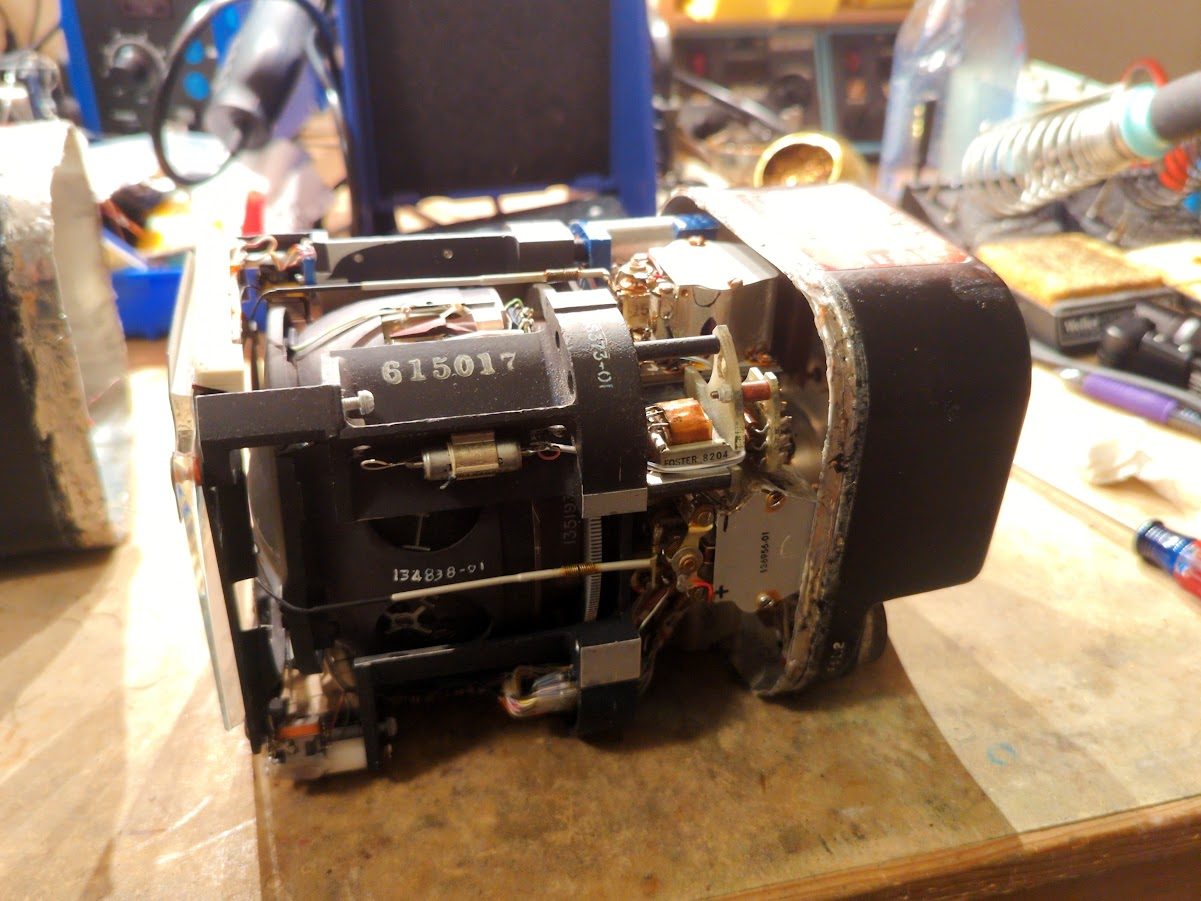
with the covers off, you can see just how complicated this thing is. basically it's a jumble of clockwork.
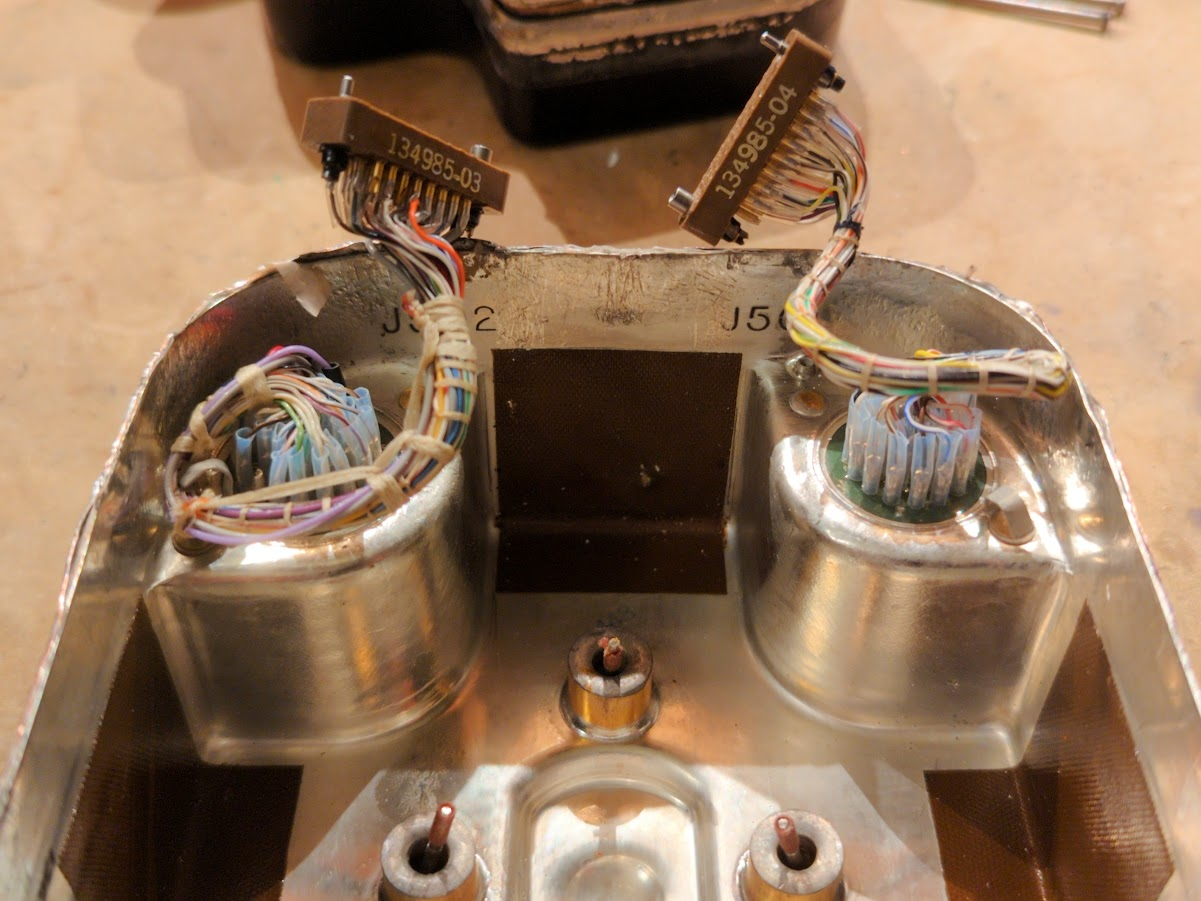
to remove the back cover of the unit, which has the two round military connectors, i have to unplug these two smaller connectors that attach it to the inner workings. all of this will need to be reverse engineered.
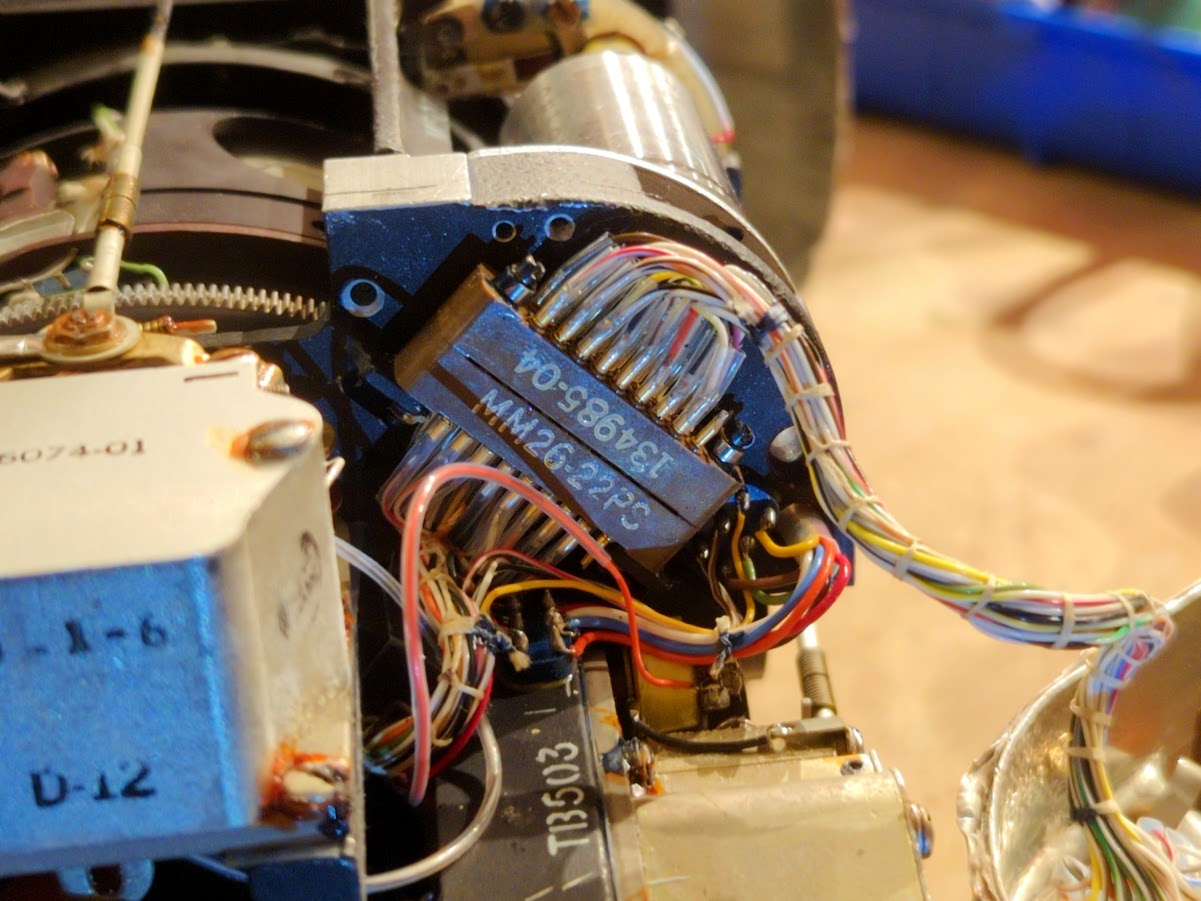
the rotating globe also has a bunch of electromechanical parts inside it, and to get to the rotating part, the roll axis has this crazy set of slip rings. these are very fragile, but so far they all look intact.
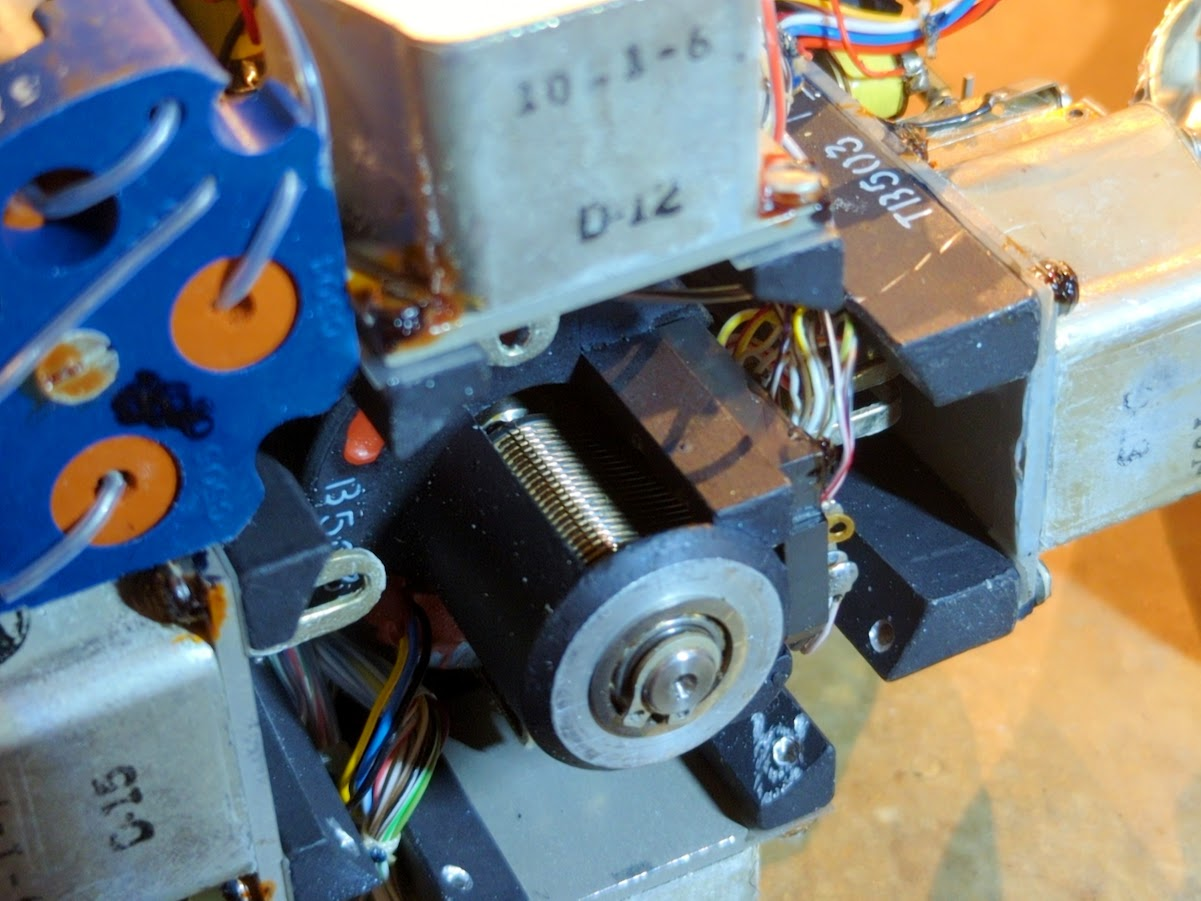
here is a typical indicator flag. it's run by a d'arsonval-style meter movement. the slightly worse for the wear coil spring not only acts as the return spring but carries the current for the electromagnet coil.
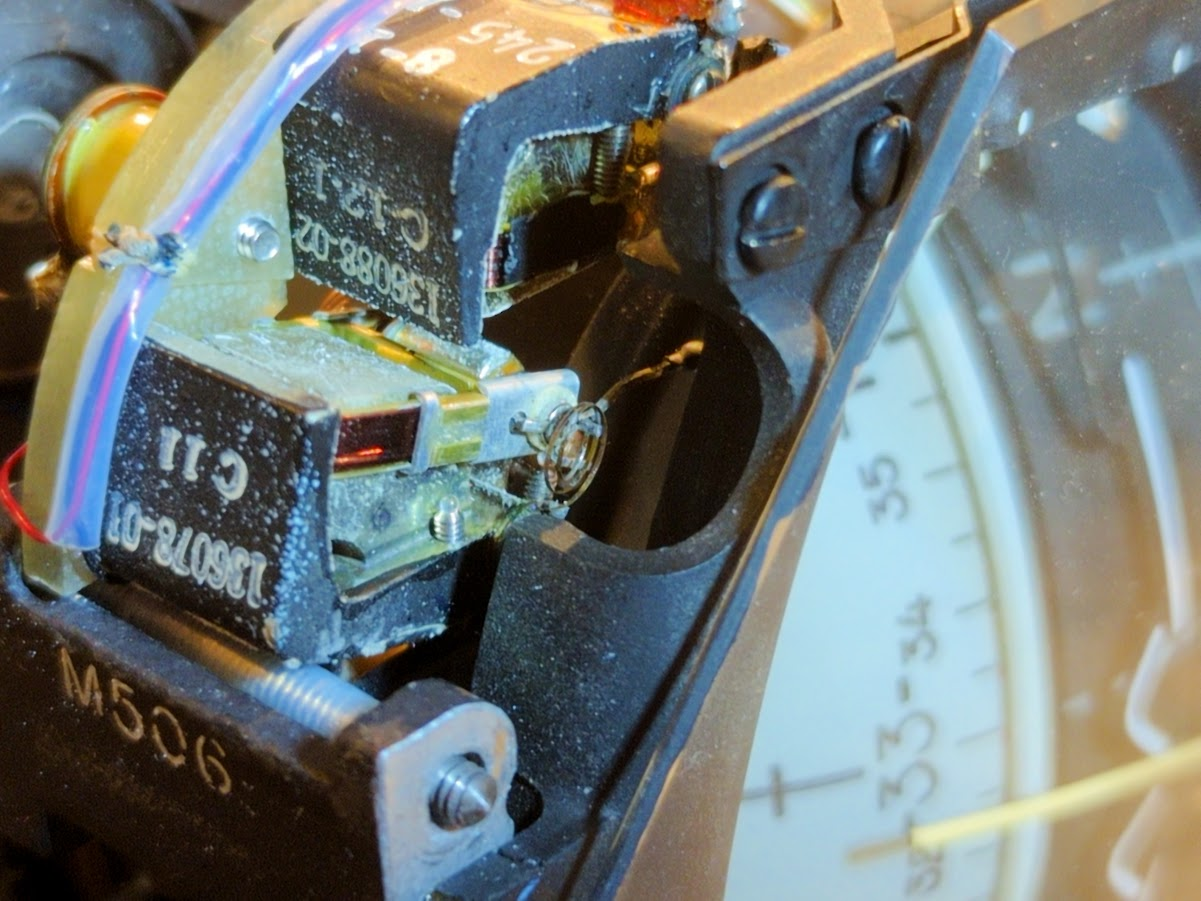
well this indicator needle was broken off at some point. i think it's the rate-of-turn indicator.

connectors. i need to reverse engineer the wiring and pinouts.
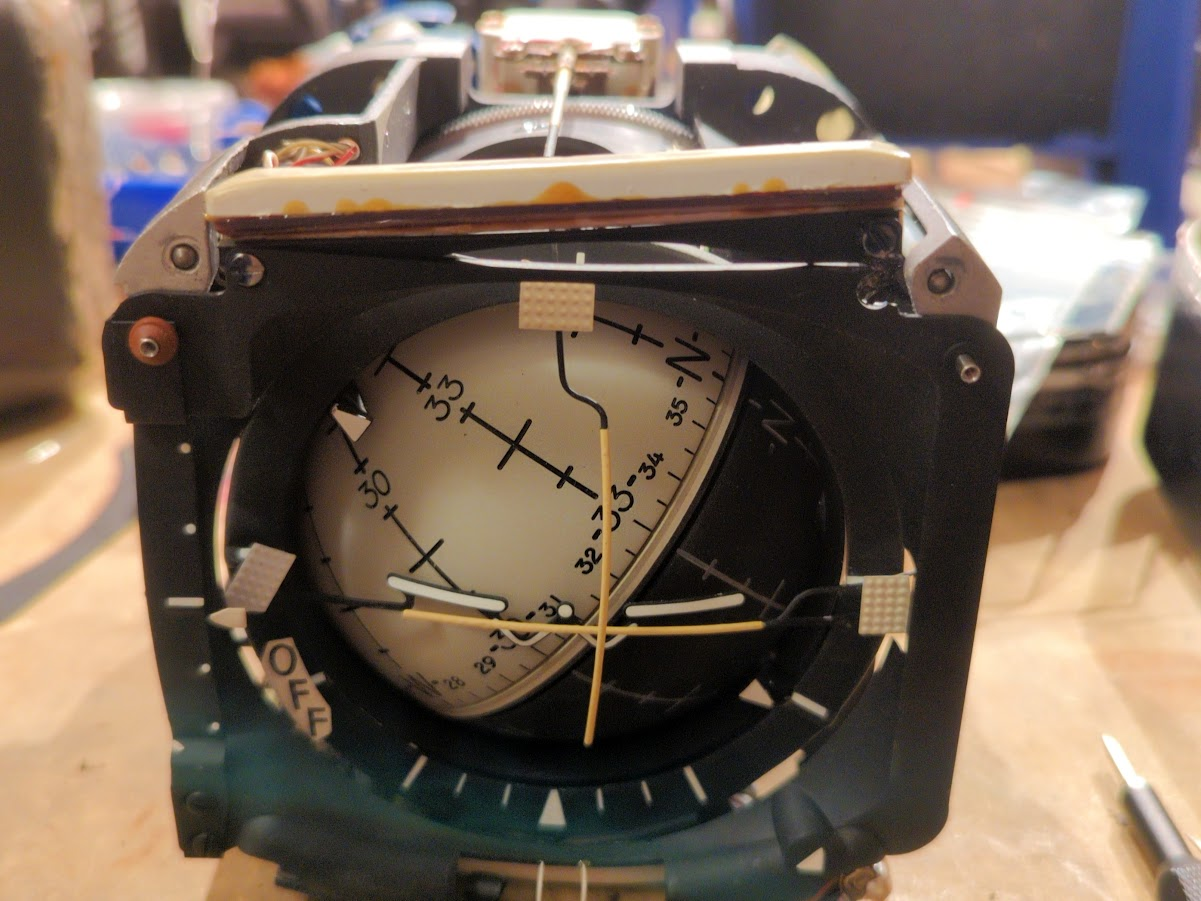
there are some cracked plastics on the front, like the mounting bracket for the illumination bar. i'll have to fix that.
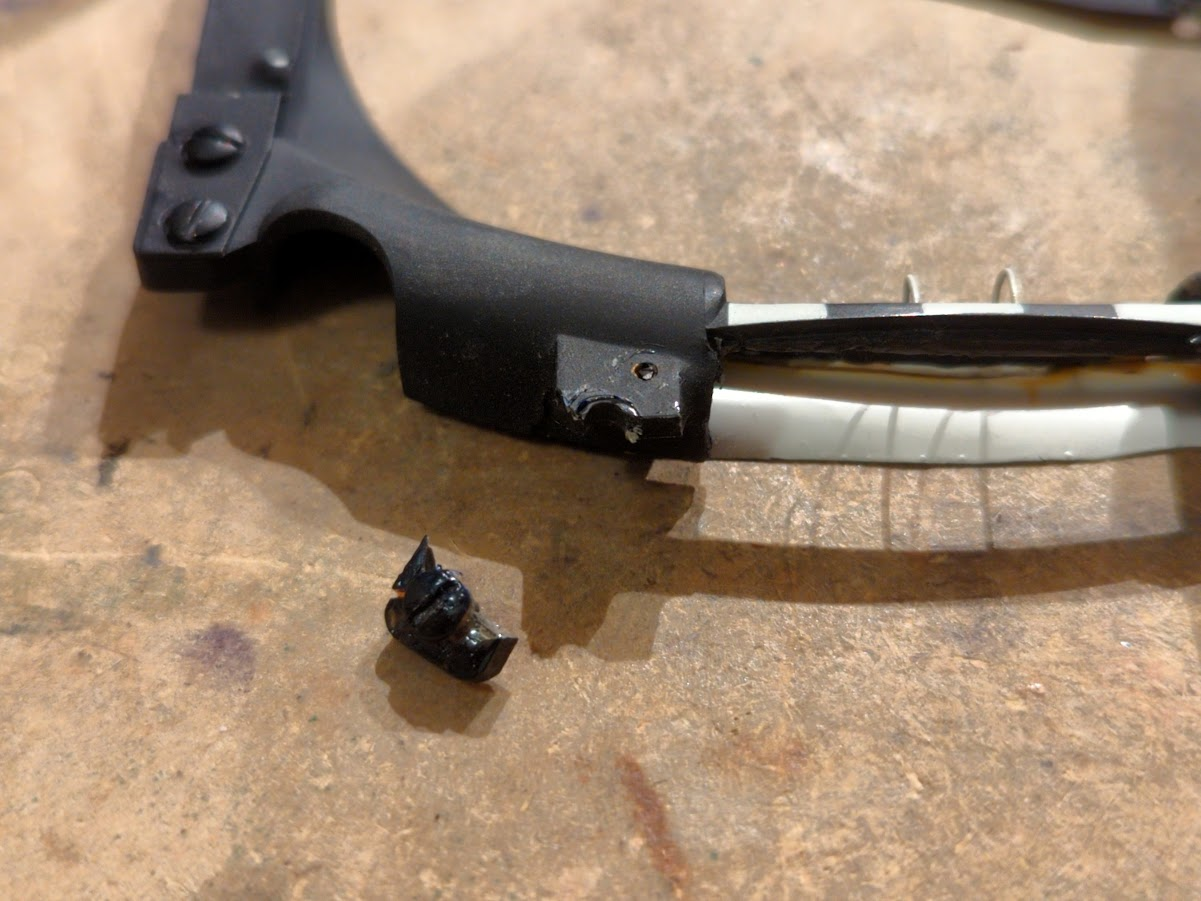
this is probably an ancient repair. whoever did it glued the screw to the bracket. ugh. does anyone have recommendations for glue that will hold up better?
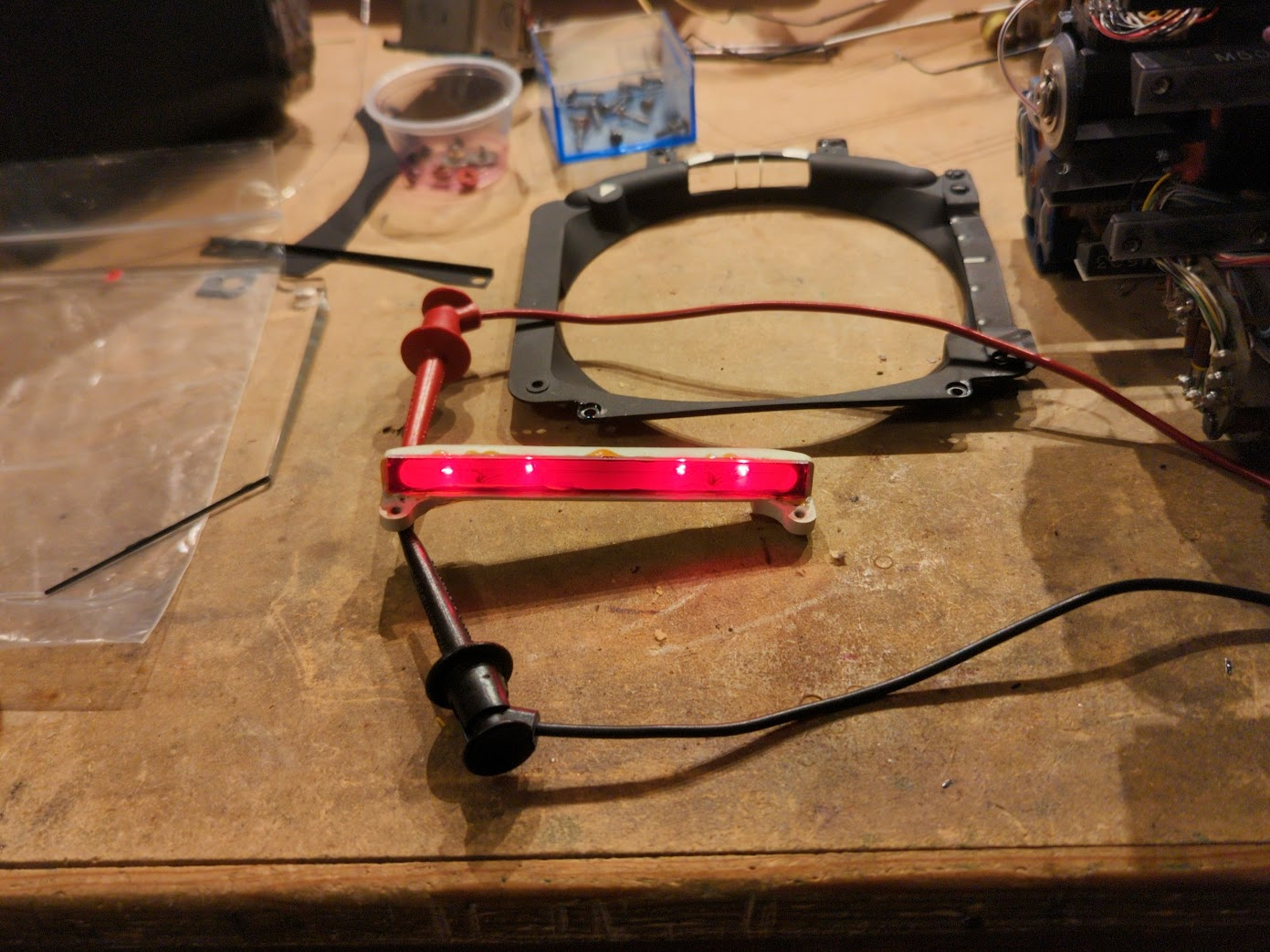
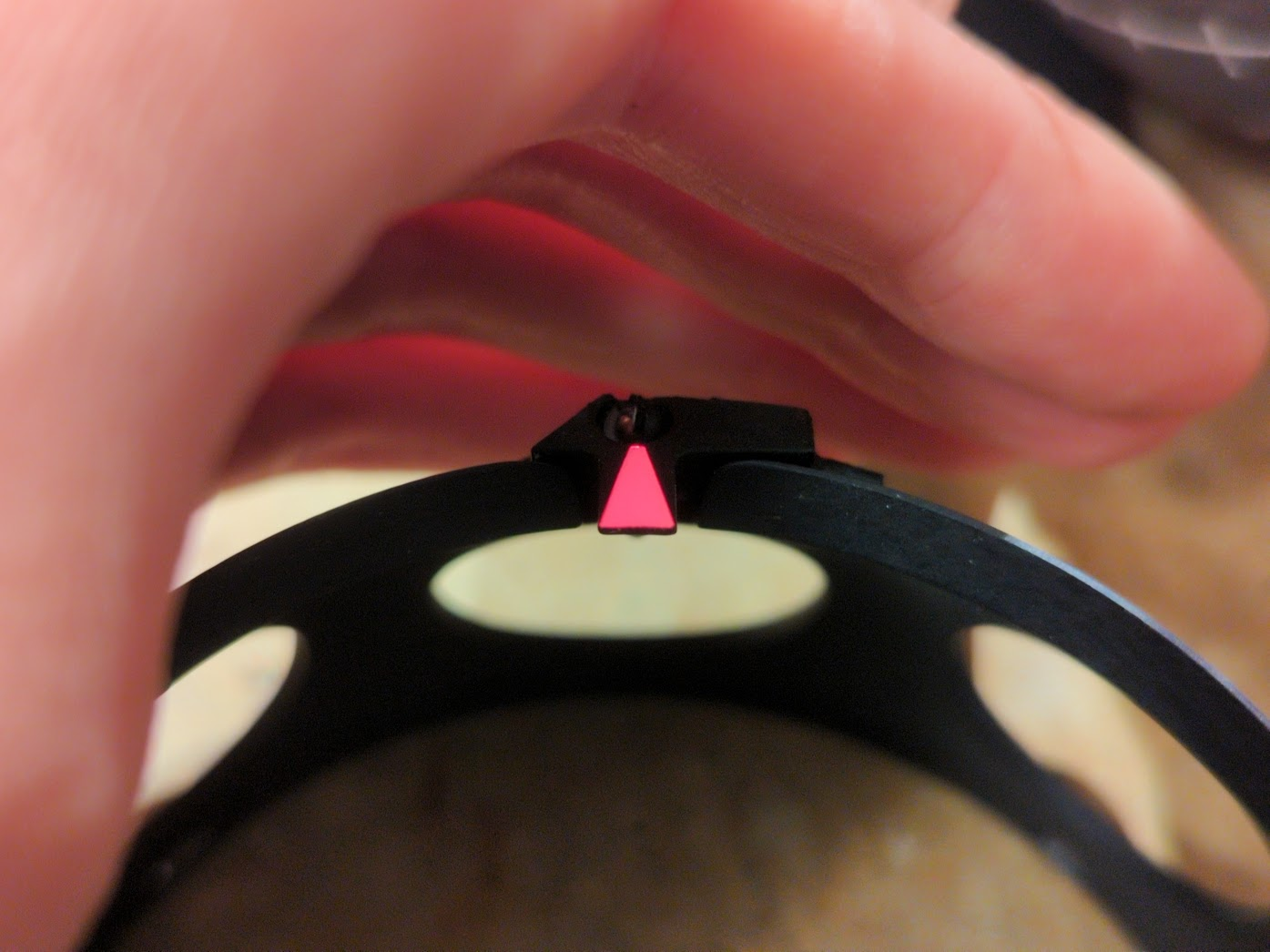
while that glues, take a look at the illumination bar. surprisingly enough -- it's red!
this thing is puzzling. it takes the place of the ball-in-tube inclinometer. it seems to be added after the fact. the thing is glued in place, has a resistor divider (100 ohm low side, 5.3K high side), and has been wired up to 2 spare pins on the connector with a different color of sleeving.
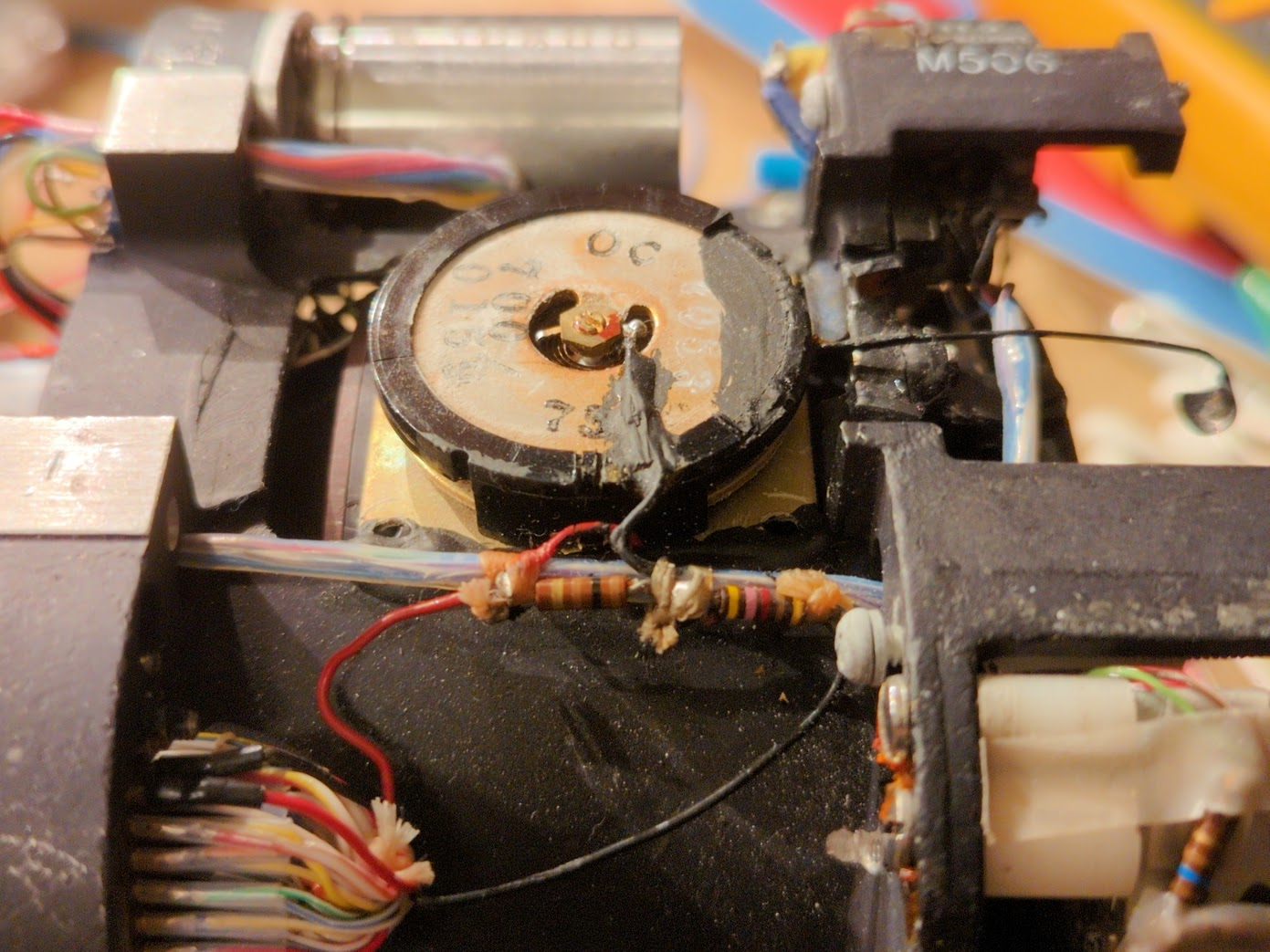
think i figured out why this was bodged in: it's replacing a ball-and-tube inclinometer because this may have been installed in a stationary setup, like a simulator, and they needed to emulate the motion of the ball.
a bit of bad news: there are a bunch of connections on the slip rings here that seem to be shorted together.
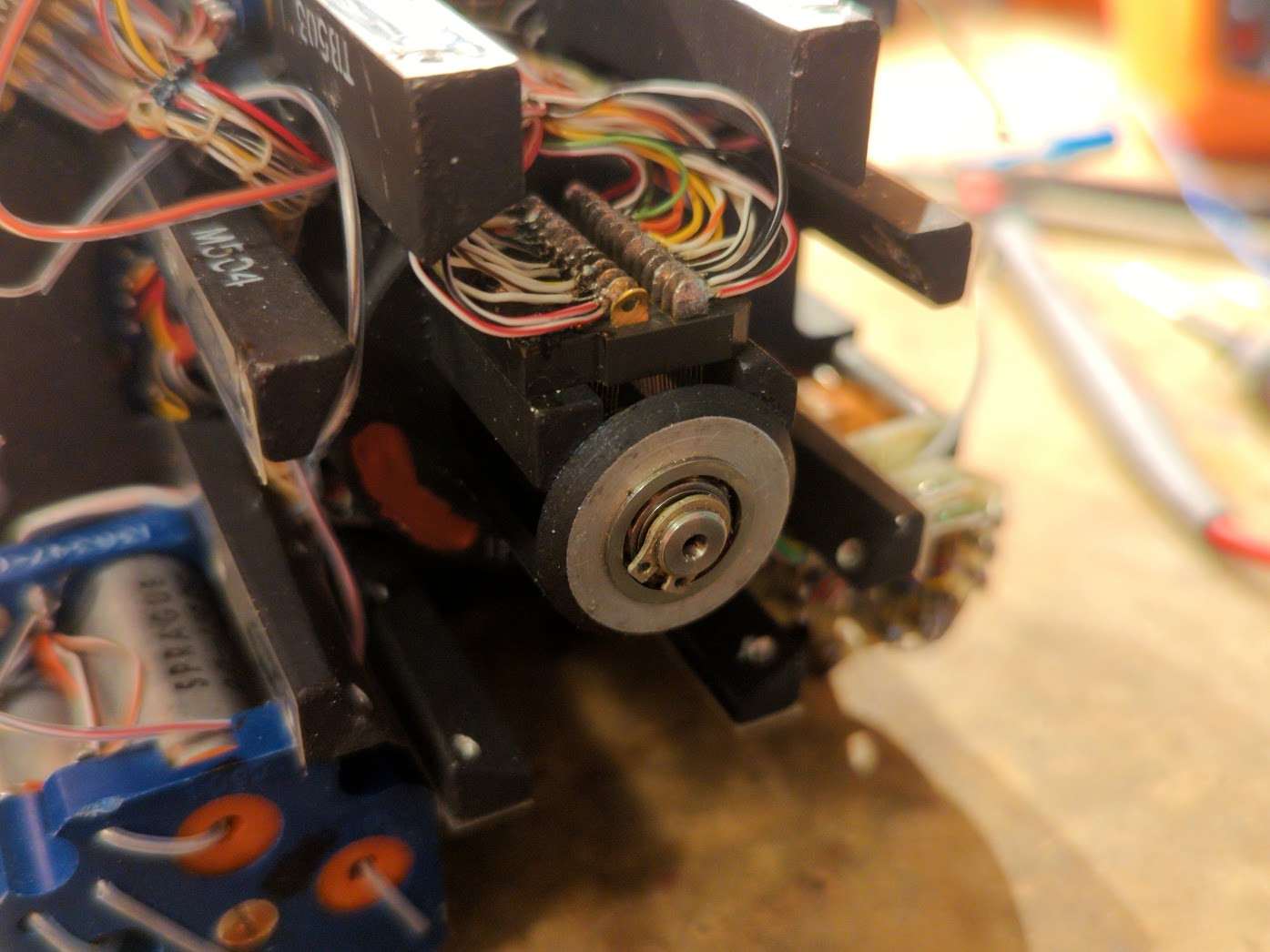
to disassemble the ball, i have to remove this surround. it's got green and white wires that go to some illumination bulbs, and those have to get desoldered.
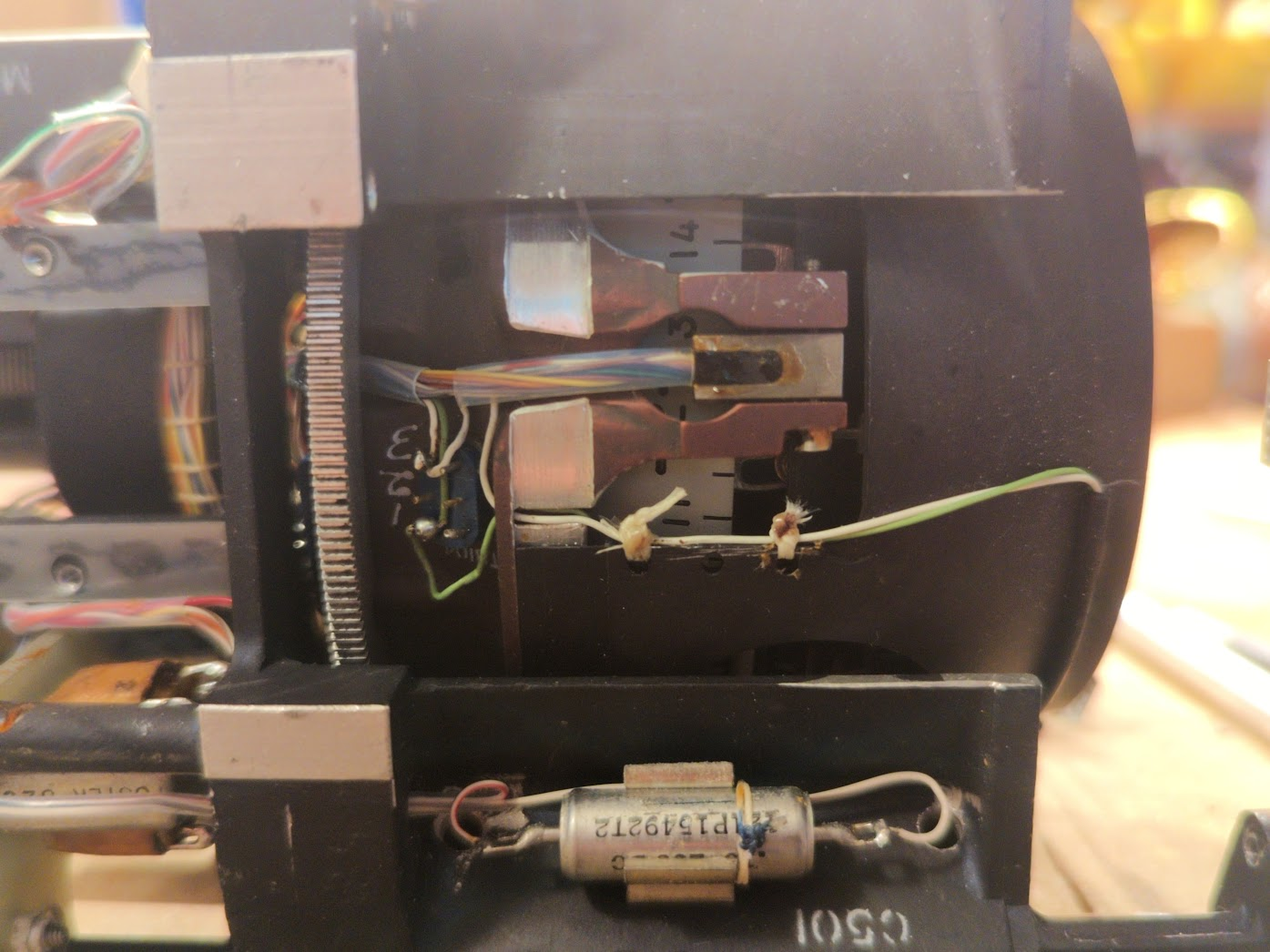
then i have to remove these four tiny bolts. they are SUPER fiddly.
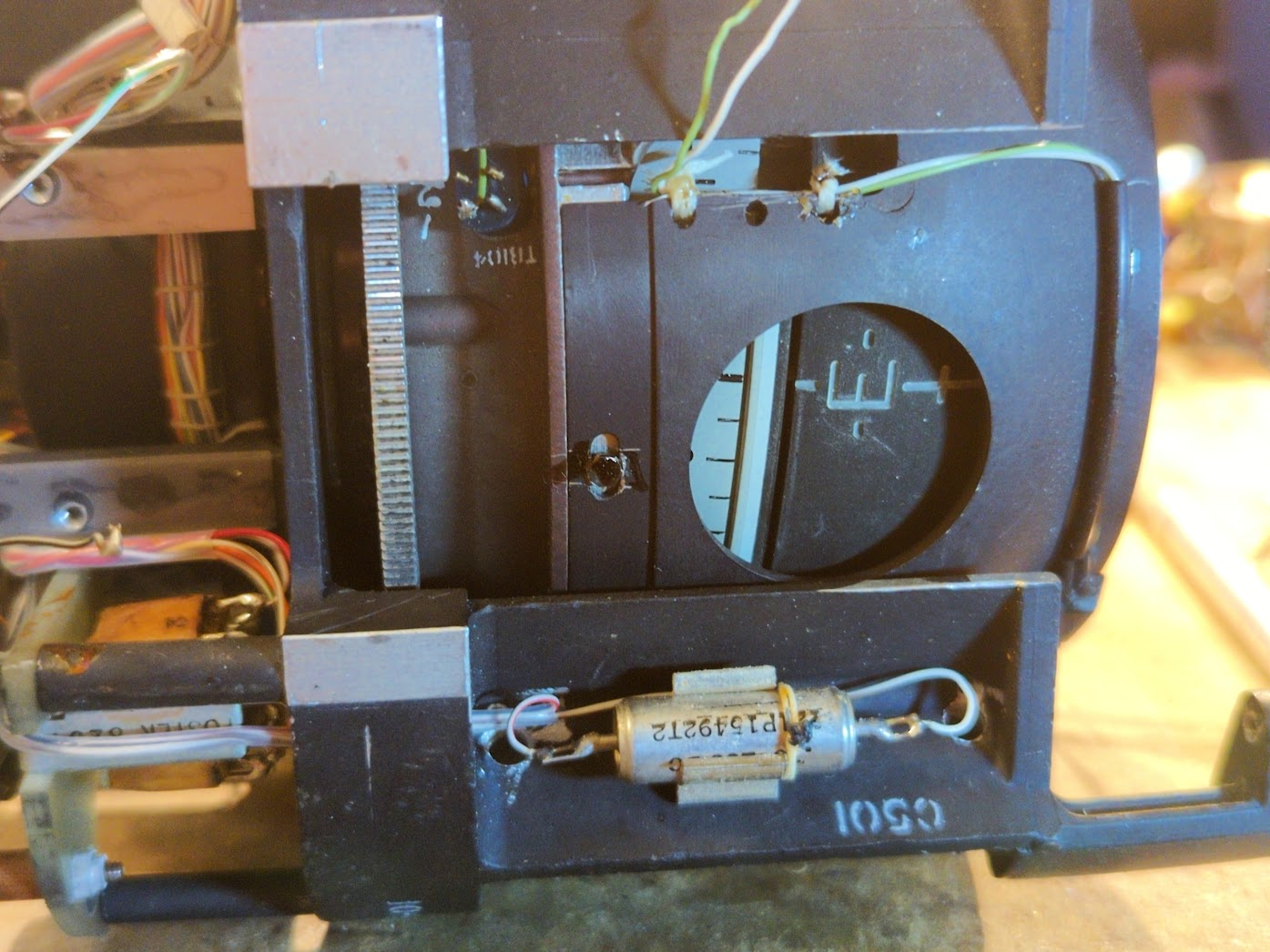
the surround came out! i had to be super careful of all those indicator flags, which are held back by blue tape.
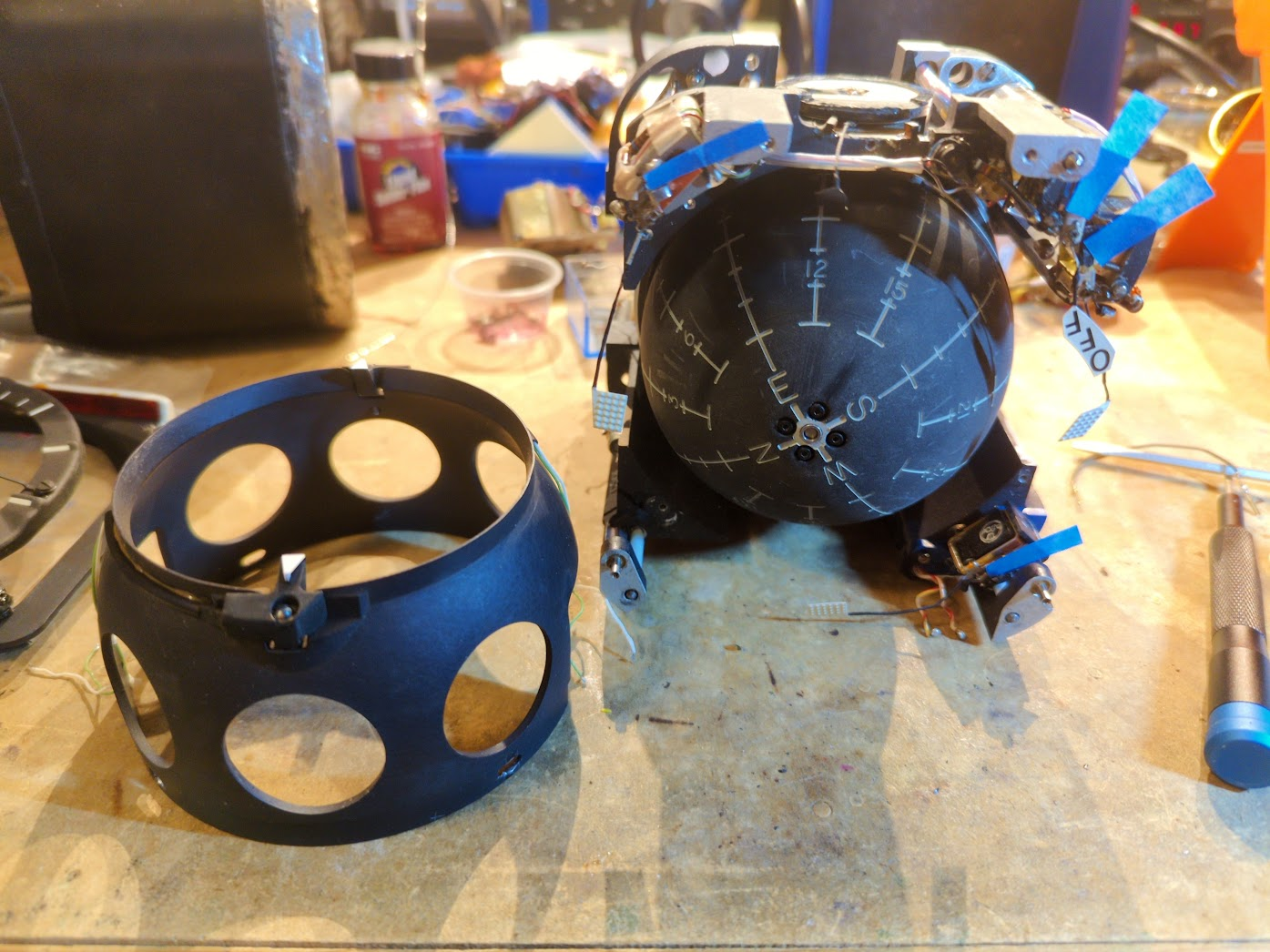
turns out those wires ran to small light bulbs inside the white pointer indicators. they light up red!
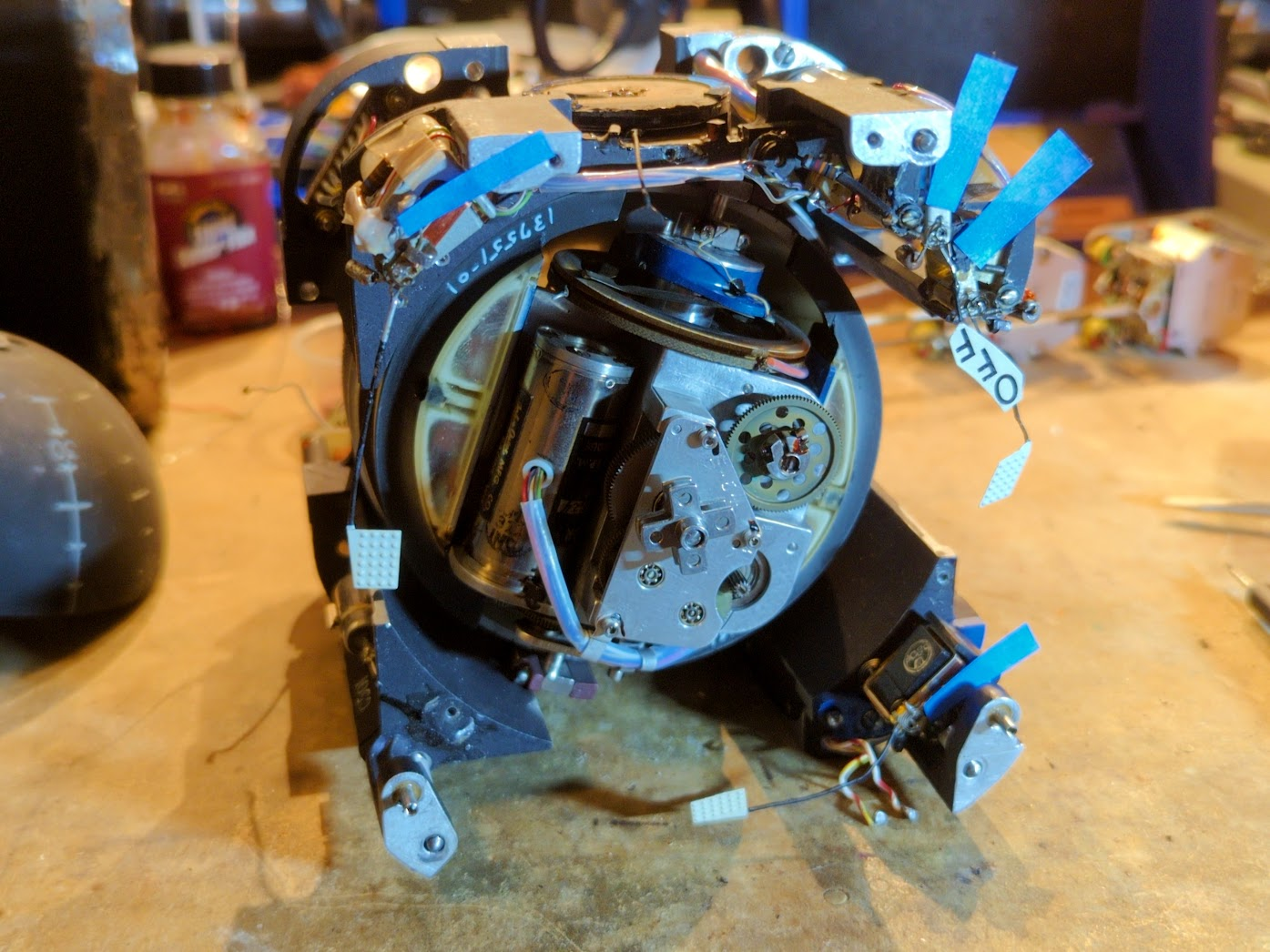
after removing 4 screws, i pulled the dark half of the globe, exposing the synchro motors and control transformers that drive the two axes geared inside the globe.
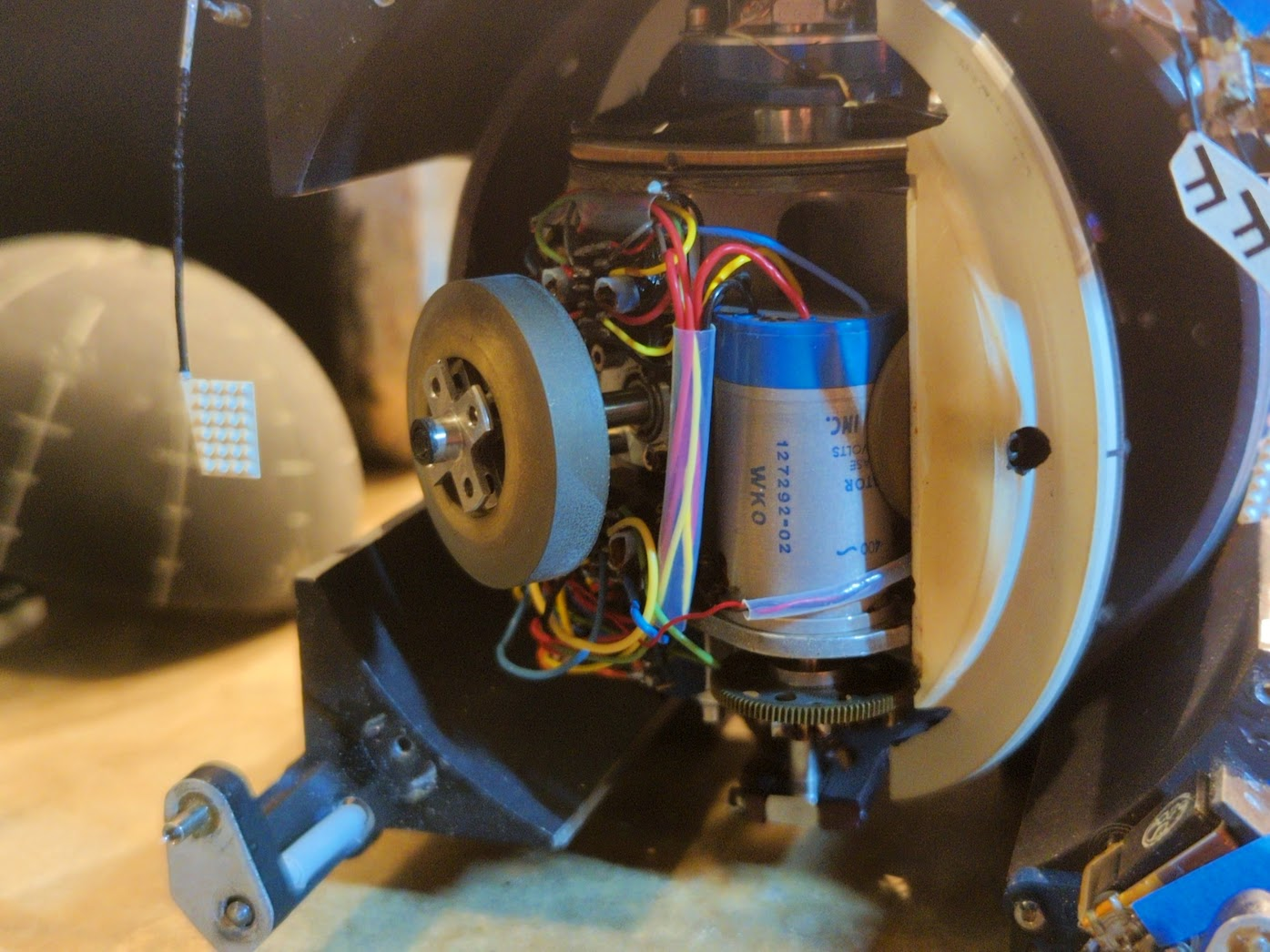
the other half (the light-colored hemisphere) hides most of the wiring, the inner slip rings, and more motors and control transformers. there are two sets of slip rings, each with 11 connections.
looks like there are 4 red-colored light bulbs hidden behind these plastic diffusers. presumably the entire globe lights up! i can't test it right now due to some sort of short circuit.
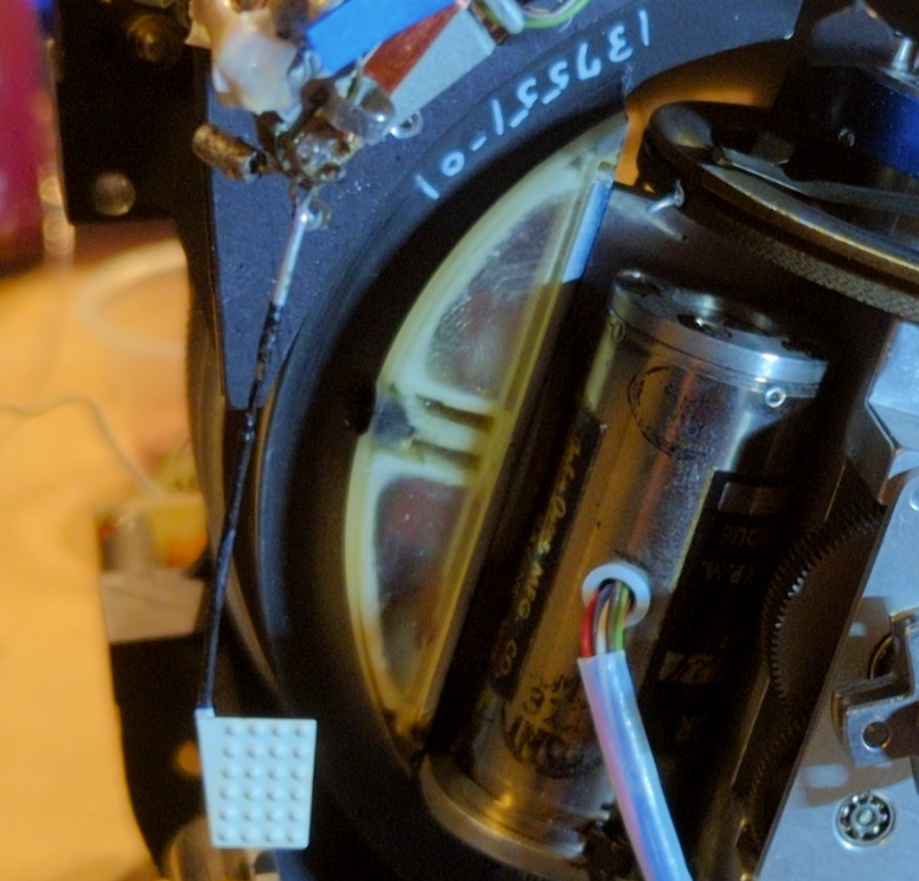
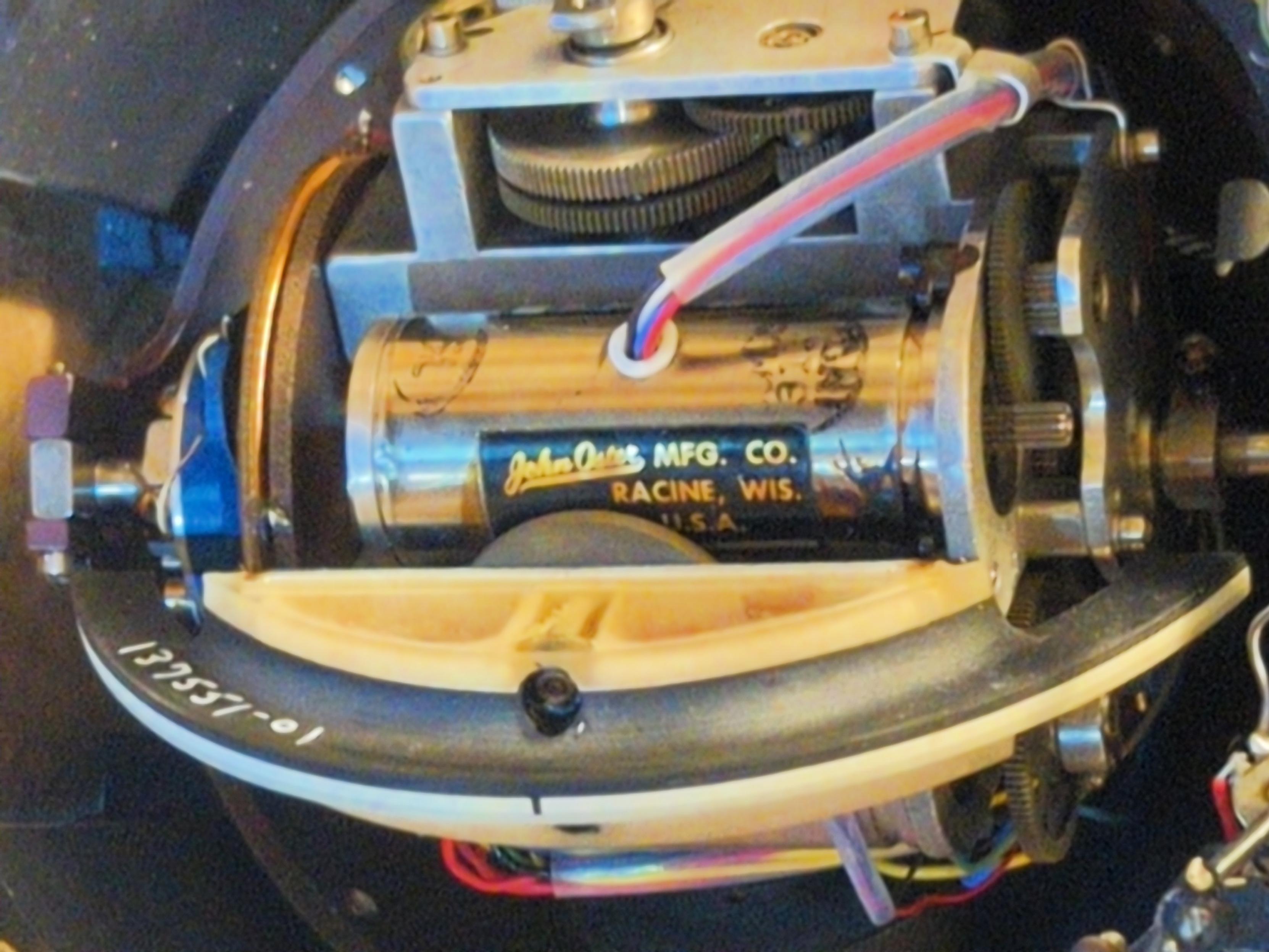
this servo motor was made by John Oster Mfg Co, in Racine, WI. the same Oster that made the famous blenders.
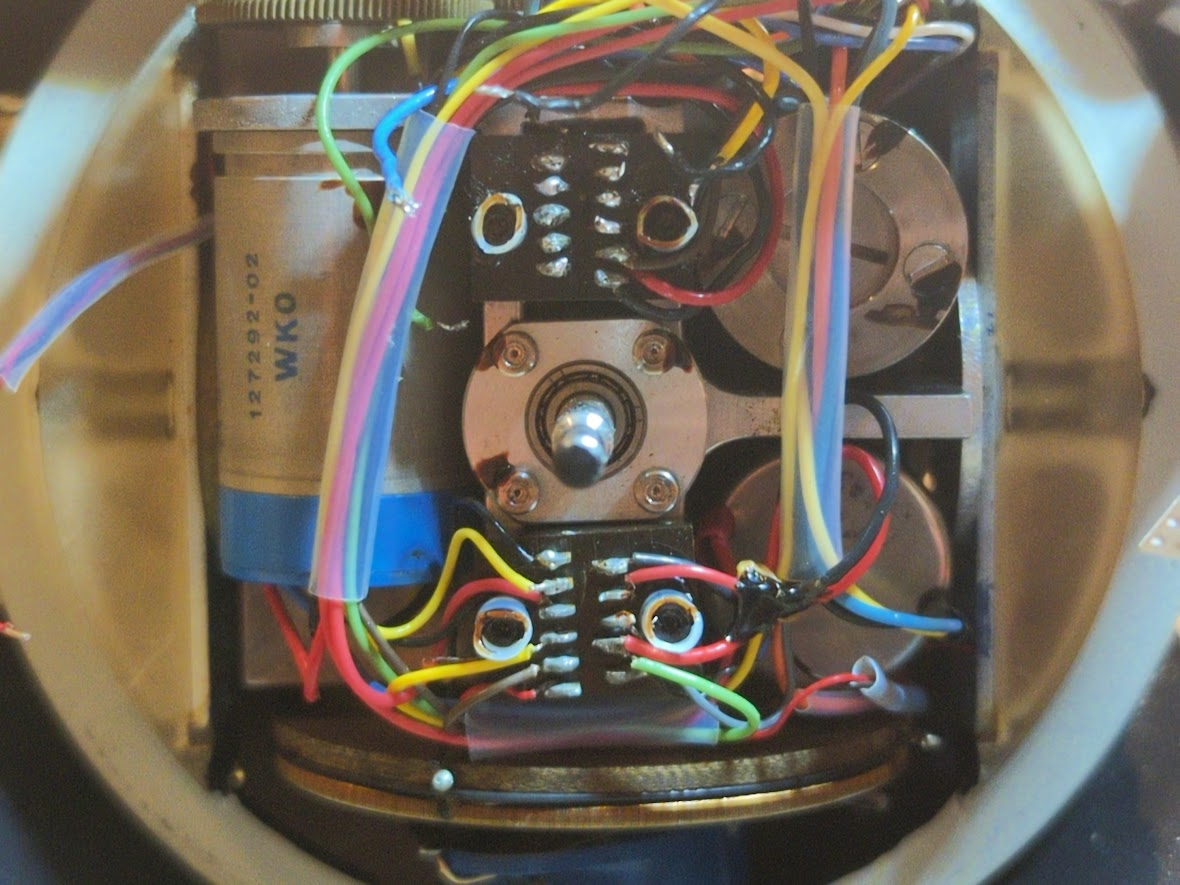
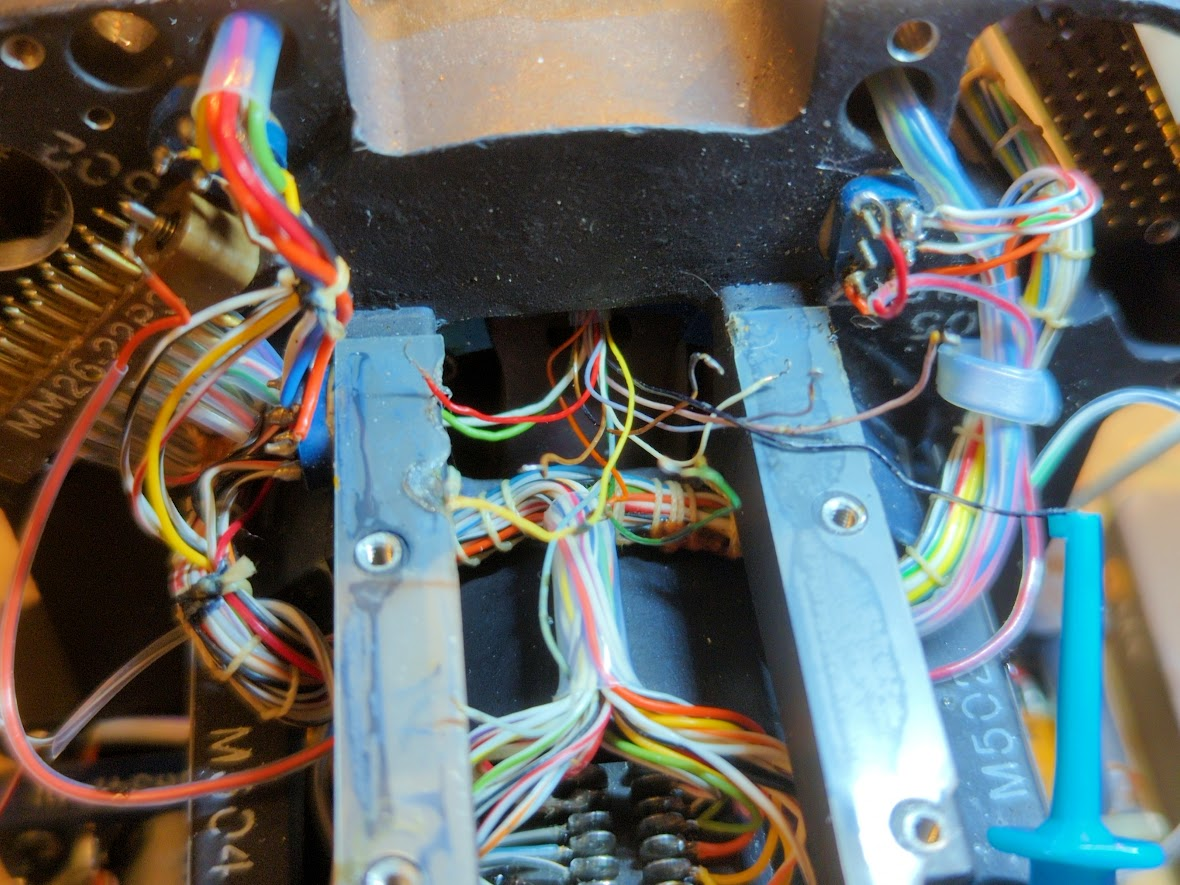
well, super bad news. i was expecting maybe one or two bad slip rings, but this *entire* set of 11 (upper set of contacts) slip rings are all shorted to each other!
 Sep 25, 2026, 4:22 AM
@tubetime If it's plastic like the other parts, I can say that PC-11 has been very good to me. It's also machinable and you can literally make new parts out of it, or (as I've done multiple times) extend an existing part that's had a piece broken off, and re-created it in the PC-11.
 Sep 25, 2026, 4:42 AM
@tubetime for a mount point like that? Urm... I'd say just epoxy putty a new one and Dremel to shape.

@tubetime
In Japan we can get special plastic repair kits consisting of a powder and a liquid...mix together and they bond most plastics together and seem to be high strength. I use this to repair broken plastics on linear turn tables.

@tubetime The usual stuff would be epoxy or the baking soda/superglue combo. Never heard of PC-11, but it seems to be epoxy. If it's acceptable to fill the hollow part in the bracket and the broken piece, you could fill everything and maybe even tap some new threads for the screw (if I see that correctly, it's a bit unclear due to the glue mess)... EDIT: I never tried it, but graphite and baking soda seems to be a better version of the superglue compound. Better color, too.

@tubetime That's the first time I'd noticed the ball markings were embossed/engraved. I bet the setup for doing that was fun.
 Sep 27, 2026, 2:01 AM
@tubetime As i remember from my time in the army, red light is used for better night vision.


@tubetime what I've done in the past with small repairs is put two small .5mm aligned holes on either side and glued in a thin metal brace to hold the two parts together

@tubetime Is it full of radium paint? That's the first thing I check on old avionics.
@chrisgj198 no, i had checked it with a geiger counter and it's clean

@tubetime does this thing have radioactive paint?
@1000millimeter no activity from a Geiger counter

@tubetime Looks like @kenshirriff has looked at one of these too (https://www.righto.com/2024/09/f4-attitude-indicator.html), thought it looked familiar - so at least some of the reverse-engineering has already been done

@kenshirriff @tubetime Oops, sorry, didn't connect the name in the credits (legal name is apparently not Mr. Tube Time)
@tubetime this was clearly developed well before that RC model BB8 thing ...