Login
You're viewing the functional.cafe public feed.
  • Jun 28, 2026, 6:28 AM

    This was built from a basic octahedral set (grey) with two spheres added on its left hand side.

    To get interlocking limbs that don't join to a sponge we need to substitute each coloured sphere with the set minus its opposing sphere. So the green child limit-set lacks the blue sphere and the blue child limit-set lacks the green sphere, as seen here.
    Because we spin up parallel threads, the green and blue spheres have no angle constraint between them; they could vary smoothly.
    (2/3)
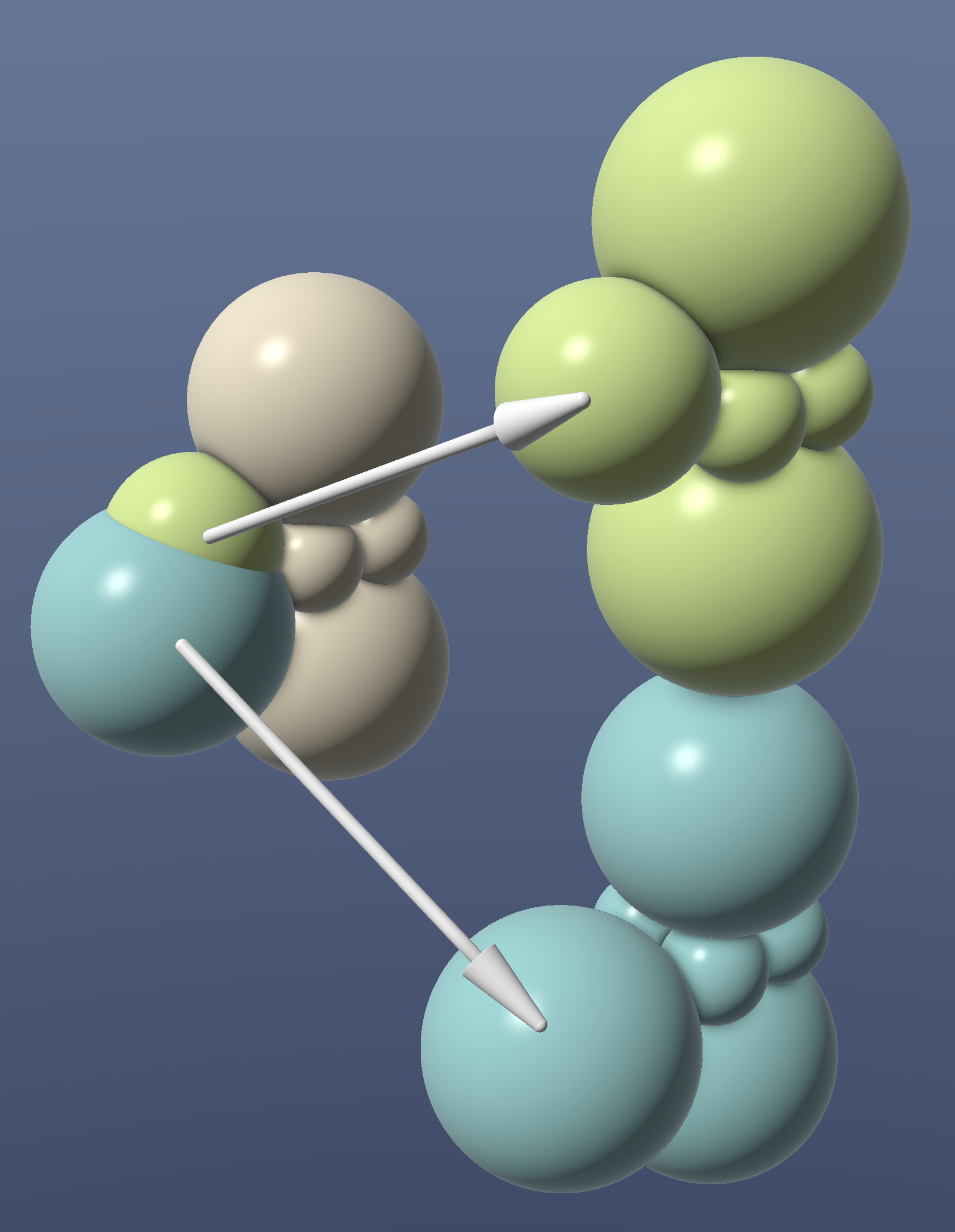
    Diagram of generating spheres for substitution set. Left side shows the grey octahedral arrangement of spheres and the green and blue spheres on its left. The right shows the sets that the green and blue spheres substitute to. Each lacking the other colour sphere, but otherwise the same limit set.
    💬 1🔄 0⭐ 0

Replies

  • Jun 28, 2026, 6:41 AM

    The above example was a tree-cluster-tree. A cluster-tree is like the Mandelbrot set, lots of dense balls that kiss in a tree structure (acyclic connectivity). A tree-cluster-tree is the same but the dense balls are trees.
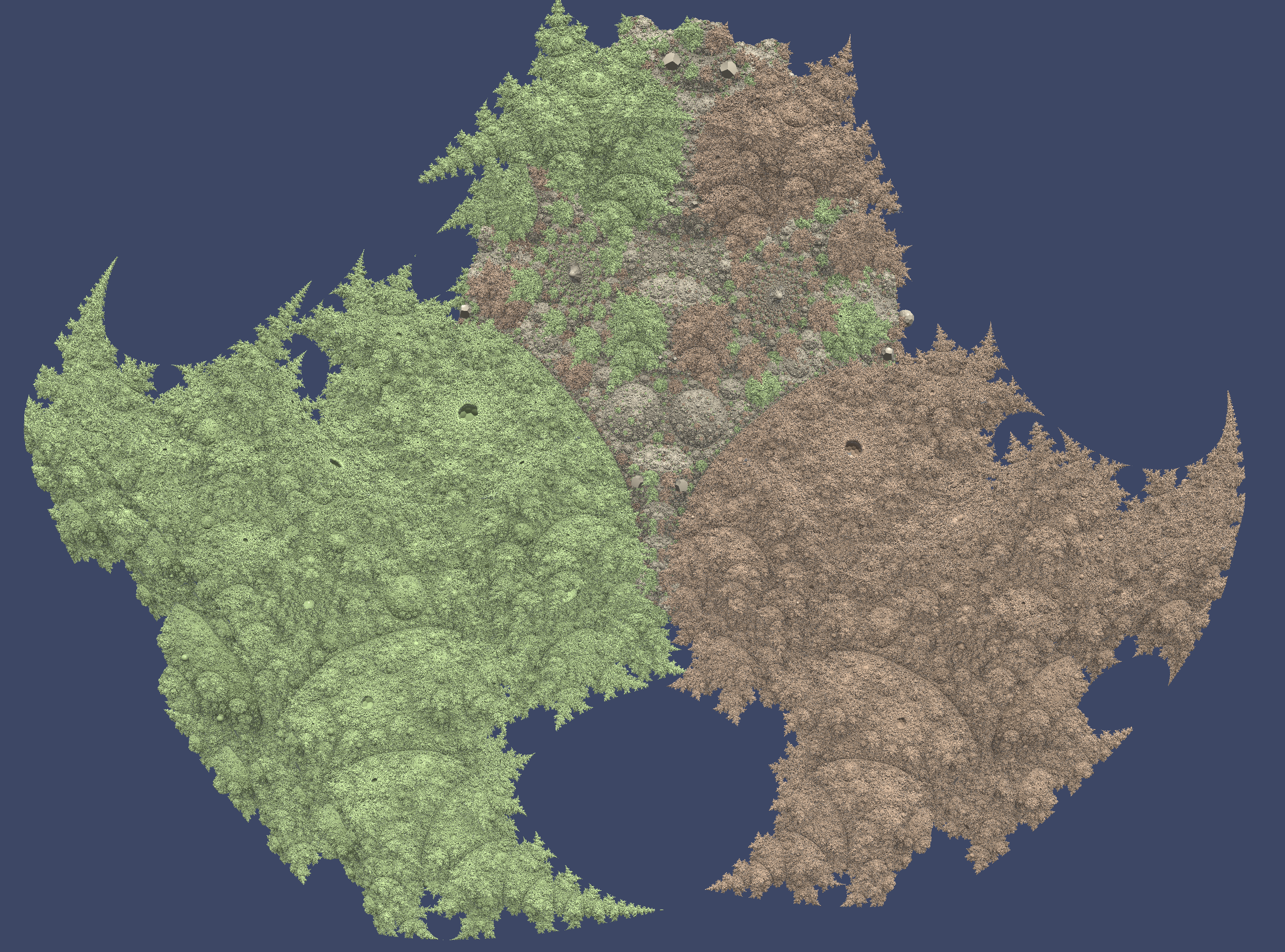
    Anyway, here's a similar example but with just a tree structure. The limbs are non-aligned, and there's a bit of overlapping of each set's space.
    I suspect that this method could allow limit-sets with longer limbs than you usually get, heading towards geometry a bit more like real-world trees.

    Blog: tglad.blogspot.com/2026/06/sub
    (3/3)

    tree-like limit set, with orange and green limbs that show a little overlap. of each other's space.
    💬 0🔄 1⭐ 3