
Ray Lee4raylee@mathstodon.xyz
Oct 16, 2026, 3:09 PMRE: https://scicomm.xyz/@cosmos4u/117447663210736527
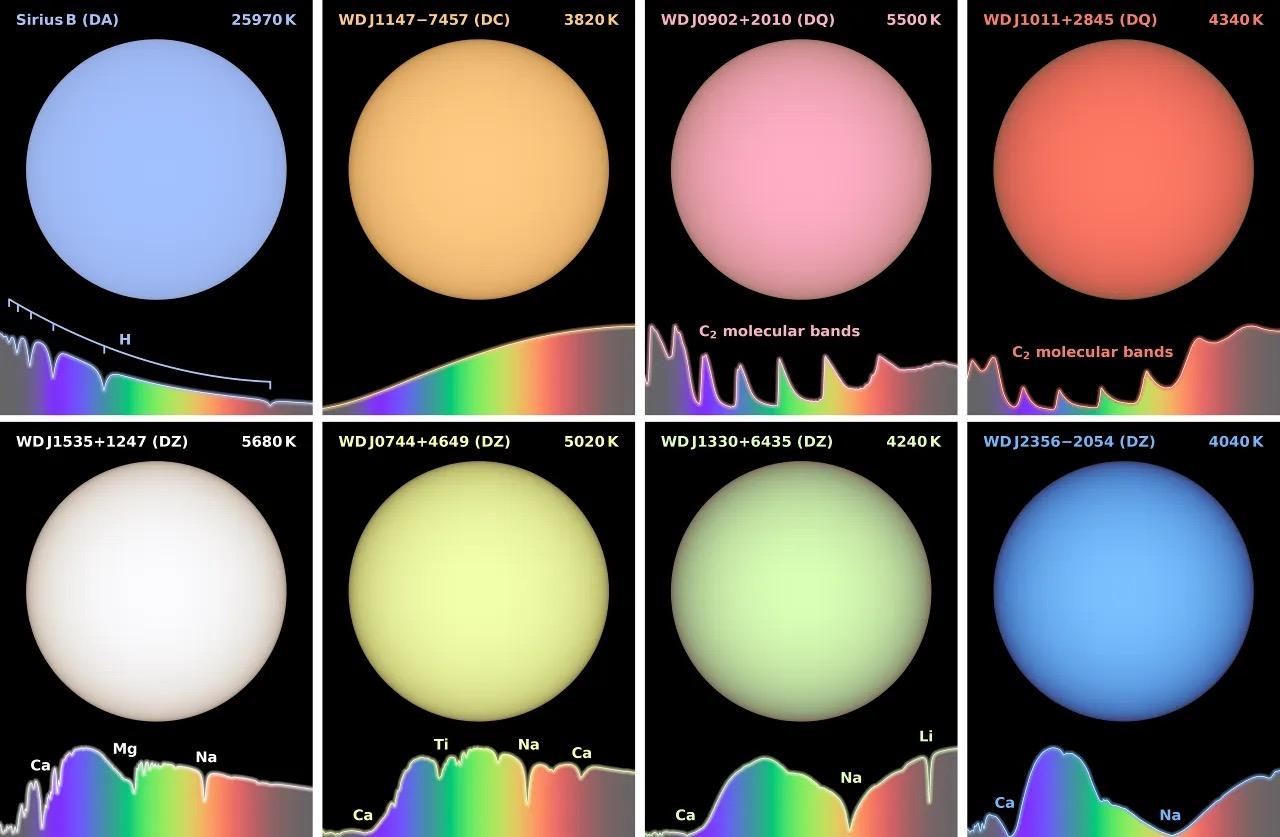
Most white dwarf stars are indeed white. But about 1 in 30 have cool enough atmospheres to let elements adjust their shine.
RE: https://scicomm.xyz/@cosmos4u/117447663210736527
Most white dwarf stars are indeed white. But about 1 in 30 have cool enough atmospheres to let elements adjust their shine.

@4raylee - "A planet orbiting a green dwarf" sounds like bad science fiction, but they may exist!

@4raylee It looks like I need to retire my "there are no green star" visualization 😉
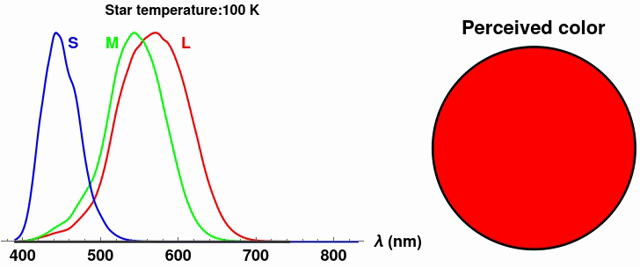
@j_bertolotti That’s a neat graphic! Might be fun to keep it and give a puzzle to the students as to how we see green stars 🤩

@4raylee @johncarlosbaez
@cosmos4u
So much for “no such thing as a green star” 😄
Or am I still okay because technically these are stellar *remnants*?
@MichaelPorter @4raylee @cosmos4u
Interesting question! One common definition says a star is a self-gravitating ball of plasma in hydrostatic equilibrium where thermal/radiation pressure from fusion holds the matter up against gravity. On that score a white dwarf fails to be star. But the IAU has no official definition of "star", unlike "planet", and in practice astronomers constantly write "white dwarf star," classify white dwarfs with spectral types (DA, DB, etc.), and place them on the Hertzsprung-Russell diagram like other stars.