Login
You're viewing the techdon.dev public feed.
  • Aug 22, 2026, 6:02 PM

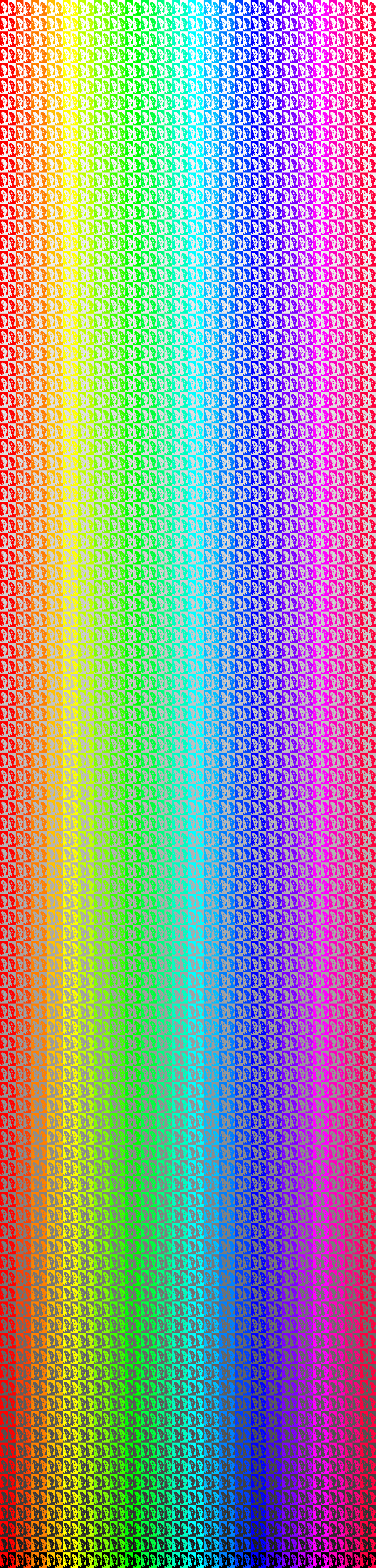
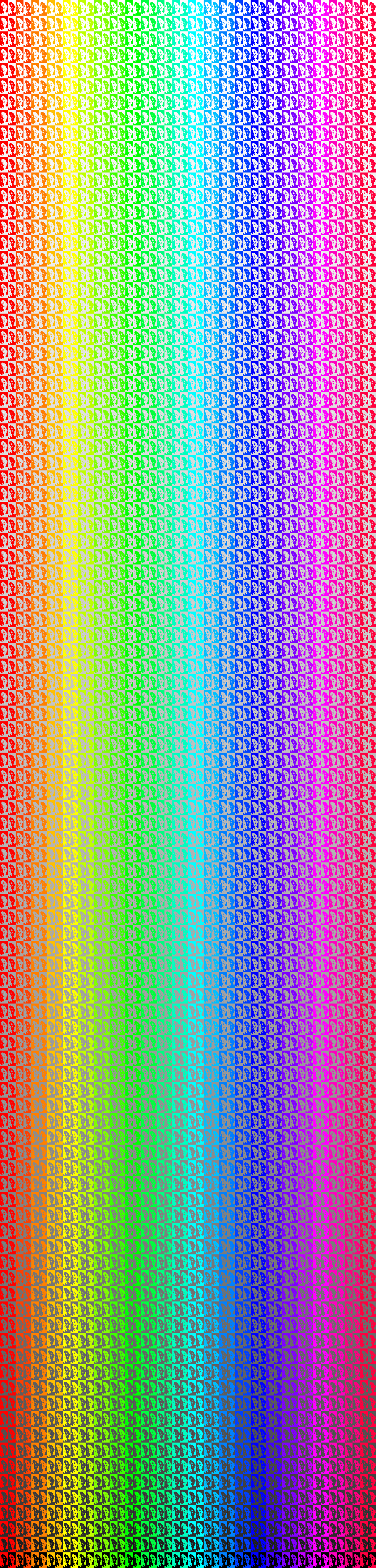
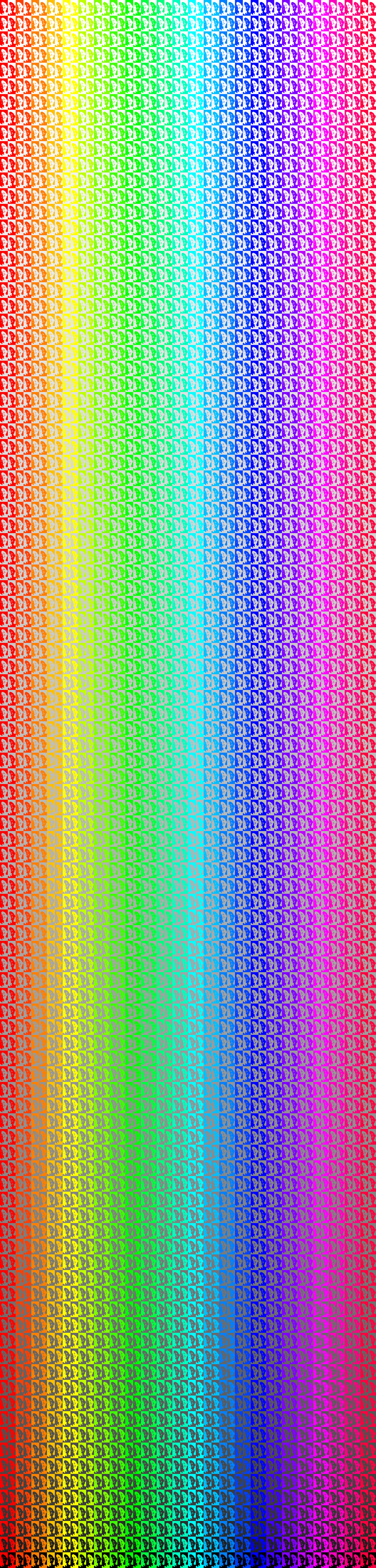
    A very useful way to really get a handle on this null is to zoom in on the picture. I've used Reinhard's Face pattern here for a reason!

    The reason is that as you stay within a single column, scan downward until the "shadow" side of a face appears to be "in shade". That's the left side of each picture. In the right, treat it as though the coloured side is "lighting" the "face".

    At some point as you traverse the vertical rows, you'll realize that this emergent cognition *changes*.
    💬 1🔄 0⭐ 0

Replies

  • Aug 22, 2026, 6:14 PM

    The TL;DR here is that *luminance* is something that ought to be more fundamentally intuitive to folks, but sadly it is not. As a concept, luminance is often treated as some weird metric that folks need to rely on Stockman and Sharpe to tell them what it is.

    Nothing could be further from the truth; luminance can be *experienced* in day to day ecological cognition, if one knows how to test it.

    Hopefully the Reinhard Face pattern helps folks really get a visceral sense of luminance!

    💬 1🔄 0⭐ 0
  • Aug 22, 2026, 6:25 PM

    If we have a grasp on luminance, we can take a leap forward, always remembering that luminance is a *signal* in our visual system. In the Reinhard Face demonstration, I would suggest that there is a *continuity* across the nulls.

    Our visual cognition system has local firing that mandates a higher order "connecting" of bits together. In the Reinhard Face demonstration, I'd forward that the "nulls", or perhaps the constellations of "less than" or "greater than" are blobbed together...

    Image attached toot
    💬 1🔄 0⭐ 0
  • Aug 22, 2026, 6:27 PM

    If we can spot this "clumping" that emerges, we might ask if there are other things to pay attention to.

    The answer is of course **yes**.

    For this, I want to introduce you to the way I prefer to think about luminance by way of a simple analogy, and then we will link it to some glaringly obvious connections that folks appear to never make.

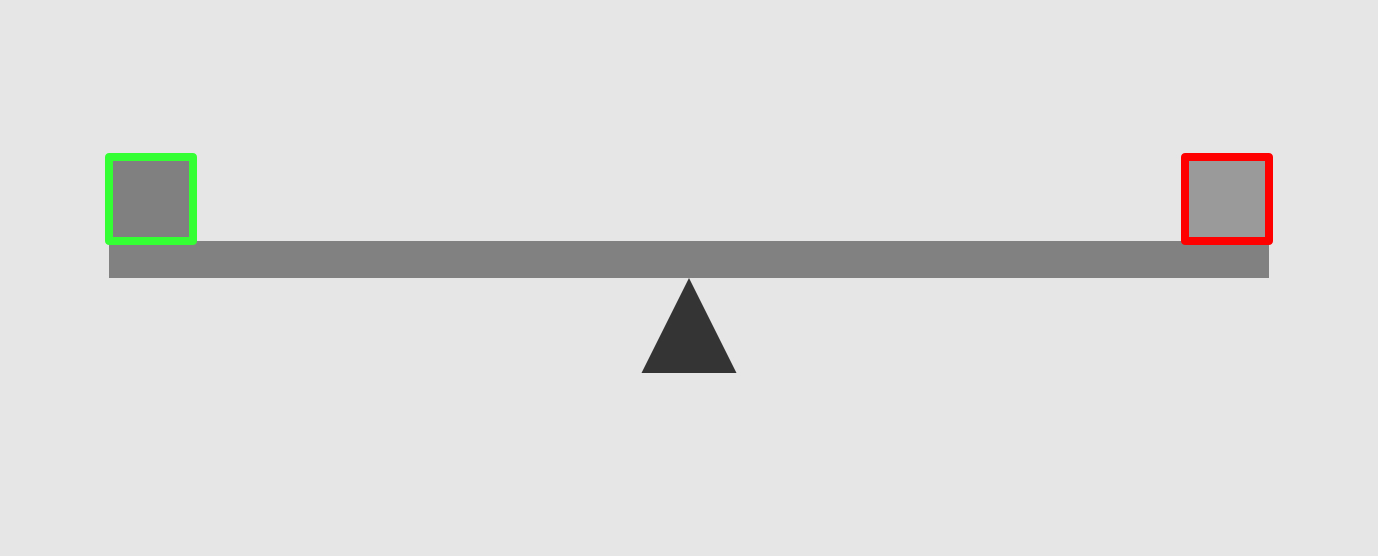
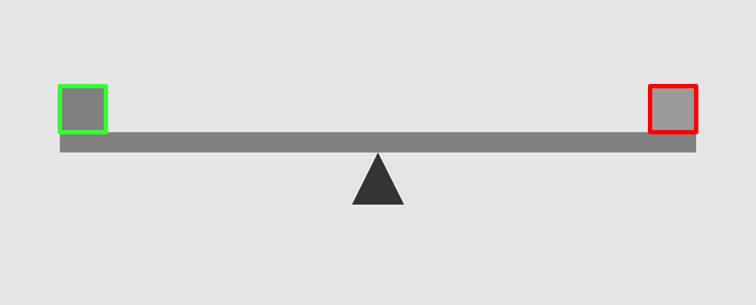
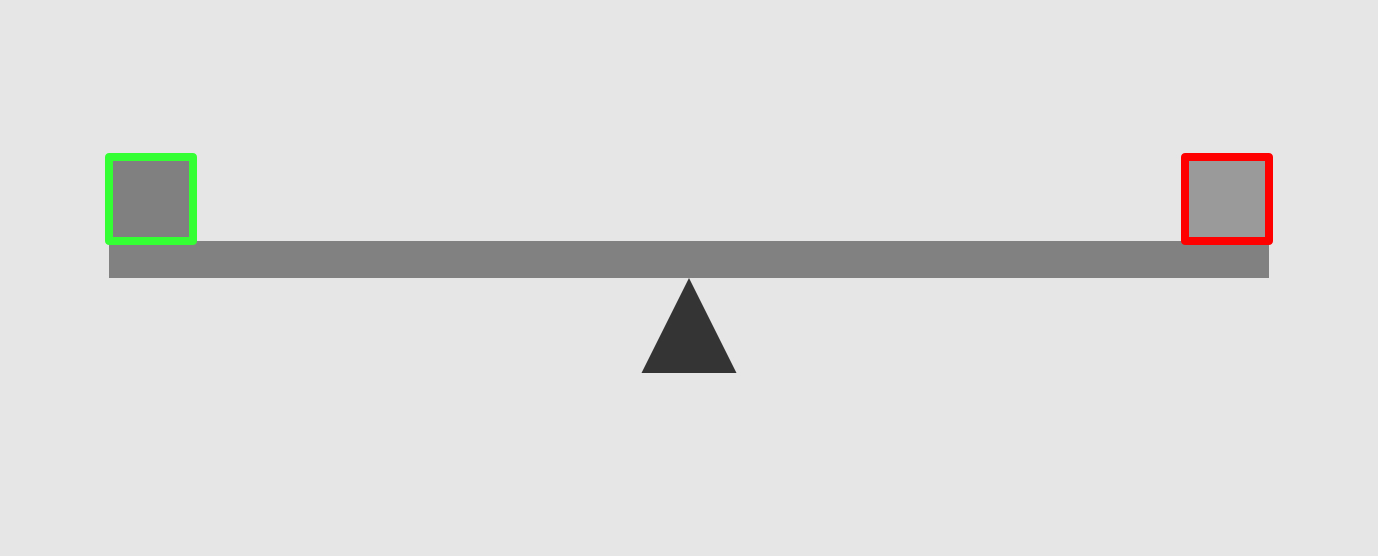
    The analogy is one of "mass". That's right... a teeter totter! And we will keep this gently adjacent to colour cognition using stimuli outlines on our mass.

    Image attached toot
    💬 1🔄 0⭐ 0
  • Aug 22, 2026, 6:29 PM

    Here, if we assume that our two boxes are identical in terms of densities, we know that our "mass" will be equal, and the teeter totter will achieve a stasis of balance.

    To draw our analogy to understanding how the experience of luminance relates, we are going to focus on two emissions. One stimuli is "red" in some context, and the other is "green". In truth, we are speaking of rigid colourimetric angles that are bound to spectra, but let's call them "red" and "green" for now.

    Image attached toot
    💬 1🔄 0⭐ 0
  • Aug 22, 2026, 6:32 PM

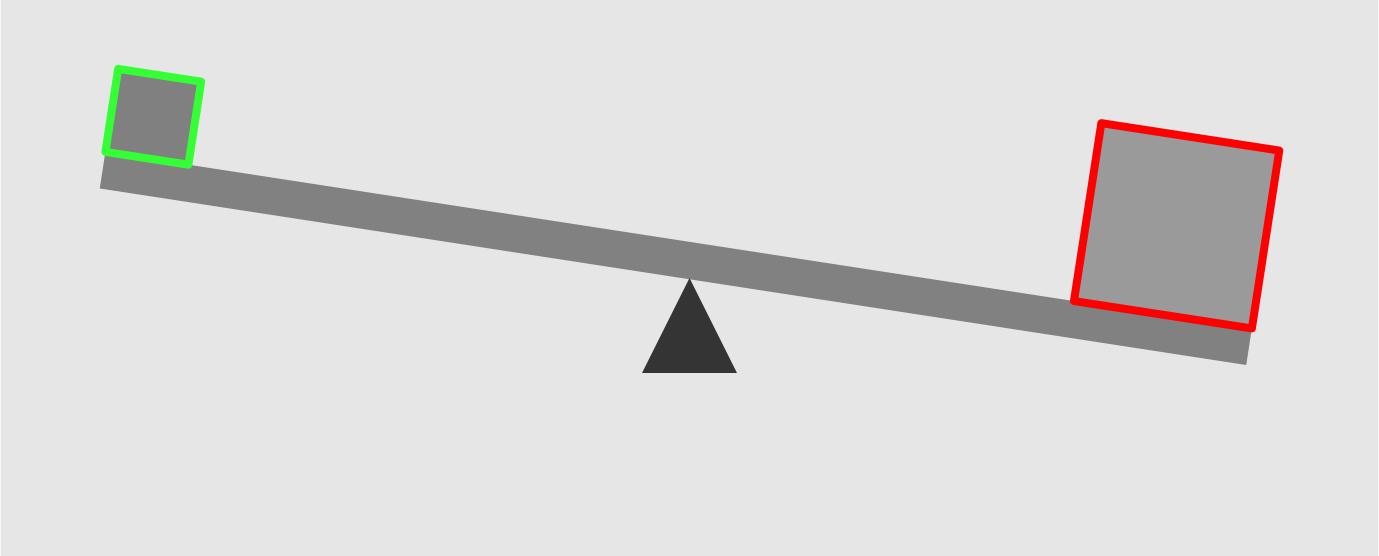
    The question we should now ask how we can throw this system out of balance?

    Well... we could increase or decrease the mass on our teeter totter, right? We could make one of our masses more massive!

    Image attached toot
    💬 1🔄 0⭐ 0
  • Aug 22, 2026, 6:33 PM

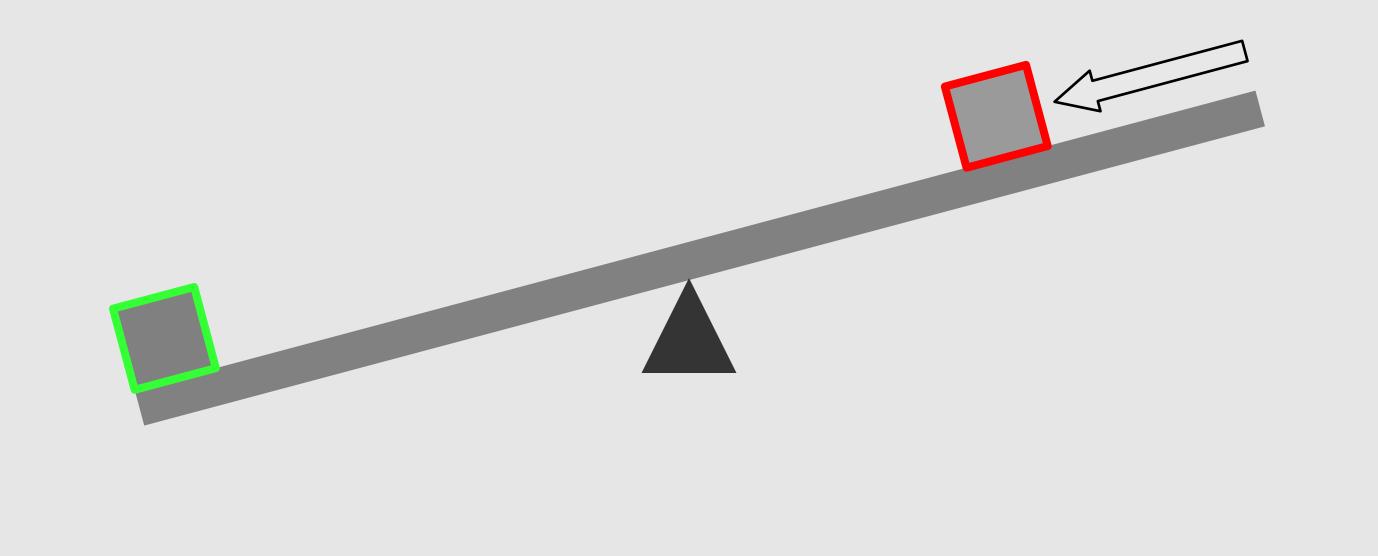
    But there is another way that is perhaps not immediately evident.

    We could keep our masses identical, and change the distances.

    Image attached toot
    💬 1🔄 0⭐ 0
  • Aug 22, 2026, 6:36 PM

    So what the hell does this have to do with colour cognition and why am I employing this ridiculous "mass" idea?

    The underlying sensory signals are indeed *barycentric* in their nature. That is, the entire premise of the aforementioned Grassmann-Abney "additivity" happens to *depend* upon it. Just like planets orbiting other planets, the system follows fundamental "laws", and these laws stem from a barycentric system.

    "Bary" from the Greek term "barus" meaning "heavy".

    💬 1🔄 0⭐ 1
  • Aug 22, 2026, 6:39 PM

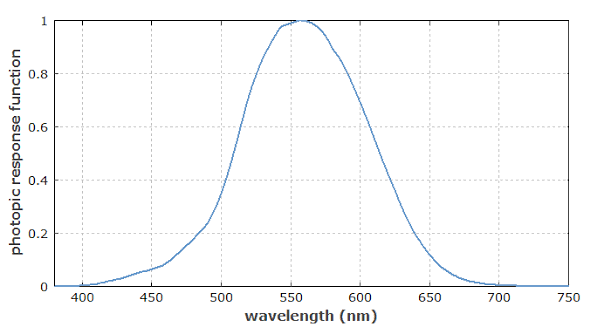
    We can *vary* the luminance mass of any stimuli by varying the electromagnetic emission levels. Thankfully, luminance appears to be **uniformly scaled** with respect to radiometric emission. That is, if we increase emission and keep the spectral composition identical, luminance tracks upward, and vice versa.

    But it is critical to understand that this proportionate system *varies* with spectral wavelength. If we shattered the visible continuous sensory range into discretized slices, that's this:

    Image attached toot
    💬 1🔄 0⭐ 0
  • Aug 22, 2026, 6:42 PM

    With a caveat to **not** conflate any given spectra with a colour, we can say that when we experience a given "colour" that it's luminance mass *varies* based on these little tiny slices of scalar magnitudes, summed up.

    So in our Reinhard Face demonstration, each column *varies* with respect to luminance in the apparently "chromatic" region.

    The normalized luminance of the "achromatic" face portion varies row by row, and the "chromatic" region is invariant.

    When the two are in balance, null!

    Image attached toot
    Image attached toot
    💬 1🔄 0⭐ 1
  • Aug 22, 2026, 6:43 PM

    So what the hell!?

    Would it be fair to say that in the Reinhard Face picture that the *other* mixtures are "out of balance"? And the answer is of course **absolutely**.

    But more importantly, we need to think about how the hell these things could be out of balance in the first place. If luminance is "mass" is there another force of "mass"? After all, if we had identical stimuli in terms of the "colour", at equal luminance, there would *be no boundary at all* between two spatial constellations!

    💬 1🔄 0⭐ 0
  • Aug 22, 2026, 6:45 PM

    We clearly identify a "shape" in the Reinhard Face pattern, which tells us immediately that *something else is at an imbalance.

    Think about this deeply...

    If we imagine two identical ratios of RGB, at identical emission, their masses are identical. And guess what... *we can't cognize anything*. This is sort of dumb, but let's flip it over...

    The fact that we are *identifying some difference* forces us to realize that it cannot be luminance. It's some other dimension of force!

    Image attached toot
    💬 1🔄 0⭐ 0
  • Aug 22, 2026, 6:49 PM

    *Most* folks reading this thread probably know that at full emission, BT.709 blue is approximately 7.22% units of luminance. So if our R+G+B emission is at 100% and our total "nits" output is 100, then the B record at full emission is 7.22 "nits", or candelas per square meter.

    Conversely, think about this... at full emission, the R and G records are 21.26 and 71.52 nits *each*. Cumulatively? That's a whopping 92.78 units compared to B's record of 7.22.

    Yet... when we integrate R+G with B?

    💬 1🔄 0⭐ 0
  • Aug 22, 2026, 6:50 PM

    That's right... we get "no colour".

    How can this be?!?!!

    I thought Hunt and RIT and Kodak told us that luminance is important in colour appearance models! After all, the entire "force" of these wretched nonsense crap garbage unworkable piles of rubbish is **luminance**.

    Yet we just manually realized that a piddly 7.22 units can somehow be *equal force* to 92.78 units.

    But how!

    💬 1🔄 0⭐ 0
  • Aug 22, 2026, 6:53 PM

    Dear read, this is because there are two parts to our force equation.

    Just as `F = ma` in good old physics land... so too it appears to emerge in stimuli sensory responses. No really!

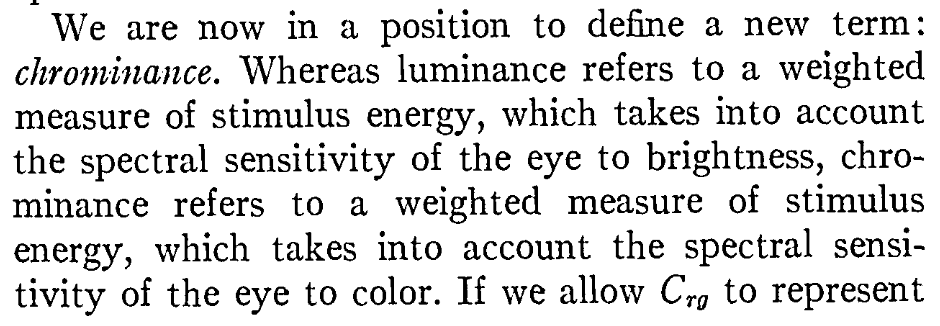
    The B record *balances* the tremendous mass of R+G through the glaringly obvious statement that there's another component. And *that* component is what I've labelled *Chrominance*.

    Here's Boynton's definition of Chrominance:

    Image attached toot
    💬 1🔄 0⭐ 0
  • Aug 22, 2026, 6:55 PM

    Why did I choose this term Chrominance as appropriate? Much like `F=ma` we realize that mass and acceleration are on "equal footing" in terms of their contributions.

    And just like `F=ma` there is a clear relationship in barycentric coordinates that two components are *similar* in terms of their contributions. Hence having two words that have the same suffix helps us to realize they are equal in terms of contribution!

    Further... it makes us think about this other component!

    💬 1🔄 0⭐ 0
  • Aug 22, 2026, 7:05 PM

    So in summary, the entire foundation of stimuli relationships in the human visual system is based on a barycentric model. There's something we can state as being "mass-like", aka luminance, and something "acceleration-like", aka chrominance.

    In a visual depiction of this relationship, as MacAdam illustrated all the way back in 1931... the *reason* that BT.709 B at full emission can "balance" the BT.709 R+G records?

    Drawn to scale, here it is...

    Image attached toot
    💬 1🔄 0⭐ 1
  • Aug 22, 2026, 7:07 PM

    The distance that small little 7.22 nits of blue "possess" is a whopping 12.85 times the distance the whopping combined mass of the R and G at full emission of 92.78 nits!

    No really... it's that damn simple.

    Image attached toot
    💬 1🔄 0⭐ 1
  • Aug 22, 2026, 7:09 PM

    If you've suffered this far, and would like to try and put the pieces of some of my delusional spew together, you might be able to go read this in-depth dive into MacAdam's 1938 work, and perhaps even understand what the diagrams mean.

    There's more to this puzzle, but I'll leave you with this for now!

    Hope you enjoyed this nonsense, and I now return you to your regular programming...

    mastodon.art/@troy_s/110866234

    💬 0🔄 0⭐ 2