
Login
You're viewing the ruby.social public feed.
  • Oct 15, 2026, 7:13 PM

    There's a lot of detail in our report, Controlium screenshots, tracking and ID syncing, Discover-Tech's corporate network, the history of its advertising tech, including odd stuff that may justify another investigation.

    On a side note, part of what we found relied on Discover-Tech's own hilariously bad security.

    A lot of information was publicly accessible without any authentication requirement, including ad bidding logs, source code for admin panels, ad encryption tools and even user logins.
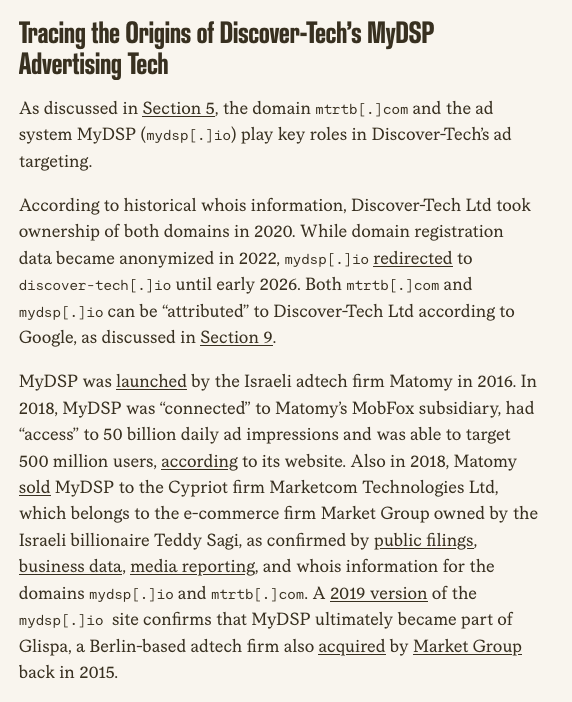
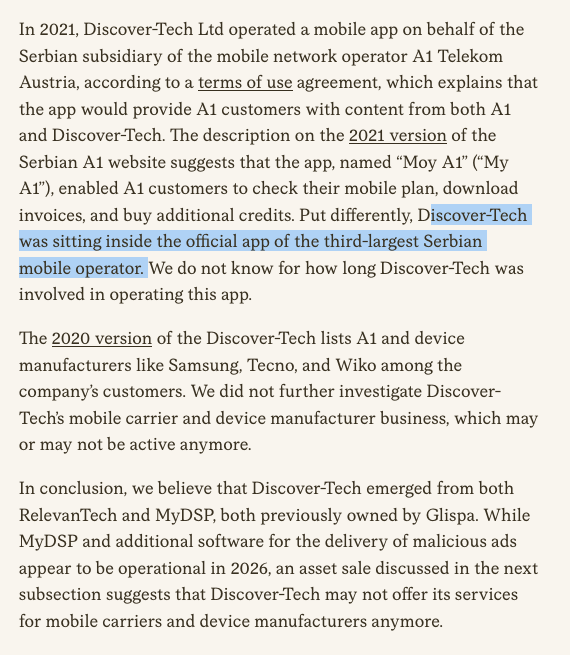
    Image attached toot
    Image attached toot
    💬 1🔄 1⭐ 0

Replies

  • Oct 15, 2026, 7:36 PM

    More broadly, we've seen ad-based malware and we've also seen indications for ad-based spyware delivery, in reports on offensive capabilities offered by ADINT vendors and most profoundly, in Amnesty Security Labs' investigation into Intellexa's ad-based 'Aladdin' infection vector and the co-timed Google report:
    securitylab.amnesty.org/latest
    cloud.google.com/blog/topics/t

    To our knowledge, our report presents the first public technical confirmation of a zero-click mercenary spyware attack delivered via ads.

    💬 1🔄 3⭐ 0
  • Oct 15, 2026, 7:55 PM

    Digital advertising is broken. The way it works today is a security threat for states, the private sector, civil society and everyone else alike.

    It's difficult, if not almost impossible, to consistently protect yourself from malicious ads. Our findings confirm that ad blocking must be considered a cybersecurity best practice.

    What else? Disable the so-called Advertising ID on mobile devices, use opt-out features of apps, use a browser that blocks tracking, if possible block at network level.

    💬 1🔄 20⭐ 0
  • Oct 15, 2026, 8:00 PM

    What about the advertising industry?

    It's disastrous that major ad vendors and organizations apparently were neither able to detect nor prevent the company's malicious advertising operations for years.

    Cybersecurity agencies, regulators and lawmakers in the US, Europe and other regions must urgently step in. They must investigate the involved companies and fix the systemic risks that enable malicious ad targeting.

    For example, mandate the removal of personal data from real-time ad auctions.

    💬 1🔄 1⭐ 0
  • Oct 15, 2026, 9:25 PM

    @wchr I worked in ad tech. To say it went "undetected" is incorrect: malicious ads & fraud were ok so long as they made money & no one important enough complained. One company I worked at made in the ballpark of 40% of their income off of fraud (refreshing ads in inactive tabs), though admittedly I was hired to reduce this (people important enough had complained). I can say with confidence through that the majority of ad impressions on the Internet are fraud.

    💬 0🔄 8⭐ 3
  • 💬 0🔄 0⭐ 0