Login
You're viewing the raphus.social public feed.
  • Oct 8, 2026, 6:58 PM

    Donald Trump has often cited Andrew Jackson as his favorite president, and as you read through Perley's stories from the Jackson era (1829-1837) you will quickly understand why. Jackson comes across in these pages as extremely Trumpian–driven by ego, pride and resentment. One such story is the tale of Jackson's Head.

    When the frigate USS Constitution was under repair at Boston, it was decided that what this ship really needed was a big wooden head of President Jackson fitted on it. The head was duly carved and affixed.

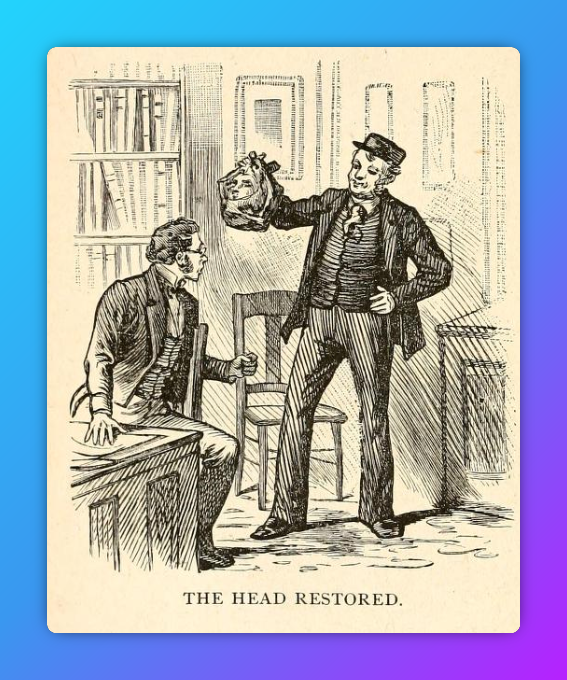
    This angered a Cape Cod mariner named Samuel Dewey, who decided to do something about it. In the middle of the night in a raging storm, he rowed a small boat out to the Constitution and sawed Jackson's head off. He then brought it back to Boston, where his prize made him the toast of the town.

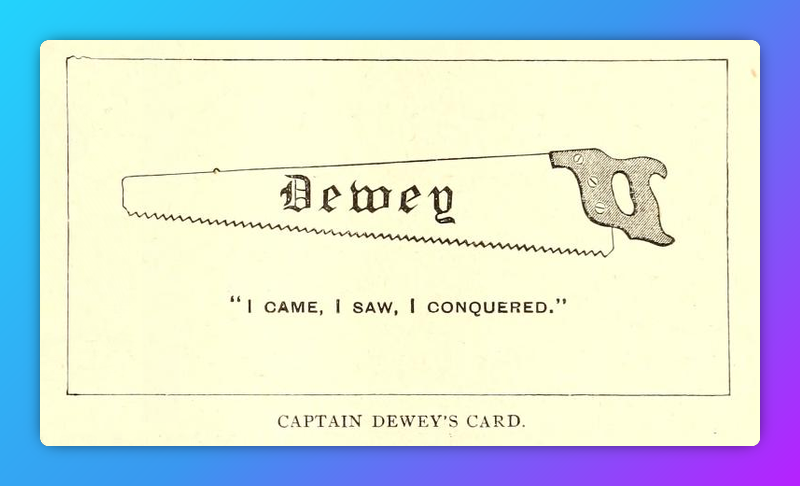
    He eventually took the head to Washington and presented it to the Secretary of the Navy, daring him to prosecute. The government chose not to. For the rest of his life, Dewey's carte de visite (an early version of what became the business card) showed a picture of a saw with the inscription "I came, I saw, I conquered."

    archive.org/details/perleysrem

    Dewey presents the head of Jackson to the shocked Secretary of the Navy.
    An illustration of Dewey's carte de visite, as described in the post.
    💬 2🔄 6⭐ 9

Replies

  • 💬 1🔄 1⭐ 0
  • Oct 8, 2026, 7:15 PM

    During the Van Buren administration, a woman arrived in Washington from Europe. Within weeks, her beauty, wit and charm made her a hit in society. She was routinely cited as a possible match for important men, including the widowed president.

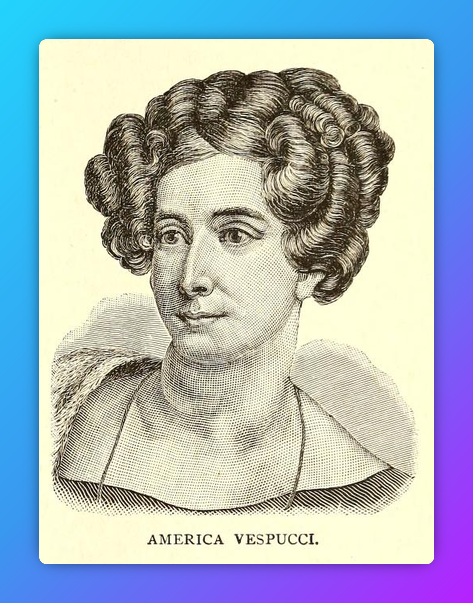
    Her name was America Vespucci, and she claimed to be a direct descendant of the famed Amerigo, who had named the continent centuries earlier. As the namesake of the nation, she suggested that the least the U.S. Congress could do would be to grant her a small portion of the District of Columbia to live on. For free.

    Remarkably, the Congress seems to have seriously considered this proposal, but eventually turned it down (with fulsome apologies). As a consolation they launched a fund for her that anyone could contribute to, and donations from the great and good poured in.

    Her moment didn't last long. Other visitors from Europe said that Vespucci was well known in their home capitals, but not in the good way, like you want. She eventually went back to Europe, though not without periodically issuing additional demands on the government of the United States.

    archive.org/details/perleysrem

    Portrait of America Vespucci.
    💬 1🔄 2⭐ 6
  • Oct 8, 2026, 7:27 PM

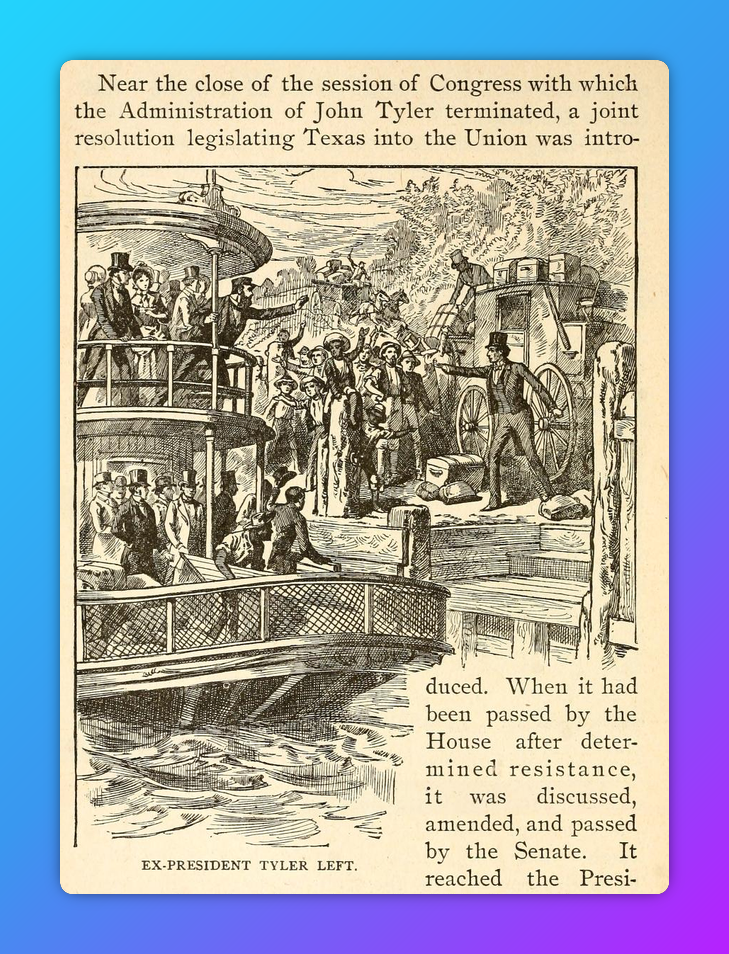
    John Tyler, a Whig, was the president of the United States from 1841 to 1845. When his term ended, he decided he'd rather not attend the inauguration of his Democratic successor, James K. Polk. So he had his stuff packed up early and headed straight for the dock where a steamboat would carry him home.

    By the time his party and all their stuff got there, though, the steamboat had already pushed off. A crowd on shore yelled at the captain to come back, as he had left behind his most important passenger. It's a mark of Tyler's popularity that the captain replied "Ex-President Tyler be dashed! Let him stay."

    archive.org/details/perleysrem

    Illustration of ex-president Tyler being left behind by his steamboat.
    💬 1🔄 1⭐ 4
  • 💬 1🔄 1⭐ 0
  • Oct 8, 2026, 7:42 PM

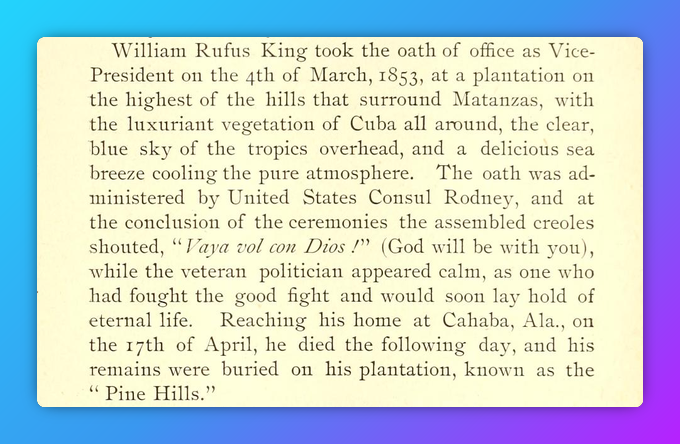
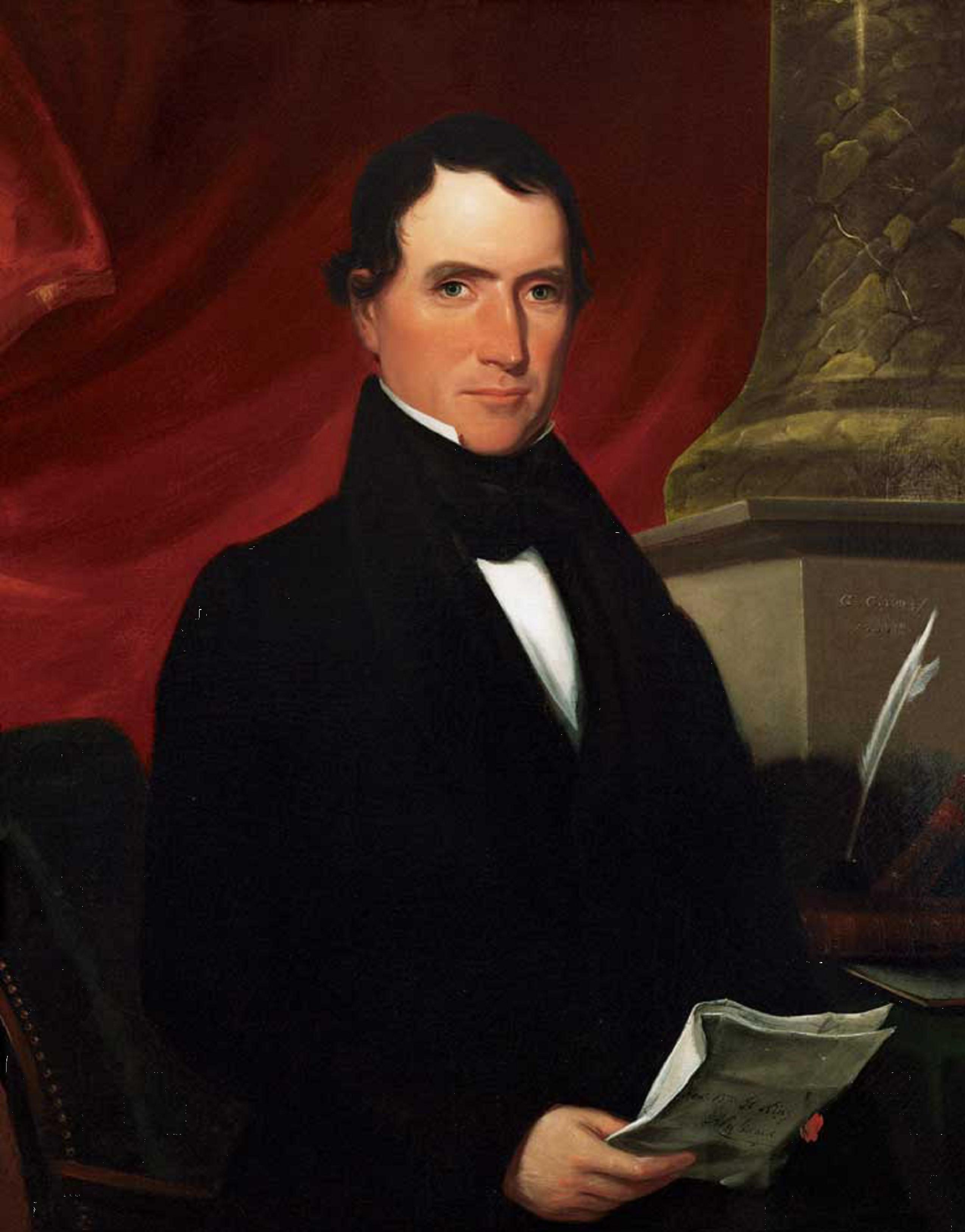
    When Franklin Pierce was sworn in as president in 1853, his running mate, William Rufus DeVane King, was in Cuba. He had tuberculosis, and had gone to the tropical island in hopes the climate would help his condition. But this raised a problem: how was he, the newly elected vice president of the United States, supposed to be sworn in if he wasn't even in the United States?

    It took an act of Congress to resolve the issue. Granted a special dispensation, King was sworn in at Matanzas, Cuba by the local U.S. consul. To this day, he remains the only president or vice president to ever be sworn into office overseas.

    archive.org/details/perleysrem

    William Rufus King took the oath of office as Vice President on the 4th of March, 1853, at a plantation on the highest of the hills that surround Matanzas, with the luxuriant vegetation of Cuba all around, the clear, blue sky of the tropics overhead, and a delicious sea breeze cooling the pure atmosphere. The oath was administered by United States Consul Rodney, and at the conclusion of the ceremonies the assembled Creoles shouted, " Vaya vol con Dios." (God will be with you), while the veteran politician appeared calm, as one who had fought the good fight and would soon lay hold of eternal life. Reaching his home at Cahaba, Ala., on the 17th of April, he died the following day, and his remains were buried on his plantation, known as the "Pine Hills."
    💬 1🔄 1⭐ 1
  • Oct 8, 2026, 7:47 PM

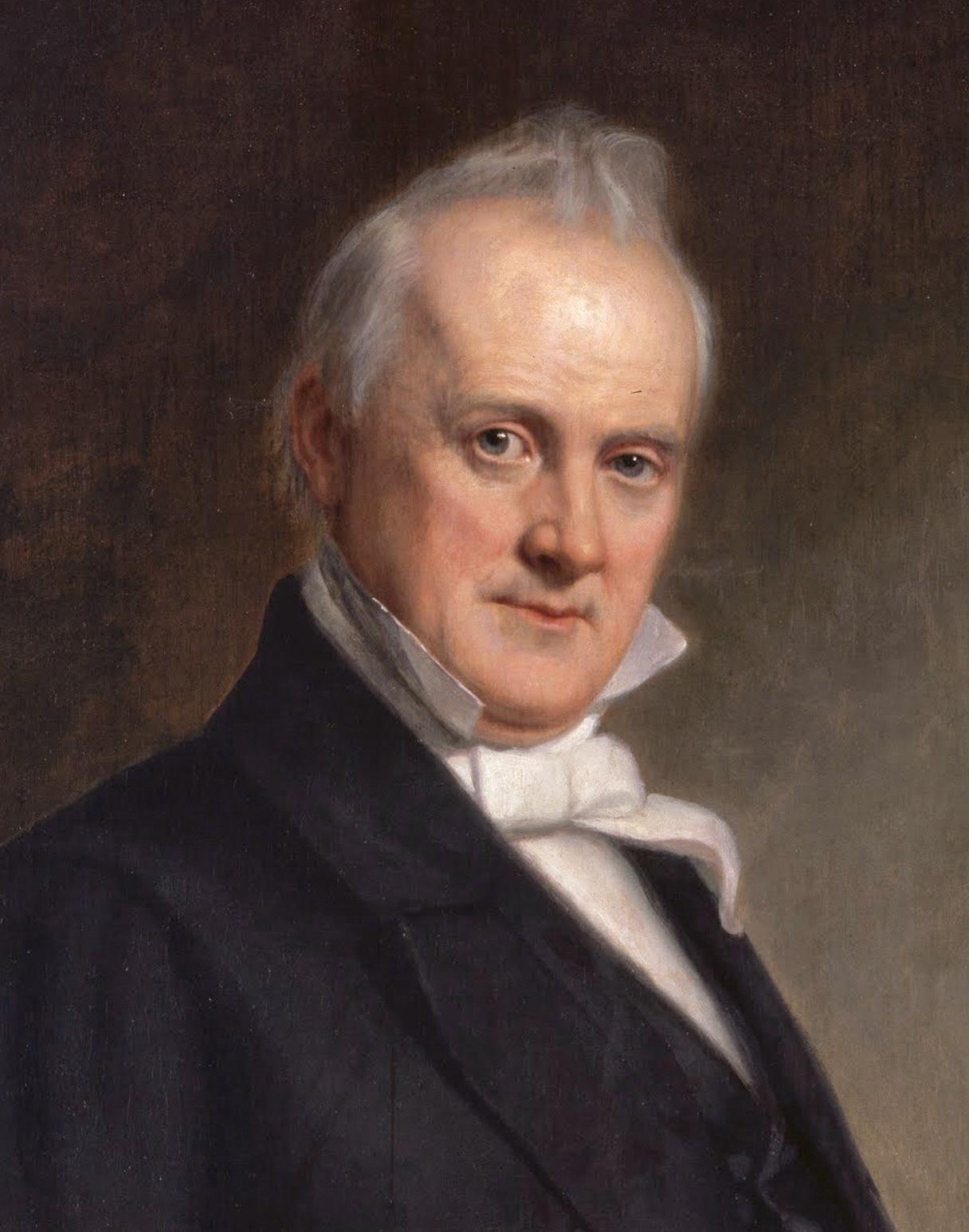
    (Perley doesn't really get into this, but William R. King is an interesting figure in general. He never married, and had a long and very close association with future president James Buchanan. Historians are still arguing about whether they were just good friends, or something more intimate.)

    en.wikipedia.org/wiki/William_

    William Rufus DeVane King.
    James Buchanan.
    💬 1🔄 1⭐ 0
  • Oct 8, 2026, 7:55 PM

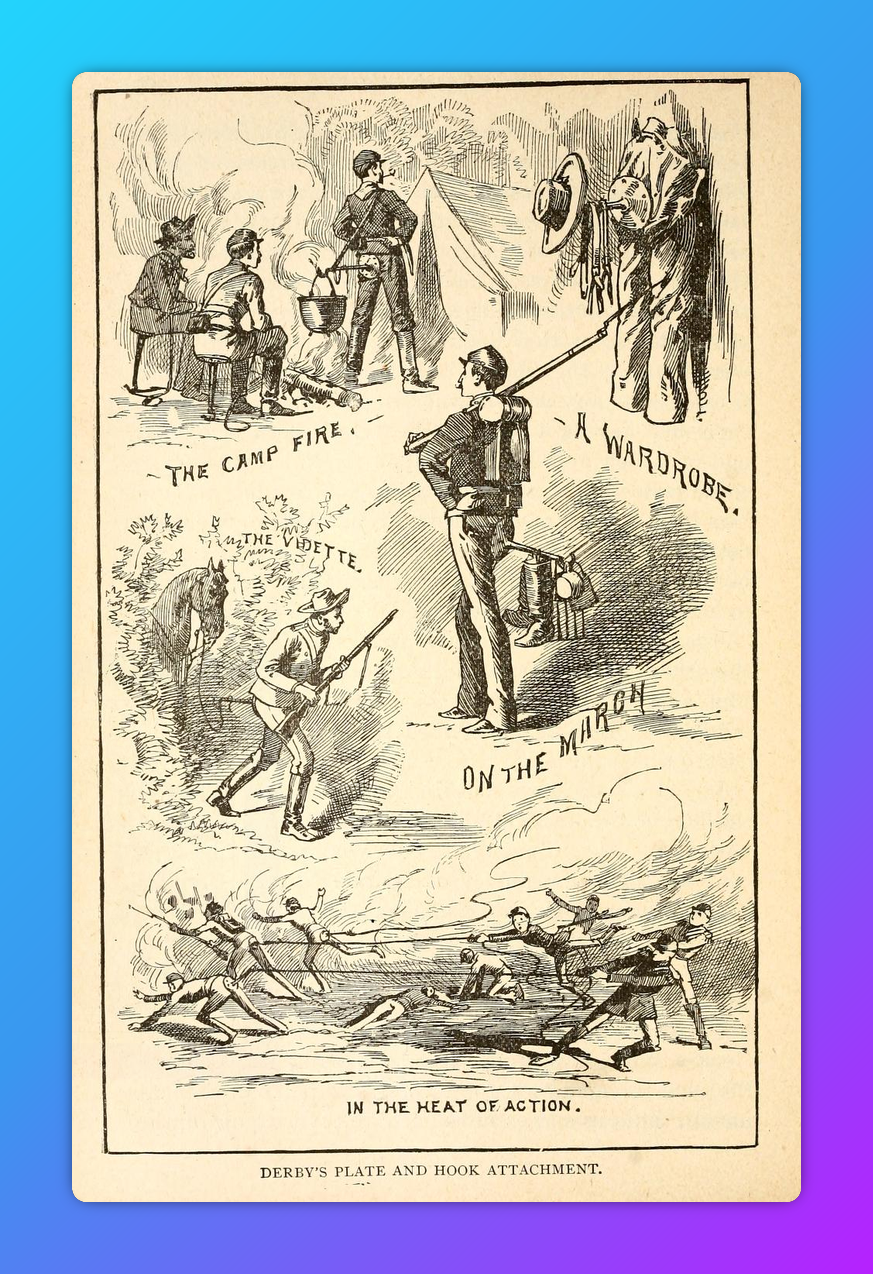
    Jefferson Davis is best known today for being the only president of the Confederate States of America (boo hiss), but from 1853 to 1857 he was the Secretary of War for Franklin Pierce. Perley reports that in that role Davis was an intense micro-manager, right down to personally directing specific changes to military uniforms.

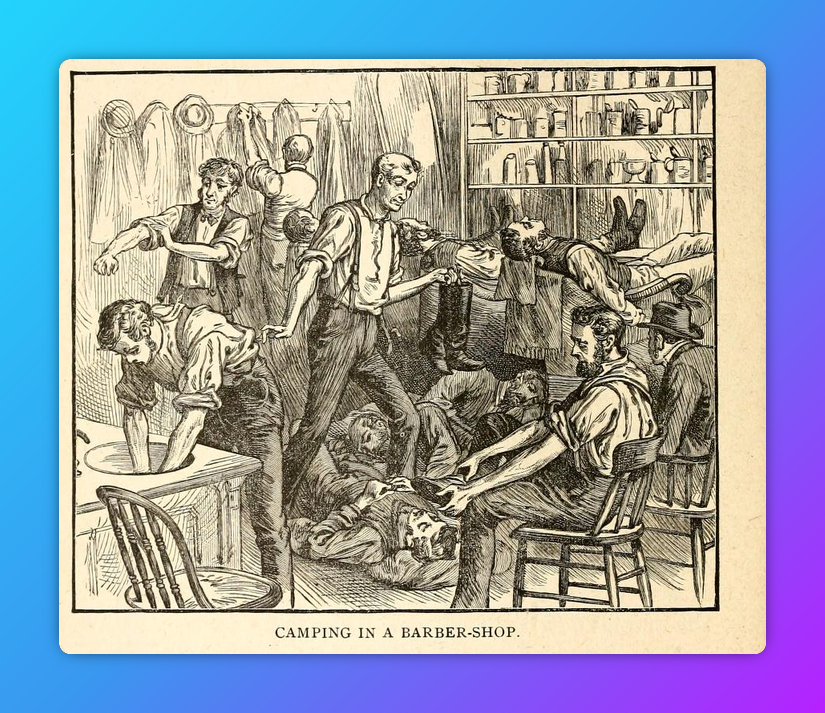
    At the time the Army contained a young officer named George Horatio Derby, who had a sideline writing humor articles under the pseudonym "John Phoenix." Derby mocked Davis by proposing that Army uniform trousers be modified to include an iron hook affixed to the seat, arguing that such a hook would be useful to a soldier in all kinds of ways.

    archive.org/details/perleysrem

    Illustration showing the merits of Derby's proposal to affix an iron hook to the seat of military uniform trousers, such as being able to hold a pot of water over a campfire without having to use one's hands.
    💬 1🔄 1⭐ 0
  • Oct 8, 2026, 8:01 PM

    I'll stop there. There's plenty more in the book, if you're interested. You can download the whole thing for free from the Internet Archive, just follow any of the links in the thread above.

    Are Perley's stories, you know, accurate? My limited research indicates the answer is "mostly." The things he talks about generally do seem to have happened, though often details are disputed.

    But it's a fun read (the first volume, anyway–the second one is a bit of a slog), and will introduce you to a whole cast of characters from the early Republic you likely have never heard of before. So I recommend it.

    THE END
    💬 0🔄 1⭐ 5
  • 💬 0🔄 0⭐ 0