Login
You're viewing the mstdn.social public feed.
  • Jul 7, 2026, 5:50 PM

    Beetles from the other day:

    - Red milkweed beetle (_Tetraopes tetrophthalmus_)—the scientific name translates as "four-eyes four-eyes", note how the antenna divides the eye in two; on its host plant, common milkweed (_Asclepias syriaca_)
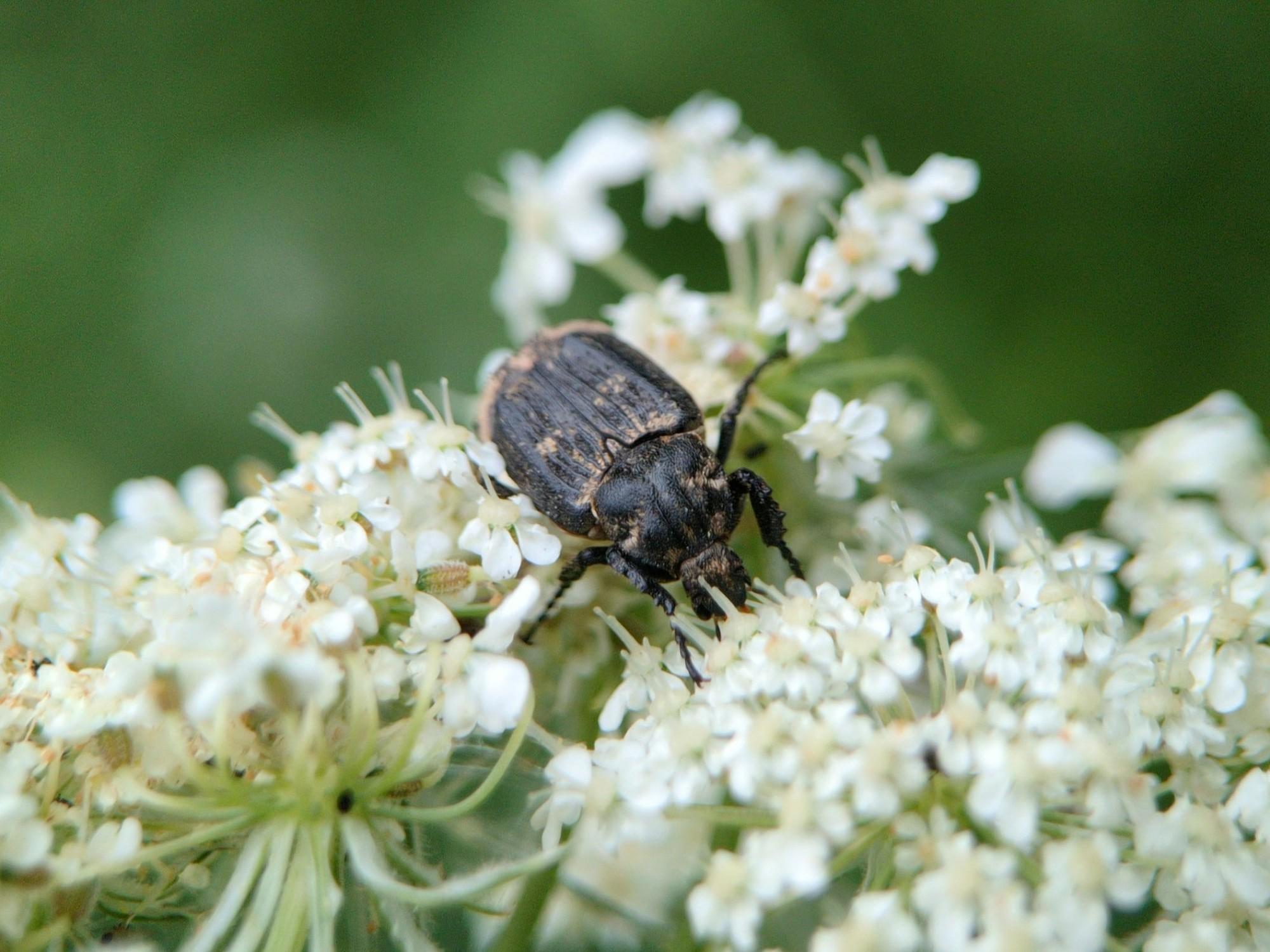
    - _Valgus hemipterus_ on Queen Anne's Lace (_Daucus carota_)
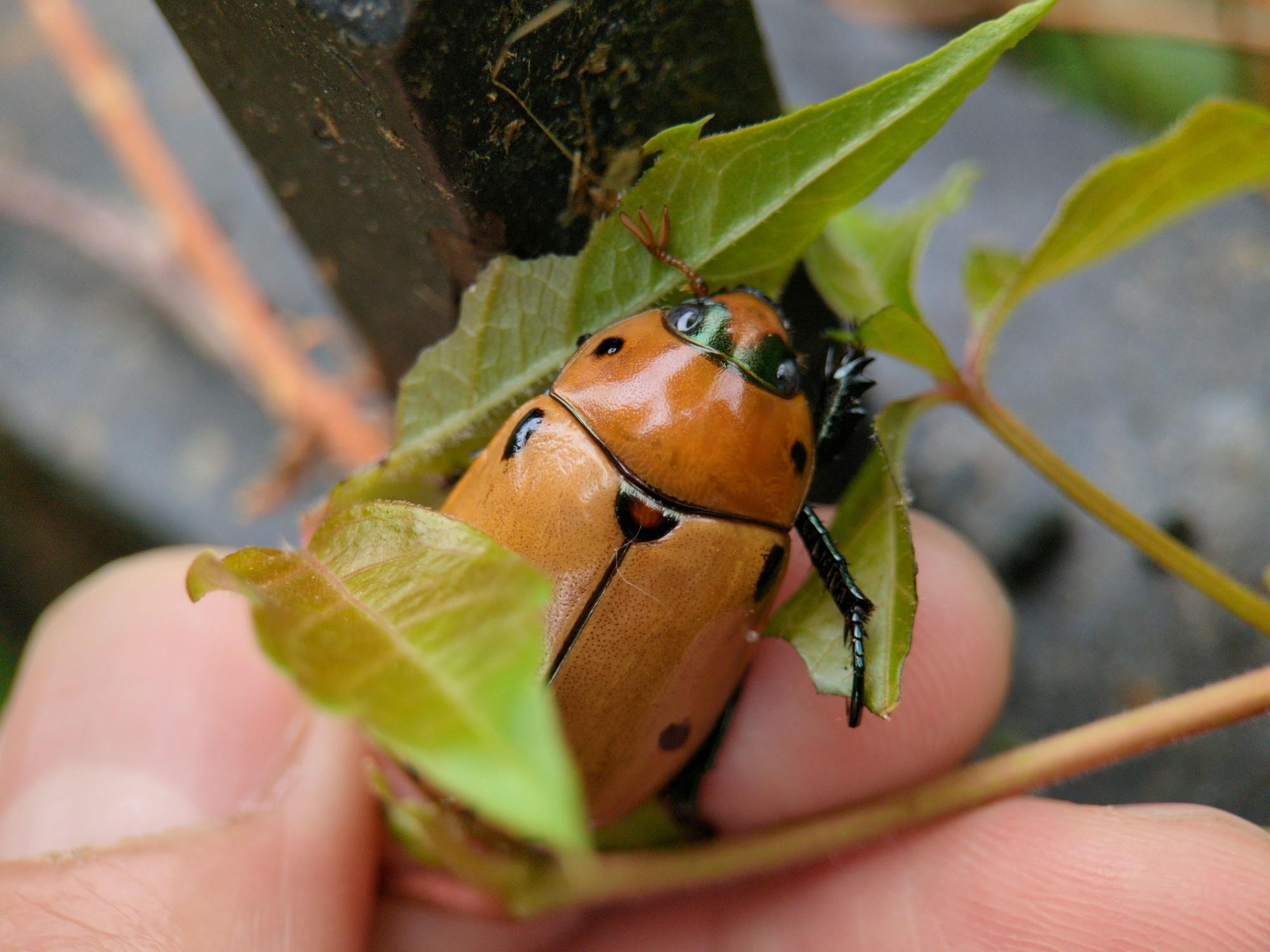
    - Grapevine beetle (_Pelidnota punctata_) on Virginia creeper (_Parthenocissus quinquefolia_)
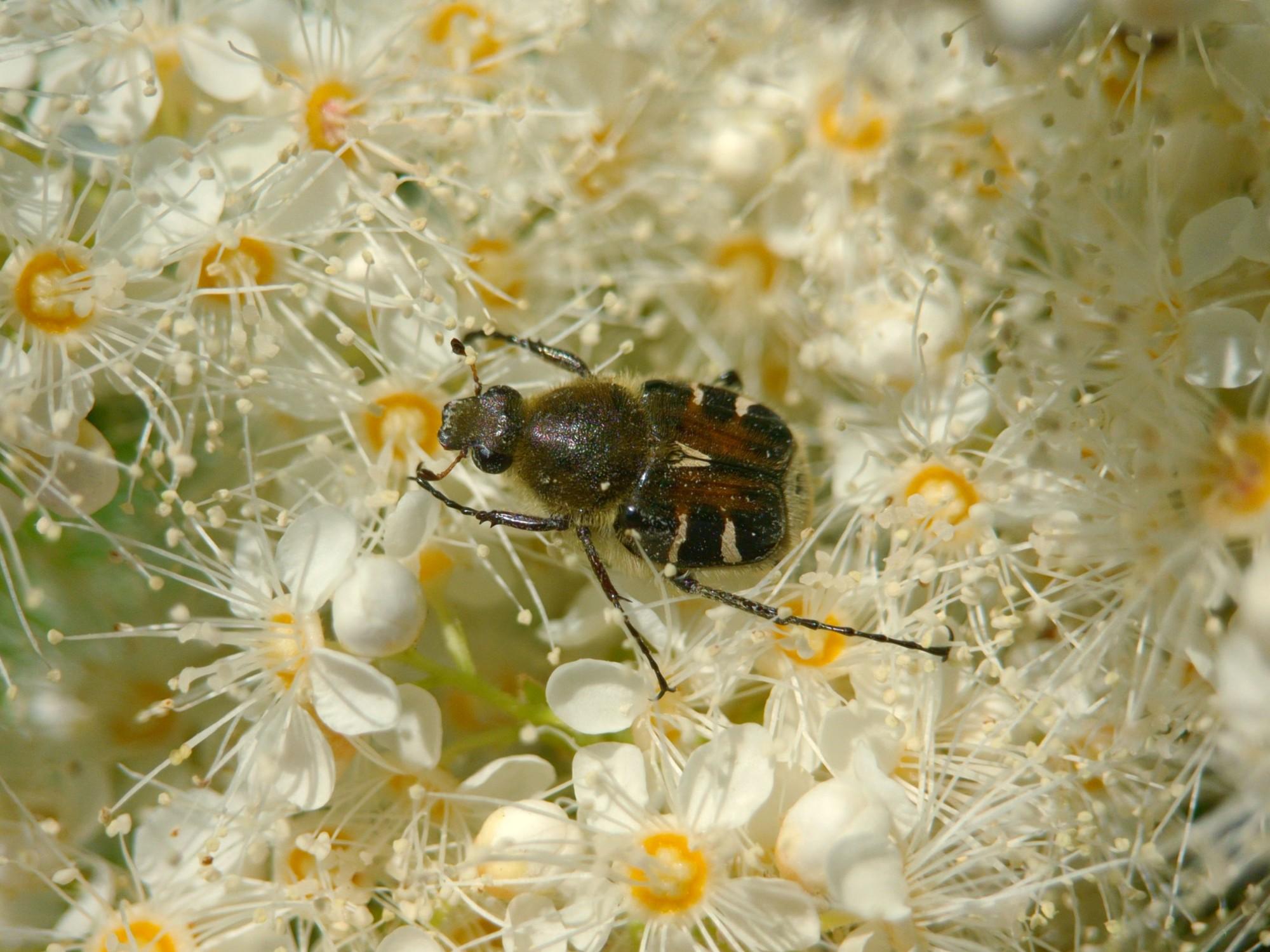
    - Hairy flower scarab (_Trichiotinus_ sp.) on some kind of spiraea

    All scarabs (family Scarabaeidae) except for the milkweed beetle who is a longhorn beetle (family Cerambycidae).

    #bugstodon #insects #beetles #LonghornBeetles #ScarabBeetles #Coleoptera #Cerambycidae #Scarabaeidae #Cetoniinae #Rutelinae
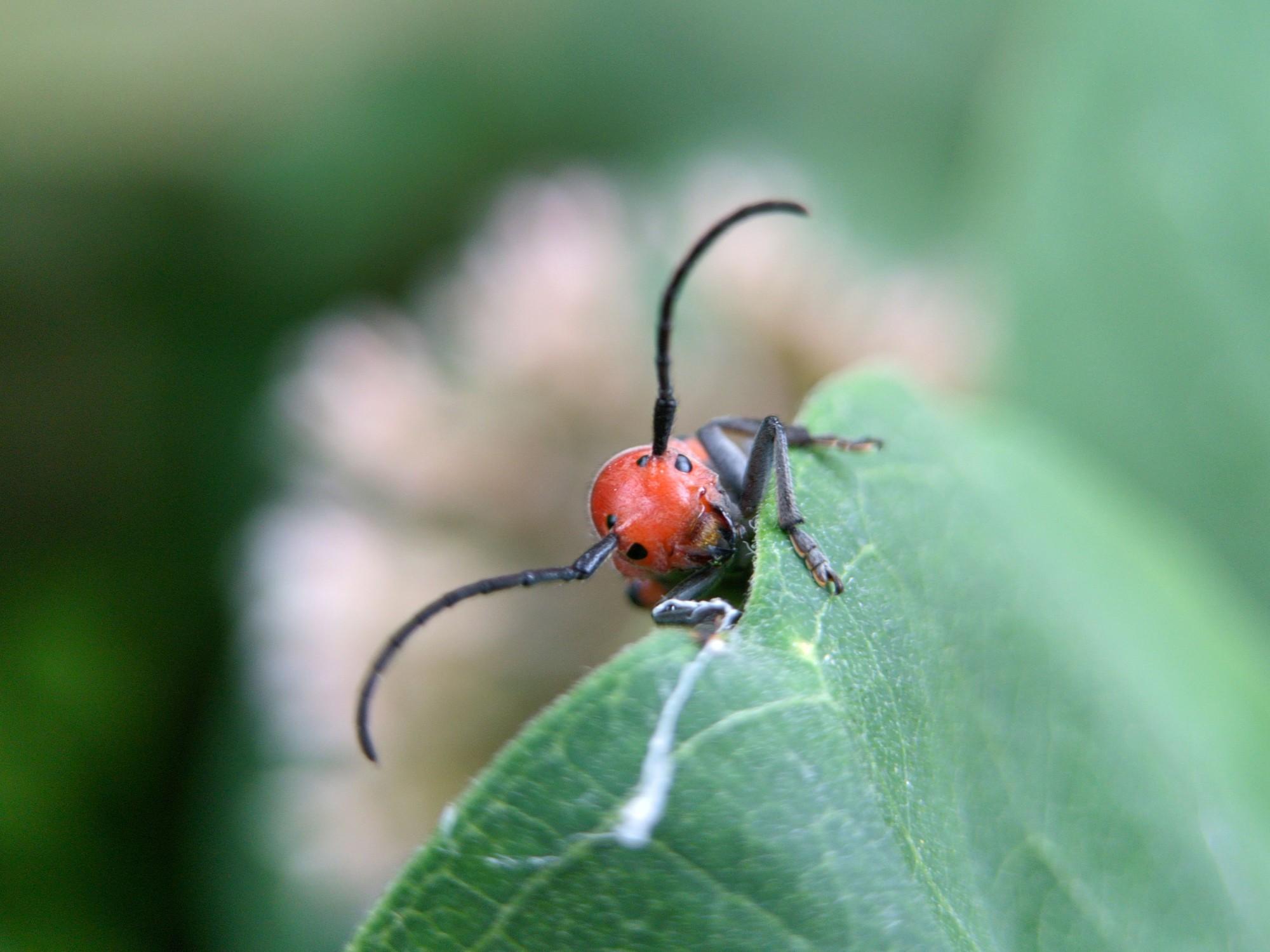
    The round, smooth face of a bright red beetle peering over the edge of a common milkweed leaf (with the bloom out of focus behind it). The beetle has very long arching black antennae which divide each eye in two.
    A black beetle with grooved elytra edged in cream, with two faint indistinct cream spots on its back. Its face is buried in the small white flowers of a Queen Anne's Lace blossom.
    A large orange beetle with a few small black spots and a dark metallic green bandit mask, clinging to young Virginia creeper leaves on a wrought iron fence.
    A fuzzy dark beetle with a round thorax and striking white markings and orange shading on its squarish elytra, sitting in a cluster of small white flowers with yellow centres.
    💬 1🔄 14⭐ 1

Replies