Login
You're viewing the mstdn.science public feed.
  • Dr Joe PajakJoePajak
    Nov 26, 2026, 5:27 PM

    A reminder that COVID-19 risk can still be reduced.
    Testing can help identify infection. Staying up to date with COVID-19 vaccination when eligible remains important, particularly for those at greater risk.
    Other sensible precautions include avoiding crowded or poorly ventilated indoor spaces where possible, considering a well-fitting mask in higher-risk settings, and improving ventilation.
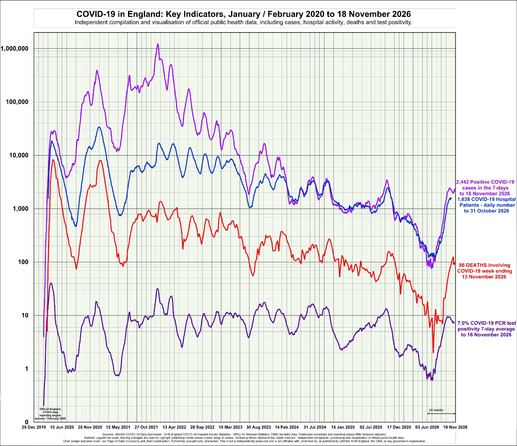
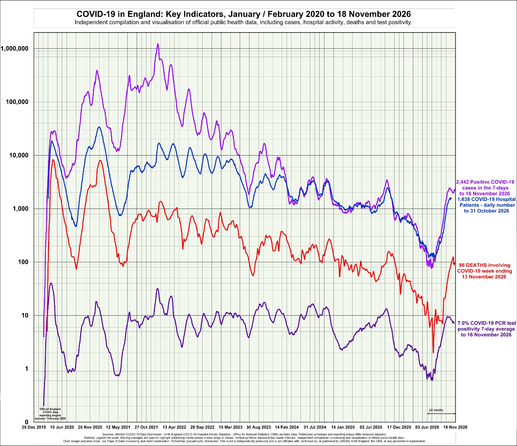
    Image attached toot
    💬 1🔄 1⭐ 6

Replies

  • Dr Joe PajakJoePajak
    Nov 26, 2026, 5:31 PM

    And if you test positive for COVID-19, or have symptoms and feel unwell, consider the people around you.
    Avoid close contact with others where possible, particularly anyone who may be at greater risk of becoming seriously unwell.
    COVID-19 can still have serious consequences. Protecting ourselves also means protecting each other. Not forgetting the huge consequences of Long COVID - often hidden from general view though not hidden from individual impact.

    Image attached toot
    💬 1🔄 7⭐ 7
  • Dr Joe PajakJoePajak
    Nov 28, 2026, 10:10 AM

    ⚠️ England’s respiratory-virus picture deserves careful attention as winter approaches.
    Latest UKHSA surveillance shows flu rising sharply and now at moderate levels. COVID-19 and RSV are also increasing, although both remain classified as low.
    Flu-like illness attendances at A&E are above seasonally expected levels.
    My updated COVID chart also shows a marked rise from the very low levels seen earlier in 2026.
    But these are surveillance signals, not a complete real-time picture. 🧵 1/4

    💬 1🔄 3⭐ 5
  • Dr Joe PajakJoePajak
    Nov 28, 2026, 10:11 AM

    Caveat about my chart:
    The long-term COVID hospital series currently ends on 31 October, while several other indicators extend further into November. UKHSA now updates this particular healthcare dataset monthly.
    So the steep rise in the blue line should not be read as showing the COVID hospital position in late November.
    However, separate, more recent UKHSA weekly surveillance also reports COVID-19 hospitalisation rates increasing.
    Different datasets, reporting schedules and lags matter. 🧵 2/4

    💬 1🔄 1⭐ 2
  • Dr Joe PajakJoePajak
    Nov 28, 2026, 10:12 AM

    Respiratory-virus activity and NHS pressures can vary between places and populations, and national surveillance cannot tell us everything about what is happening in every local area.
    Different indicators cover different populations, use different methods and arrive with different reporting lags.
    So I see these data as signals requiring attention, rather than a complete picture of current pressure everywhere.
    That distinction matters when interpreting trends. 🧵 3/4

    💬 1🔄 2⭐ 4
  • Dr Joe PajakJoePajak
    Nov 28, 2026, 10:14 AM

    What should we take from this?
    Not panic, but proportionate prevention: vaccination where eligible, better ventilation and cleaner indoor air, staying home where possible when acutely unwell, and taking care around vulnerable people. Consider the use of appropriate face-masks in crowded and poorly ventilated spaces.
    These are my interpretations of limited public data, not an official assessment. Different indicators have different reporting lags.
    🧵 4/4

    💬 0🔄 3⭐ 5