Login
You're viewing the mastodonapp.uk public feed.
  • Oct 24, 2026, 7:22 AM

    One of the problems I see with modern portrayals of old folk tales is that there is a tendency of turning into neat "packages" - one single, "definite" version of a story with a clear beginning and end for easy consumption of an audience that will not know the context of the original storytellers. The Brothers Grimm themselves were part of this trend, with their repeated "cleaning" of their fairy tales collection, but many of their successors hardly did better.

    Real folk tales and real folklore is considerably messier, with countless variants and narratives mutating and merging into each other. A good example is the text I am currently translating, featuring a particular crumbling well in the #Aargau canton of #Switzerland . This well has an entire myth-cycle associated it, with variant tales in neighboring villages. These range from the Devil lurking down there as a treasure guardian, to the Wild Hunt, to a vast sunken Roman city. These tales are messy and confusing, but that's what makes them so fascinating to me.

    In modern media and storytelling, the closest we come to this is #fanfiction . Published media - whether books, movies, or television/streaming series - have their own "canon" events and stories, and fans obsessing over canon. But fanfiction writers make all of this their own, and weave their own contradictory stories with their own lore out of this base - just like the oral folk storytellers of old.
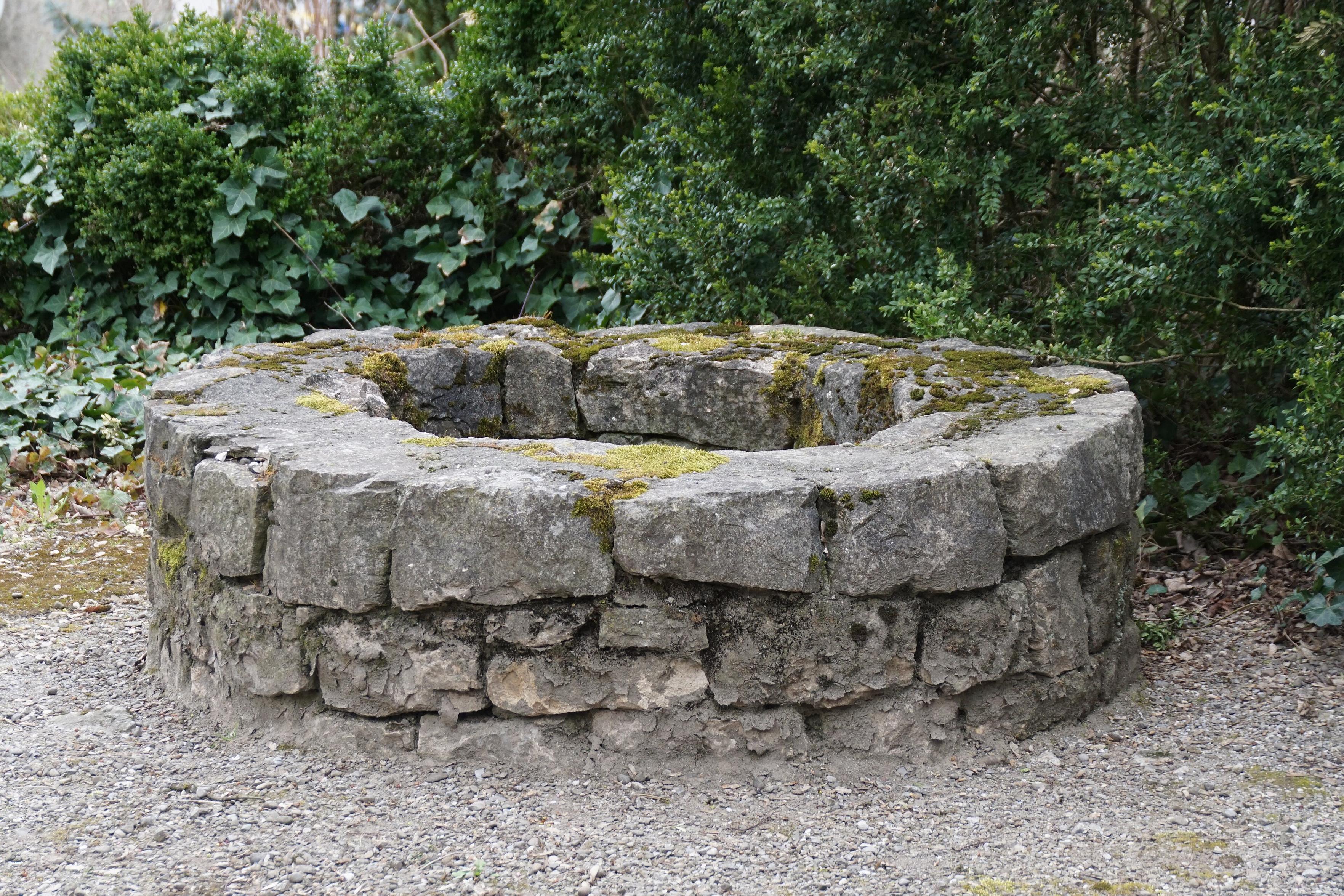
    An old well, built out of coarse stones.
    💬 8🔄 45⭐ 1

Replies

  • 💬 0🔄 0⭐ 0
  • Oct 24, 2026, 10:19 AM

    @juergen_hubert Oh! The reference to the Wild Hunt reminds me of something that I've been meaning to ask but procrastinating on.

    There's a youtuber, one Crecganford, who often discusses the reconstructed PIE myths.

    As far as I can tell, the structure of the reconstructions he proposes appear to broadly match the scholarly consensus, modulo the obvious wobbliness of, well, interpolating backwards through changing societies and technologies, but my eyebrows keep raising by his ascriptions of the reconstructions' origins to tens of thousands into the pasts. There's youtube.com/watch?v=lw_qPbB_MwI, for an example, where he argues for Berezkin's proposed ties between Siberian and Native American folklore motiffs. And, well, I've read the Dene–Yeniseian linguistic grouping hypothesis, and as far as I can reckon, its plausibility boils down to 'it kind of looks like the pieces might possibly fit, but we have very few of them and had to use lots of plaster', which would seem to make reconstructing a cultural connection even iffier than the linguistic one.

    Do you have an opinion on the plausibility of such postulated deep time folklore?

    💬 1🔄 2⭐ 0
  • Oct 24, 2026, 7:11 PM

    @riley

    I'll have to watch that video when I have the time. I am no trained linguist, but this is a tricky business:

    Are certain folk tale motifs widespread because they are really old?

    Or were they so popular that they spread like wildfire along trade routes?

    Or is it a matter of parallel evolution? For example, most human cultures have myths of "sleep paralysis demons" because "sleep paralysis" is a widespread human experience. And many cultures around the world have phenomena similar to the European Wild Hunt, because (I suspect) "the wind making odd noises at night" is also a widespread phenomenon.

    I'd have to take a closer look at the science behind such studies to judge them.

    💬 2🔄 1⭐ 0
  • Oct 24, 2026, 10:34 PM

    @juergen_hubert He doesn't go into linguistics much, actually. He talks about the Proto-Indo-Europeans, but mostly as a label for a culture rather than the language family. The linguisic comparison is, well, just another deep time reference that I happened to be somewhat familiar with as a reference.

    My intuitive counterhypothesis to the idea of traceable common folklore motiffs between East Urals and North America would be, over time, the old folklores crumble to rubble / get buried in noise to such a degree that beyond some point, possibly just 1000–2000 years for non-literate cultures, similarities don't indicate common cultural heritage anymore, but possibly the common neuroarchitecture of the people who told these tales. But the substrate analysis of modern linguistics is very intriguing even though I don't understand it very well, and so insomuch as it might be a workable technique for recovering lost words and grammar rules, I can't entirely exclude something similar possibly also being useful in deep time folklore motiff analysis. And, well, I kind of hope you'd have access to somewhat better heuristics than my "maybe can't exclude it".

    💬 1🔄 0⭐ 0
  • 💬 0🔄 0⭐ 0
  • Oct 24, 2026, 10:39 PM

    @juergen_hubert Btw, is Wild Hunt imagery specific to a particular environment? I've always imagined it as requiring a forest and horses, but now that I think of it like that, if a comparable tale would have existed among, say, the pre-contact prairie native Americans, then it would presumedly include neither the forest nor the horses.

    💬 1🔄 0⭐ 0
  • 💬 0🔄 0⭐ 0
  • 💬 0🔄 0⭐ 0
  • 💬 0🔄 0⭐ 0
  • Oct 24, 2026, 2:57 PM

    @juergen_hubert Love reading the original translations of the Grimm tales, so much messier than the sanitized versions. Makes sense that they took them from other versions and made it their own...

    💬 1🔄 0⭐ 0
  • 💬 1🔄 0⭐ 0
  • Oct 26, 2026, 10:26 AM

    @MaksiSanctum

    Well, depends on the precise texts, and the language.

    The seventh edition of the Brothers Grimm's "Kinder- und Hausmärchen" ("Grimm's Fairy Tales") was translated into English in the 19th century. As it is public domain, it is widely available in a variety of formats.

    Their _first_ edition was only translated in full very recently, which means that the translation is not public domain and must be bought. I am not sure if there are ebook versions or if only the print version is available.

    Their "Deutsche Sagen" ("German Legends") was translated once, in 1979/80, and has been out of print for decades. It is one of my longer-term goals to publish a new translation that makes it available again, but I feel I should only do that once I've got some other books published first.

    Of course, there are many, many _hundreds_ of German-language folk tale collections in the public domain that were written by other people than the Brothers Grimm. They are widely available as digital scans to those who can read German, but only a minuscule portion has ever been translated into English.

    I am to change that, and I am making steady progress. Still, considering the vast amounts of source material, I have not gotten very far yet.

    💬 0🔄 1⭐ 0
  • Oct 24, 2026, 4:55 PM

    @juergen_hubert i think it's also important to remember where the word "canon" comes from: religious texts, and specifically the movement in Judaism and Christianity culminating in the first few centuries CE to make a definitive version of those texts. even though we nowadays consider every word as sacred, we know from archeological findings that even those texts had a lot of variation early on, to the point of several versions with major differences of the same text being used in one community.

    💬 1🔄 2⭐ 0
  • Oct 24, 2026, 4:57 PM

    @juergen_hubert all of that to say that even within the history of writing, a text having one definitive version is a relatively new phenomenon. and much moreso when you consider all of human history and unwritten versions of said texts.

    💬 0🔄 2⭐ 0
  • Oct 24, 2026, 4:55 PM

    @juergen_hubert fan fiction is very clearly today society's adaptation of the folk storytelling imperative (as much as I have no truck with fandoms myself)

    💬 0🔄 1⭐ 0
  • Oct 26, 2026, 1:41 PM

    @juergen_hubert, that reminds me of the Ravenous Bugblatter Beast of Traal which has been described as making meals for visiting tourists. Completely wrong, of course: like the stories which you describe, it makes meals of visiting tourists.

    (I think that I'll stick to stories intended for consumption by an audience.)

    💬 0🔄 0⭐ 0