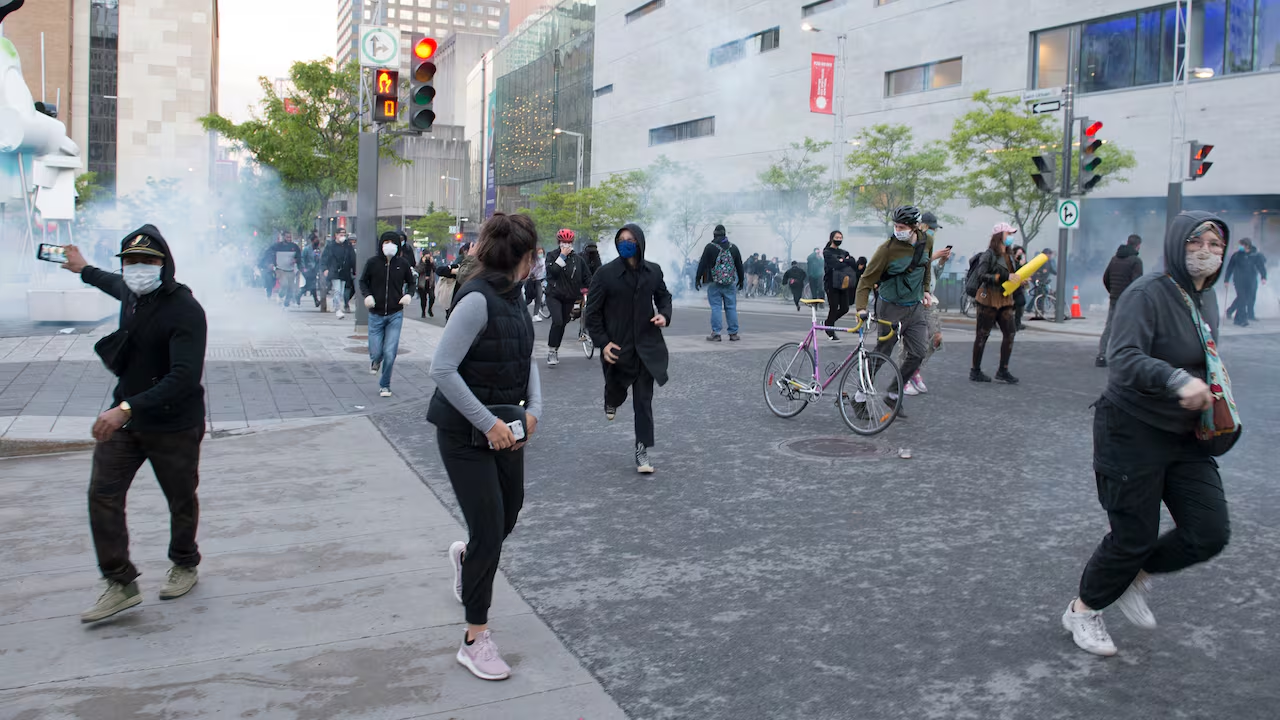
@ianrogers Just some context (not defending it, but good to know the history): the reason that the use of tear gas and other less-lethal chemical weapons is banned in warfare is not because they're considered cruel or inhumane or anything.
It's because the original convention writers were concerned that something like CS tear gas could be confused, in the heat of battle, for a lethal chemical agent like chlorine (which produces similar irritation at low concentrations) and provoke an escalation. Basically the same reason you don't see ICBMs with non-nuclear warheads: while there are potentially useful military applications for such a weapon, actually firing one risks a nuclear retaliation by an adversary who doesn't know or believe you didn't just shoot a nuke at them.
So post WW1 all of the various countries agreed not to deploy them in hopes of preventing another large scale chemical war.
Civilians are unlikely to respond to a police escalation by deploying chemical weapons of their own, so this argument isn't really valid in this context (which is why the conventions did not prohibit their use by police, only against another nation's military)
Now, arguing against it on the grounds of unnecessary violence, the well documented and potentially serious side effects, etc? I'm all for that.