Login
You're viewing the functional.cafe public feed.

Replies

  • katharinethatkatharine@ohai.social
    Nov 16, 2026, 5:19 AM

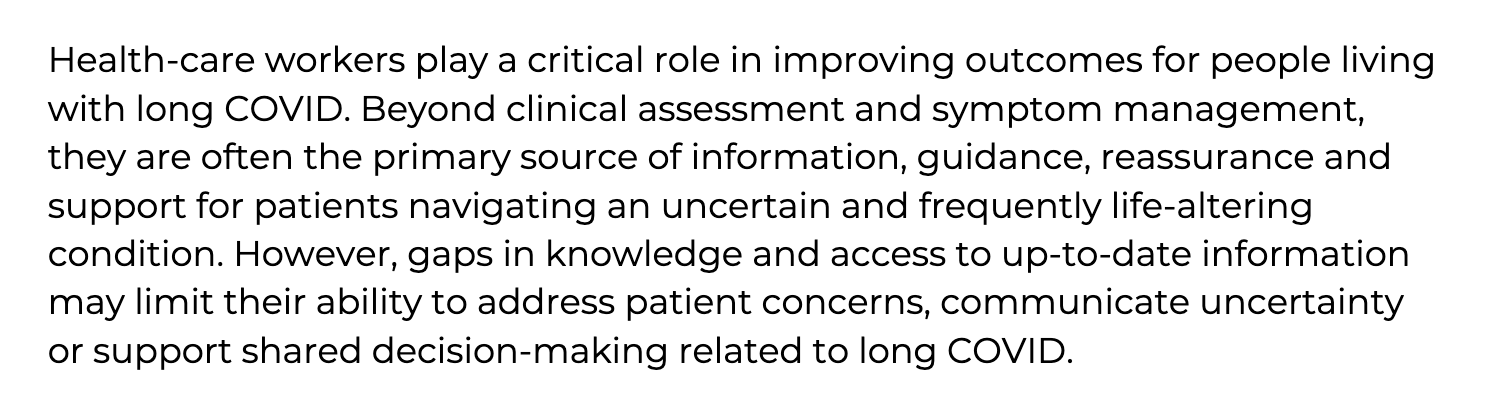
    Long Covid risk is cumulative.
    Long Covid can develop in people who had asymptomatic infections.
    Covid reinfection can worsen baseline symptoms of people who now already have Long Covid.
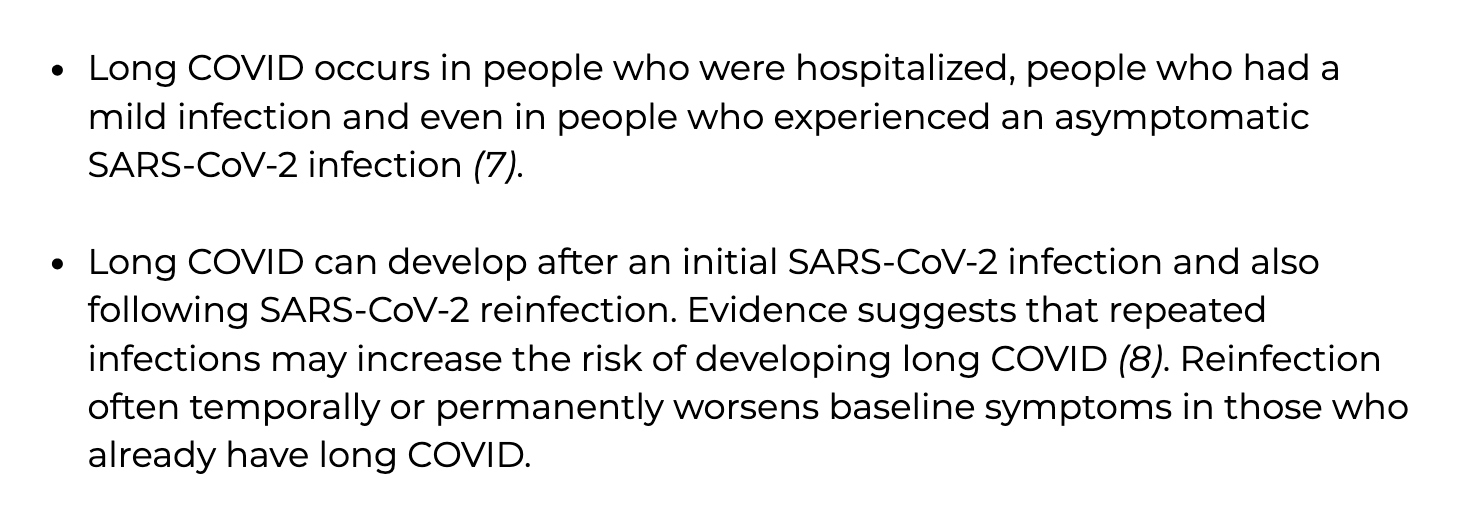
    It is 2026 and there is still no accessible evidence-based treatment for Long Covid.
    There is no cure for Long Covid.

    The only way to prevent Long Covid (worsening) is to prevent Covid (re)infection(s).
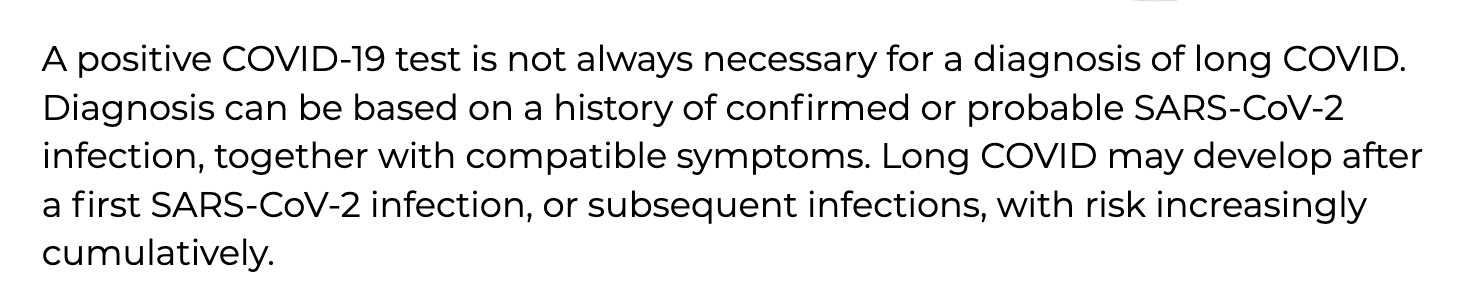
    A positive COVID-19 test is not always necessary for a diagnosis of long COVID. Diagnosis can be based on a history of confirmed or probable SARS-CoV-2 infection, together with compatible symptoms. Long COVID may develop after a first SARS-CoV-2 infection, or subsequent infections, with risk increasingly cumulatively.
    Long COVID occurs in people who were hospitalized, people who had a
mild infection and even in people who experienced an asymptomatic
SARS-CoV-2 infection.

Long COVID can develop after an initial SARS-CoV-2 infection and also
following SARS-CoV-2 reinfection. Evidence suggests that repeated
infections may increase the risk of developing long COVID. Reinfection
often temporally or permanently worsens baseline symptoms in those who already have long COVID.
    As of August 2026, the evidence base for treatment of long COVID is
currently limited. However, there is evidence-based guidance on how to
successfully manage some of the co-morbidities and symptoms that are
commonly associated with long COVID.
    💬 1🔄 6⭐ 0
  • katharinethatkatharine@ohai.social
    Nov 16, 2026, 5:26 AM

    Every body is at risk for Long Covid.
    This list is pretty much everybody except maybe young, rich white dudes and they're the ones responsible for a bunch of the reasons that put more people at risk.
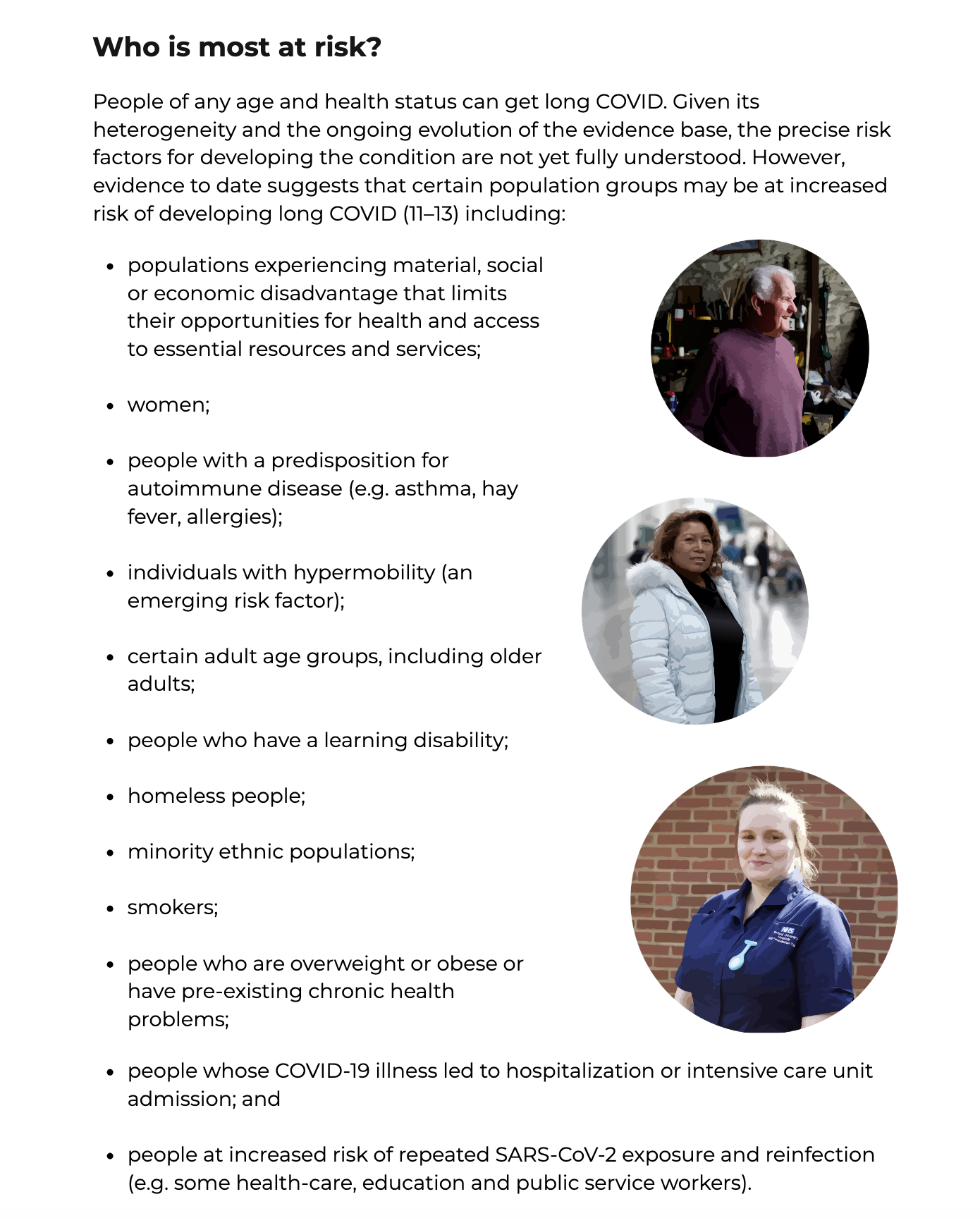
    Who is most at risk?
People of any age and health status can get long COVID. Given its heterogeneity and the ongoing evolution of the evidence base, the precise risk factors for developing the condition are not yet fully understood. However, evidence to date suggests that certain population groups may be at increased risk of developing long COVID (11-13) including:
• populations experiencing material, social or economic disadvantage that limits their opportunities for health and access to essential resources and services;
• women;
• people with a predisposition for autoimmune disease (e.g. asthma, hay fever, allergies);
• individuals with hypermobility (an emerging risk factor);
• certain adult age groups, including older adults;
• people who have a learning disability;
• homeless people;
• minority ethnic populations;
• smokers;
• people who are overweight or obese or have pre-existing chronic health problems;
• people whose COVID-19 illness led to hospitalization or intensive care unit admission; and
• people at increased risk of repeated SARS-CoV-2 exposure and reinfection (e.g. some health-care, education and public service workers).
    💬 1🔄 6⭐ 0
  • katharinethatkatharine@ohai.social
    Nov 16, 2026, 5:39 AM

    It's a very wordy document for basically going "stop being a dick to people who are dealing with some shit science hasn't fully figured out how to treat yet."

    But maybe consider printing out a couple copies to hand to a HCW who acts like a dick about your respirator and to leave around your doctors' offices. Or forward the link to the toolkit to your regular healthcare professionals.

    💬 1🔄 3⭐ 0
  • katharinethatkatharine@ohai.social
    Nov 16, 2026, 5:47 AM

    WHOmst shoulders some of the responsibility for the number of people with Long Covid being so high as it is and also for the uncertainty? WHOmst played games about how Covid spreads and helped sow confusion and misinformation in the first hecking place? And WHOmst got on the mic and declared the emergency over, granting governments permission to cut funding to testing and surveillance despite knowing full goddamned well there was already a substantial proportion of people living with Long Covid?
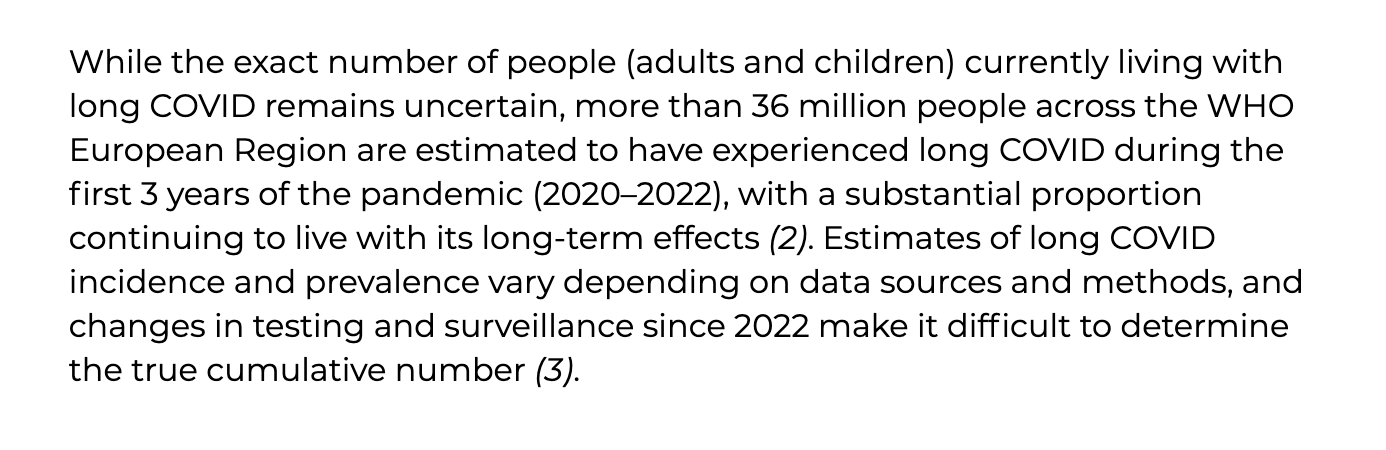
    While the exact number of people (adults and children) currently living with long COVID remains uncertain, more than 36 million people across the WHO European Region are estimated to have experienced long COVID during the first 3 years of the pandemic (2020-2022), with a substantial proportion continuing to live with its long-term effects. Estimates of long COVID incidence and prevalence vary depending on data sources and methods, and changes in testing and surveillance since 2022 make it difficult to determine the true cumulative number.
    💬 1🔄 1⭐ 0
  • katharinethatkatharine@ohai.social
    Nov 16, 2026, 7:31 AM

    Long Covid as a result of letting kids get repeatedly infected with Covid seems way worse than the school closures for a few weeks that one time.
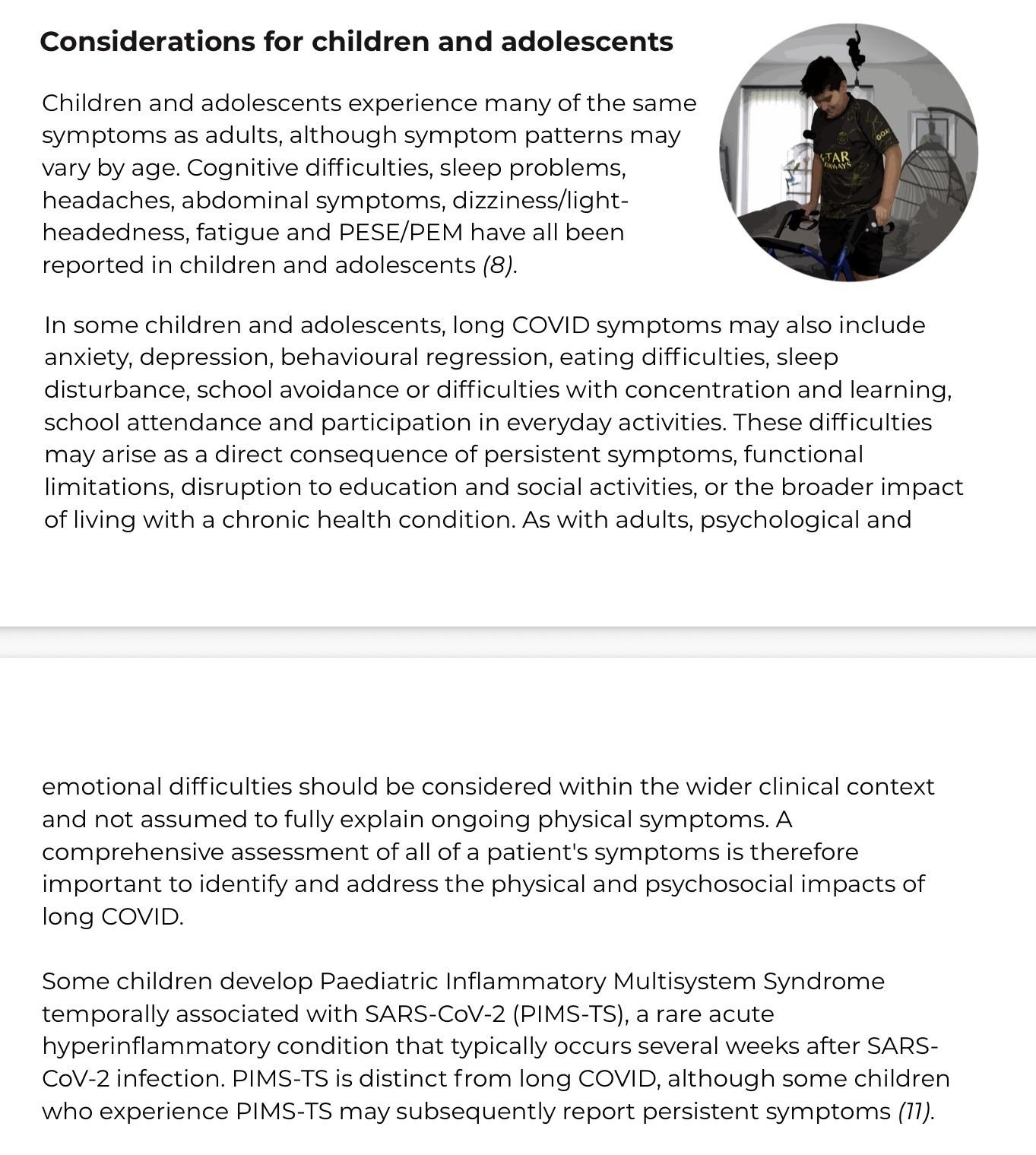
    Considerations for children and adolescents
Children and adolescents experience many of the same symptoms as adults, although symptom patterns may vary by age. Cognitive difficulties, sleep problems, headaches, abdominal symptoms, dizziness/light-headedness, fatigue and PESE/PEM have all been reported in children and adolescents.
In some children and adolescents, long COVID symptoms may also include anxiety, depression, behavioural regression, eating difficulties, sleep disturbance, school avoidance or difficulties with concentration and learning, school attendance and participation in everyday activities. These difficulties may arise as a direct consequence of persistent symptoms, functional limitations, disruption to education and social activities, or the broader impact of living with a chronic health condition. As with adults, psychological and emotional difficulties should be considered within the wider clinical context and not assumed to fully explain ongoing physical symptoms. A comprehensive assessment of all of a patient's symptoms is therefore important to identify and address the physical and psychosocial impacts of long COVID.
Some children develop Paediatric Inflammatory Multisystem Syndrome temporally associated with SARS-CoV-2 (PIMS-TS), a rare acute hyperinflammatory condition that typically occurs several weeks after SARS-CoV-2 infection. PIMS-TS is distinct from long COVID, although some children who experience PIMS-TS may subsequently report persistent symptoms.
    💬 2🔄 3⭐ 0
  • katharinethatkatharine@ohai.social
    Nov 16, 2026, 7:56 AM

    The WHO’s declaration that the PHEIC phase of Covid was over allowed organizations of all stripes to pretend that the pandemic is past-tense, clearly defined by the dates of the PHEIC phase, and say ludicrous garbage like “after Covid” and “post-pandemic” as if that’s a reality we currently exist in.

    The WHO quietly releasing documents to help mitigate problems it loudly created is really quite something.

    💬 0🔄 3⭐ 0
  • Nov 17, 2026, 11:02 AM

    @thatkatharine This is part of why I no longer work as a classroom teacher. We are irreparably physically damaging the brains we should be protecting, nuturing and educating.

    💬 0🔄 0⭐ 0