Login
You're viewing the front-end.social public feed.
  • Nov 5, 2026, 5:57 AM

    The temple's troubles were not over. By 1227 construction of the main hall was well underway when the head carpenter discovered that his calculations were incorrect.
    1 of the central 4 pillars (made from Jōkon's gift) had been cut too short to support the height of the roof!
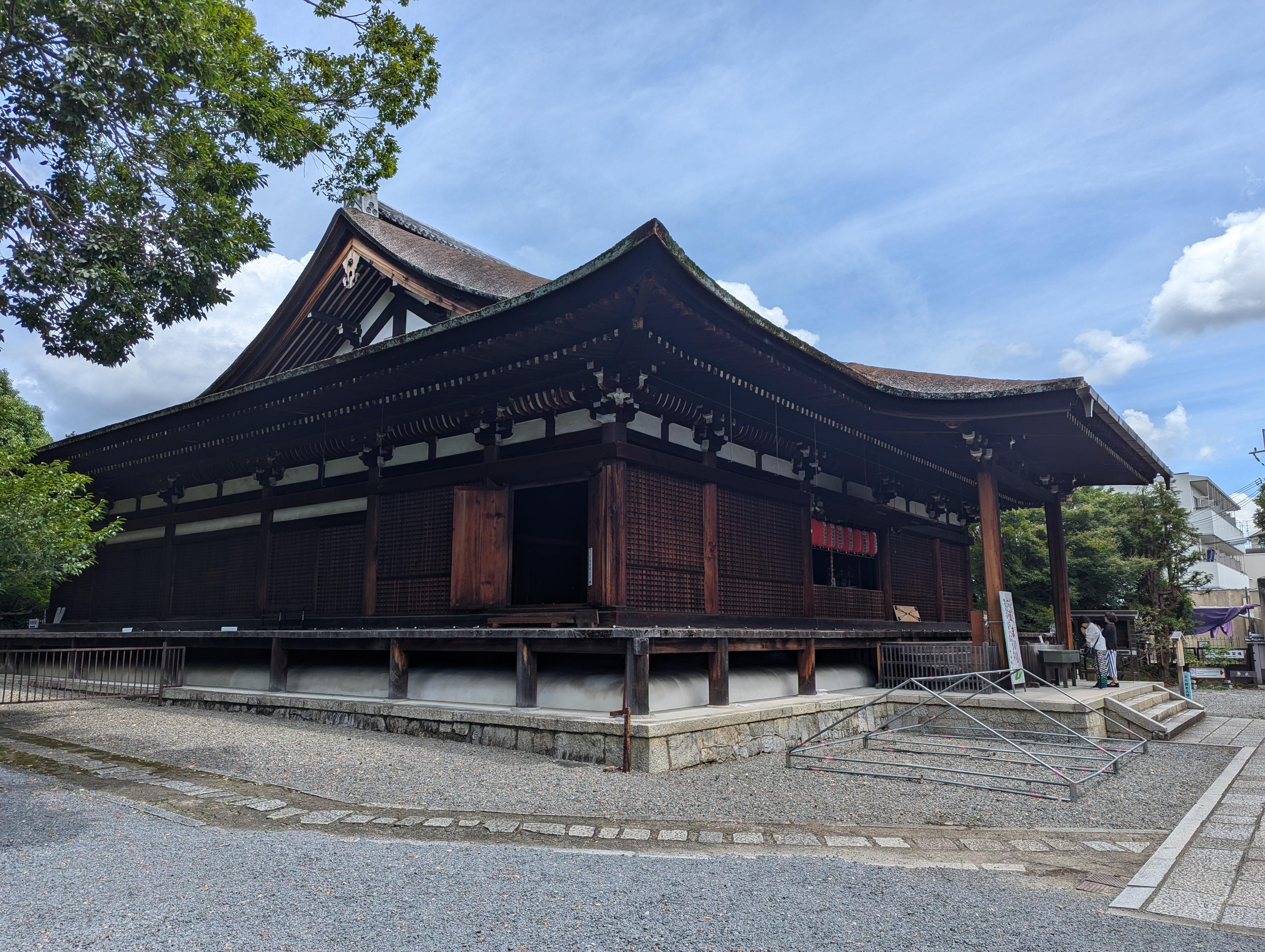
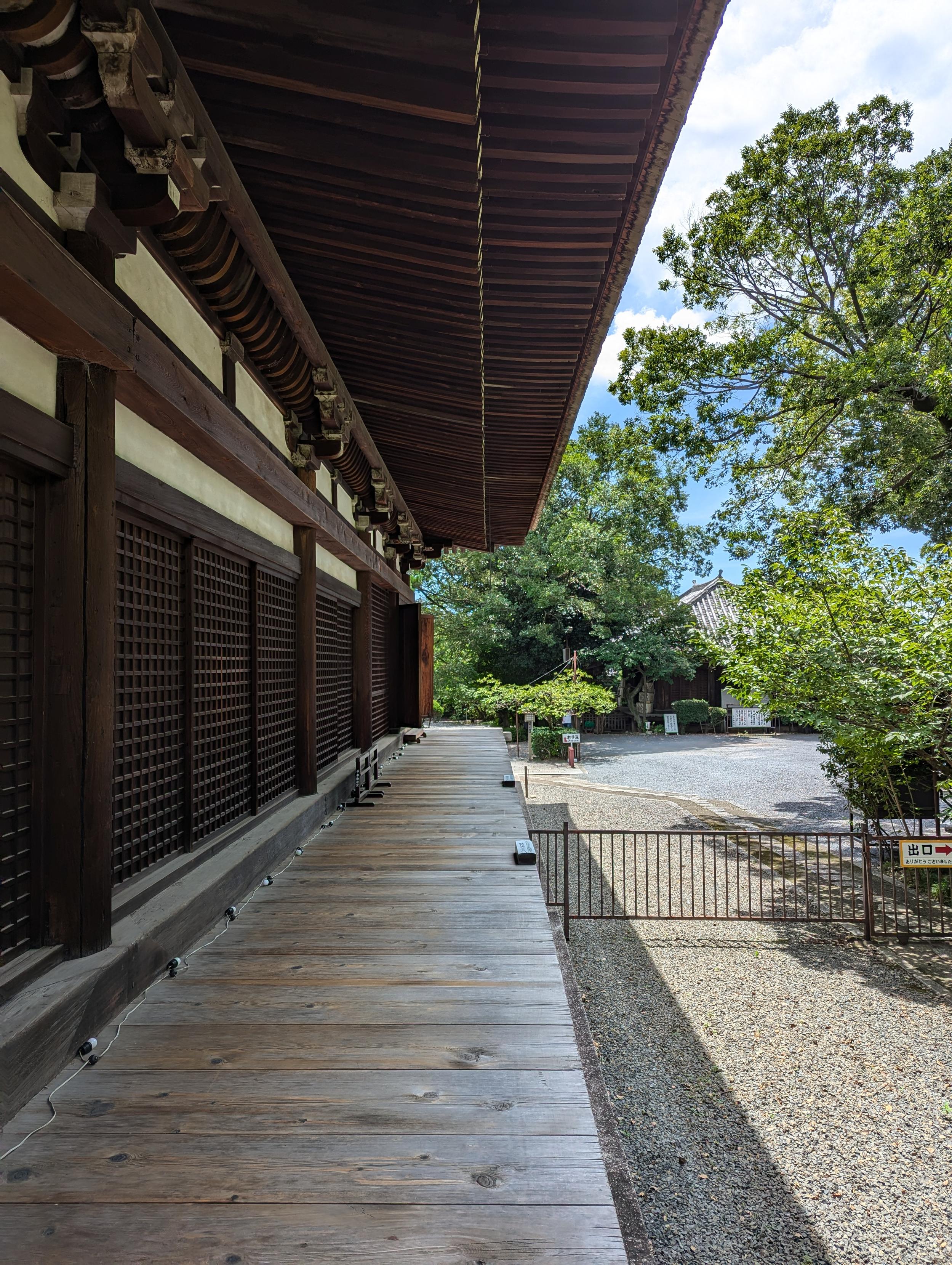
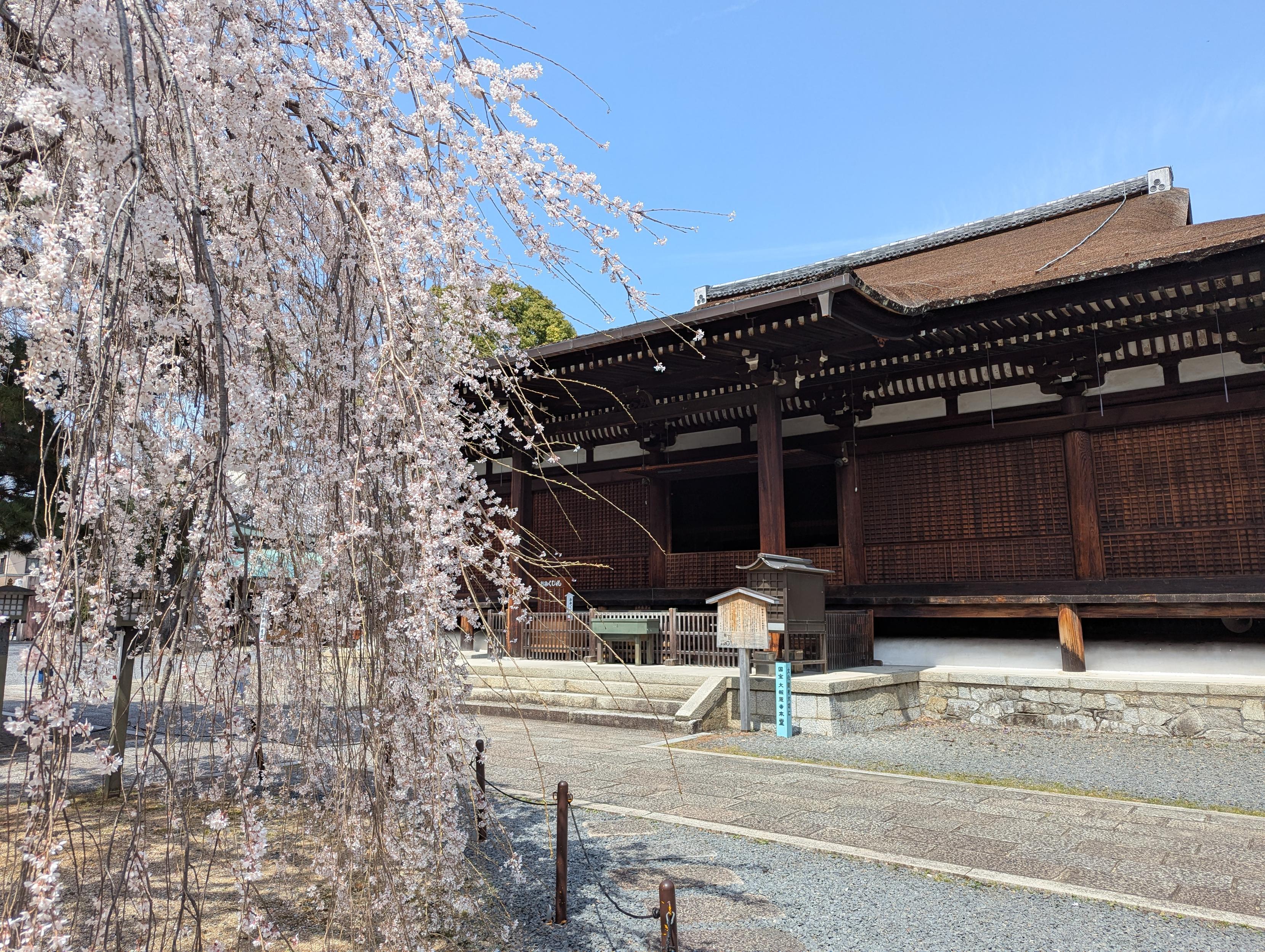
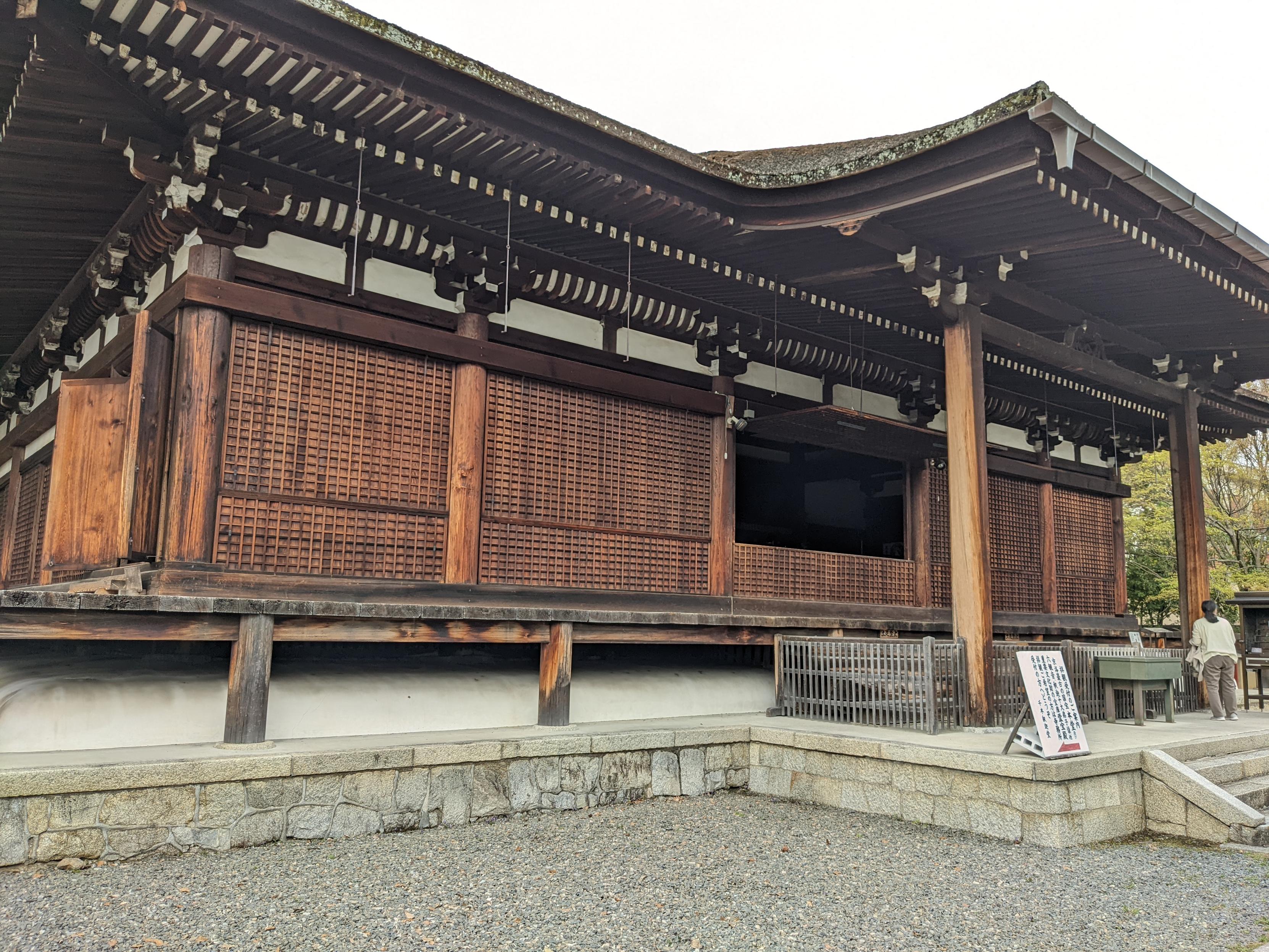
    The main hall of Daihoon-ji, the oldest extant building within Kyoto's original city boundaries.
    The main hall of Daihoon-ji, the oldest extant building within Kyoto's original city boundaries.
    The main hall of Daihoon-ji, the oldest extant building within Kyoto's original city boundaries.
    The main hall of Daihoon-ji, the oldest extant building within Kyoto's original city boundaries.
    💬 1🔄 2⭐ 10

Replies

  • Nov 5, 2026, 6:20 AM

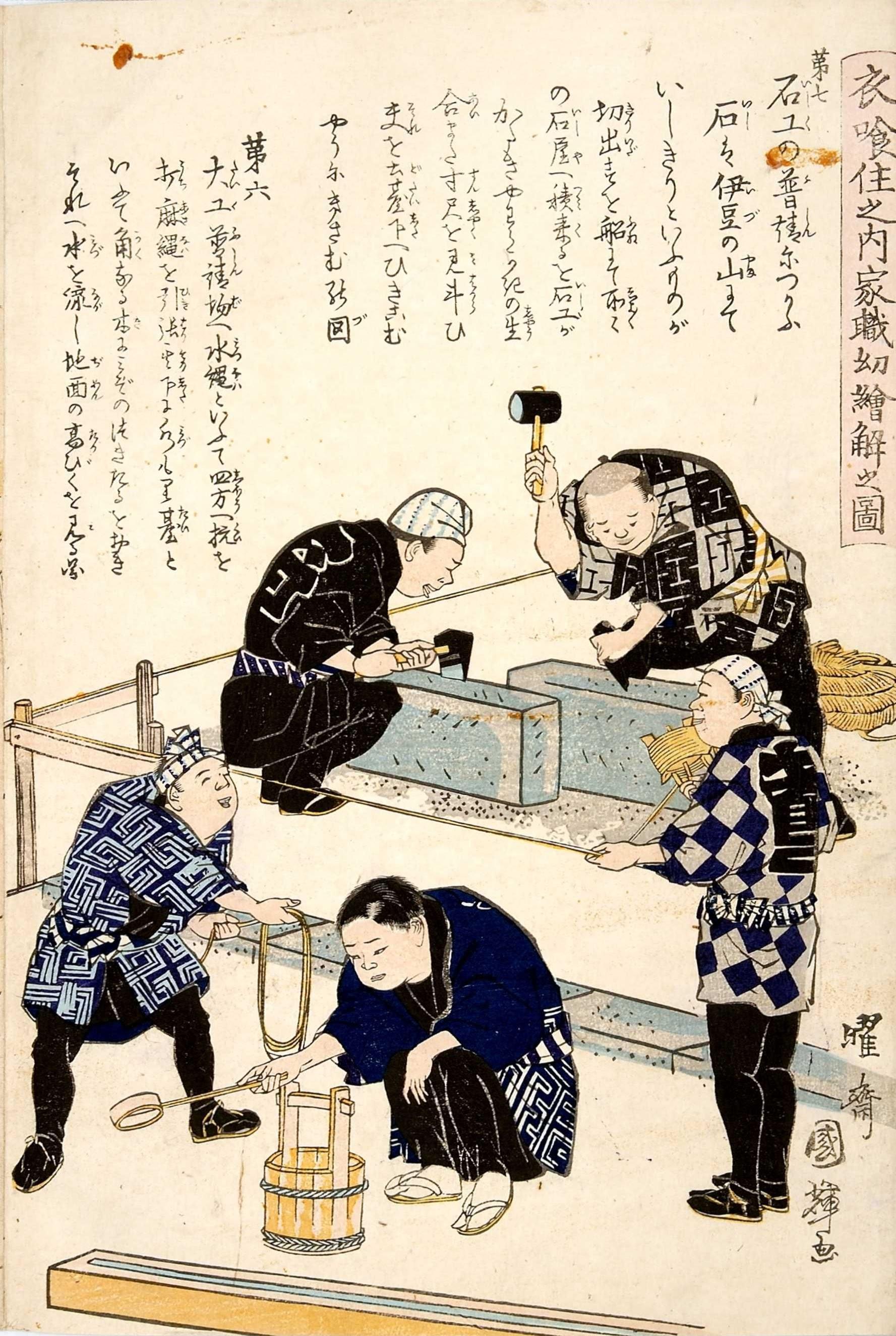
    A previous Governor of Hida Province, Nagai Takatsugu was a noted carpenter, with a workshop on Nishinotōin-dōri Ichijō (西洞院通一条の名大工/長井飛騨守高次).
    Such a mistake would not only ruin him, but bankrupt the temple.
    And he would have been ruined, were it not for his wife.

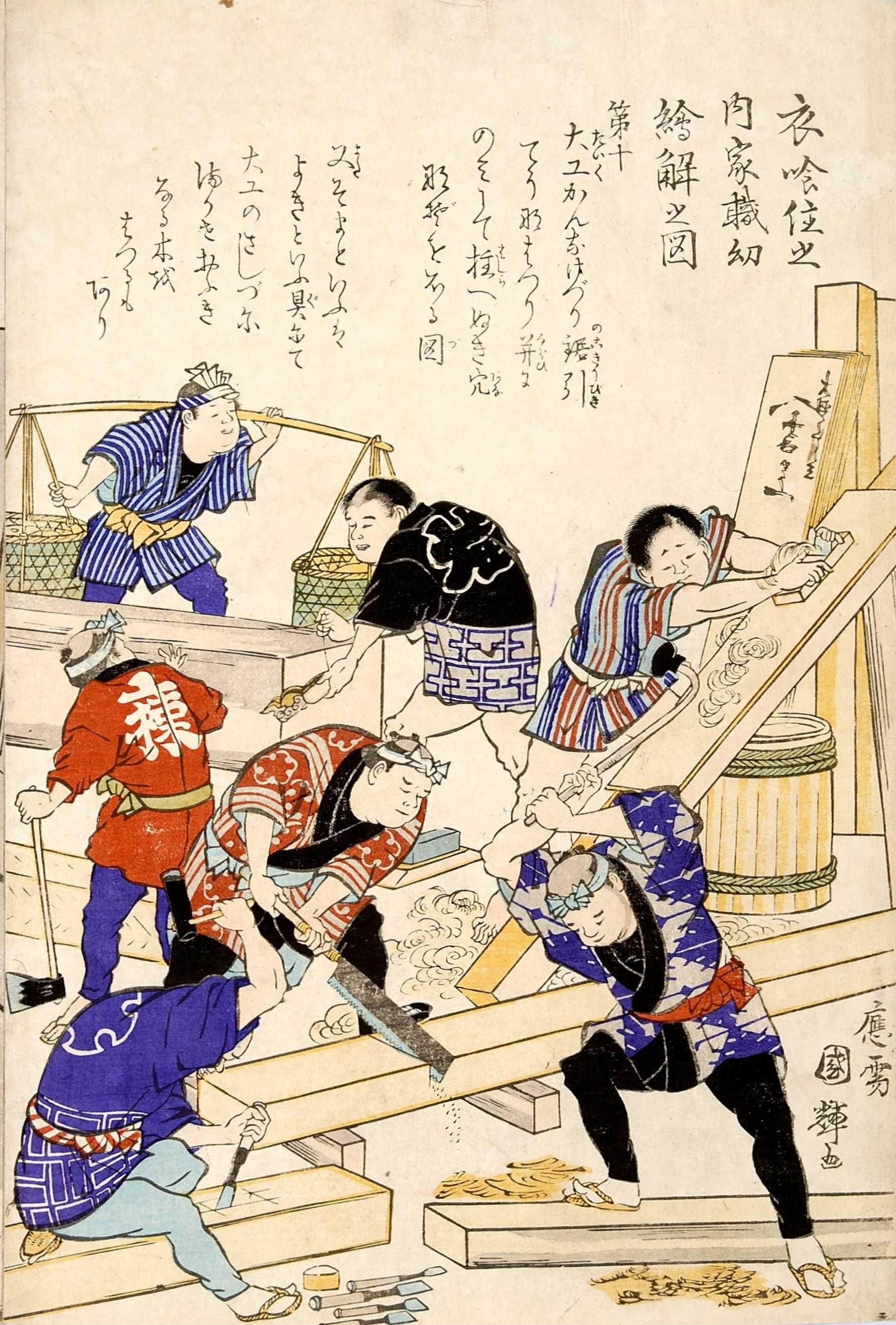
    Woodblock print of carpenters at work.

Image thanks - https://ja.ukiyo-e.org/
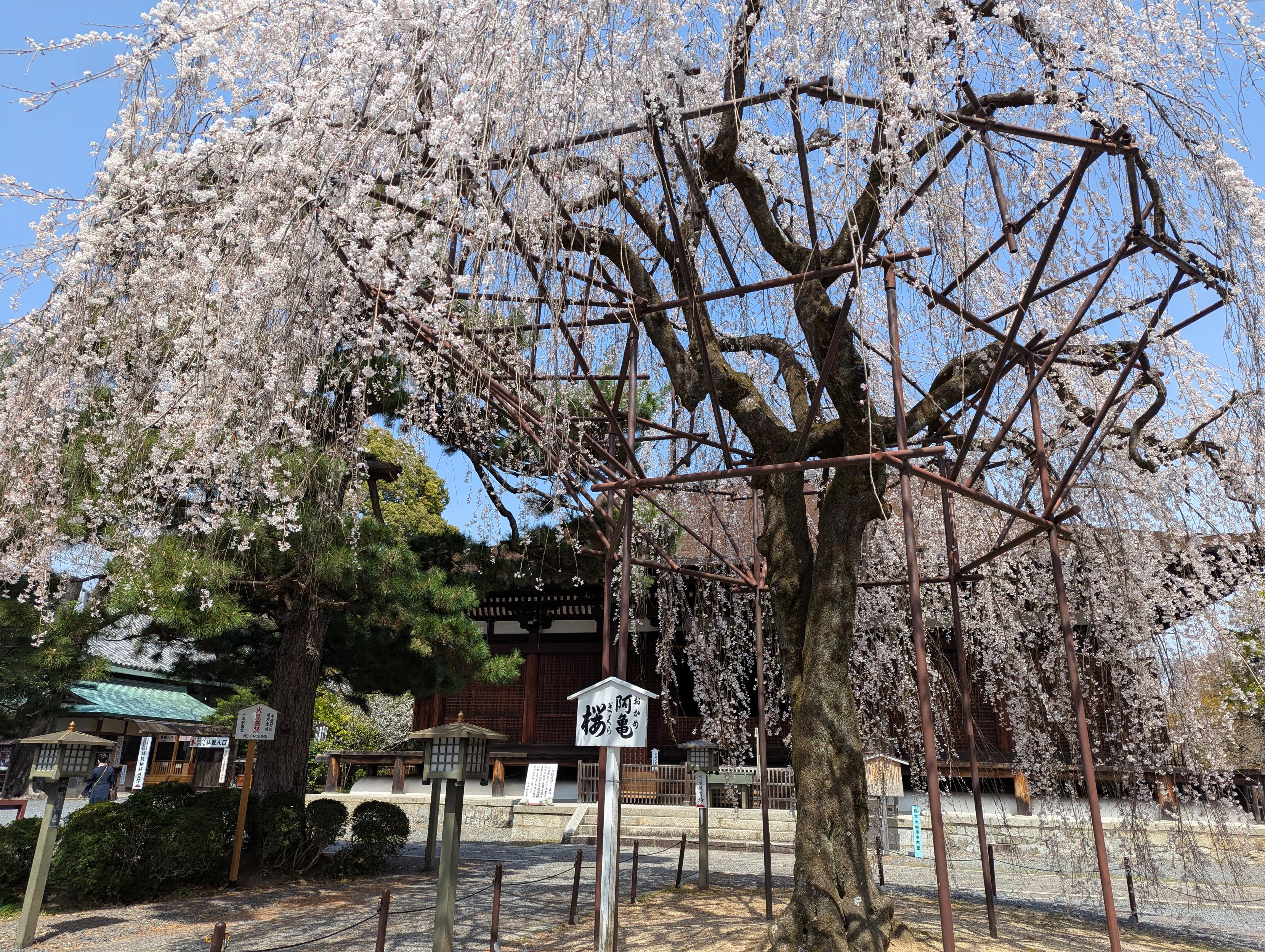
    Daihoon-ji's great weeping cherry tree.
    Image attached toot
    Woodblock print of carpenters at work.

Image thanks - https://ja.ukiyo-e.org/
    💬 1🔄 1⭐ 9
  • Nov 5, 2026, 6:34 AM

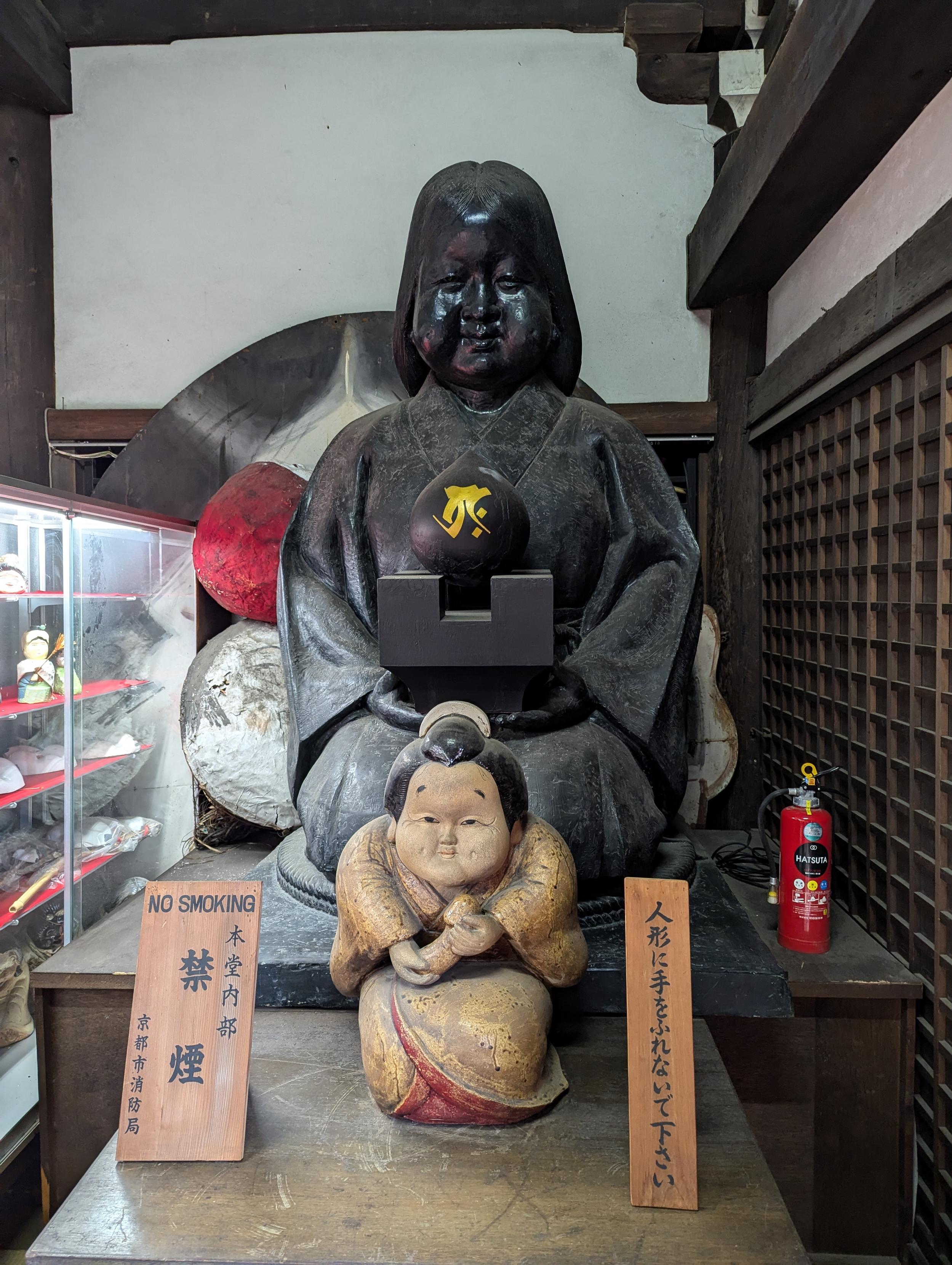
    As is typical for many historical women, we know very little about Okame (阿亀 ?-1227).
    We know she was Nagai Takatsugu's wife, and we know it is thanks to her that the main hall could be completed.

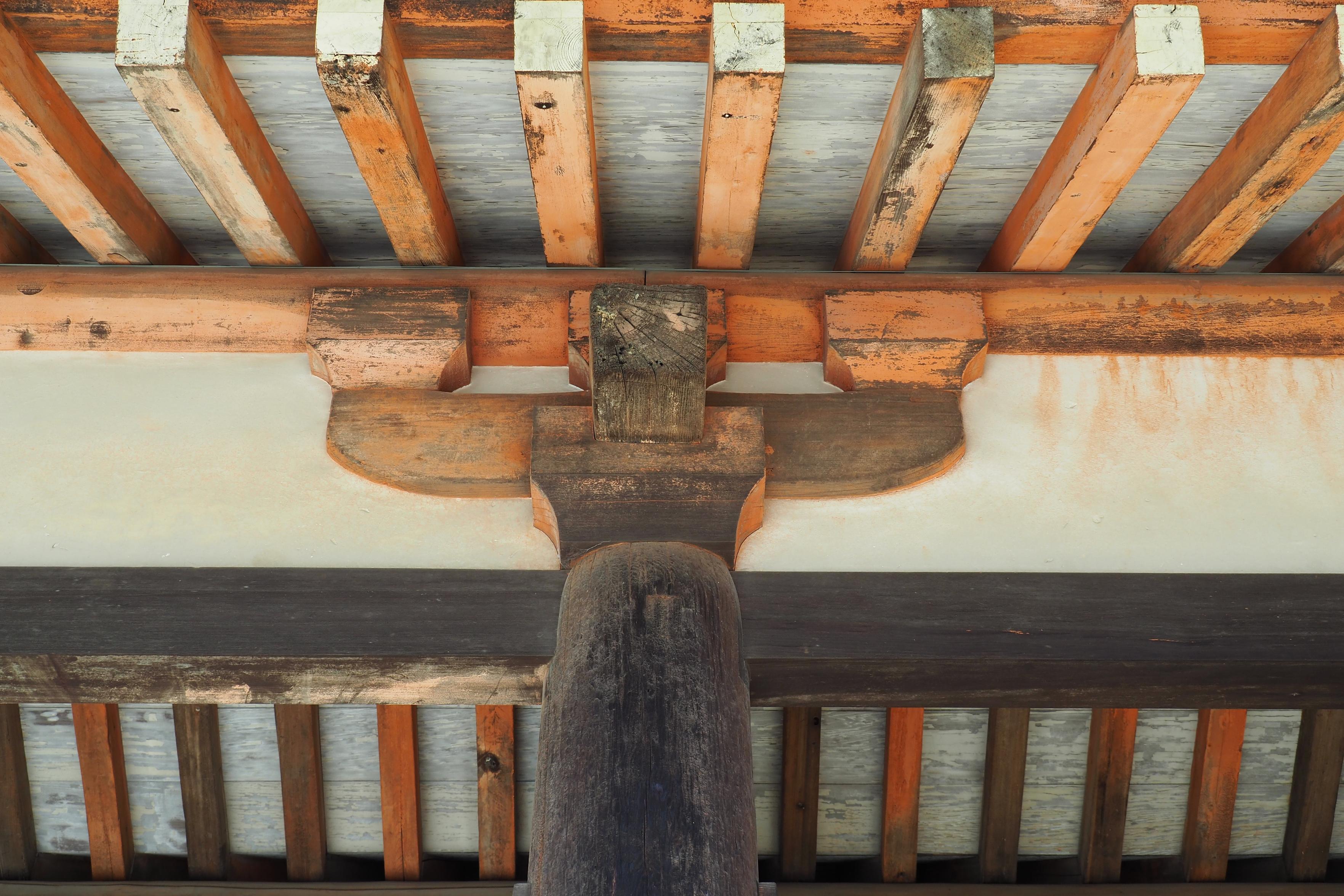
    Her solution to the problem was simple: add flying brackets to the pillar tops.

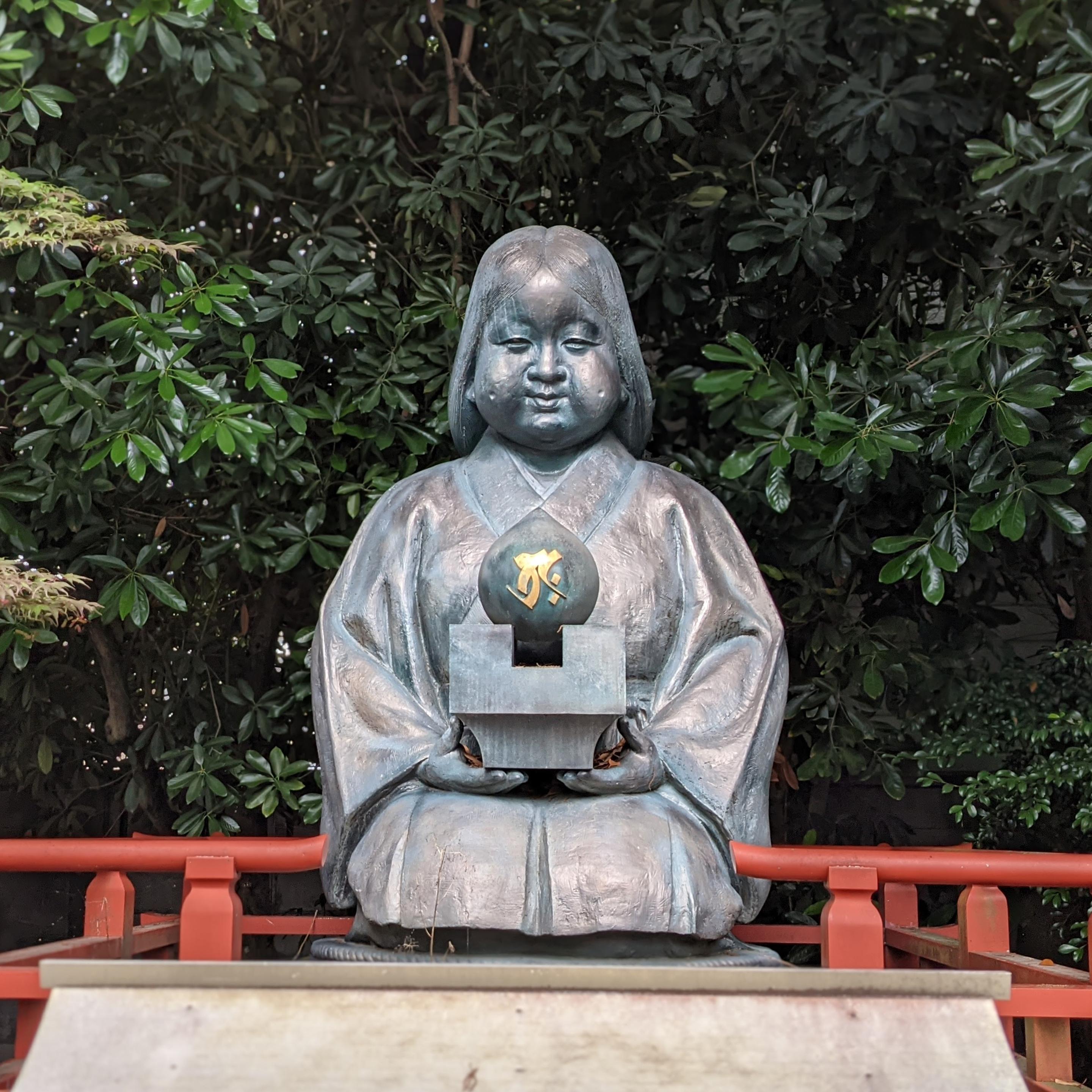
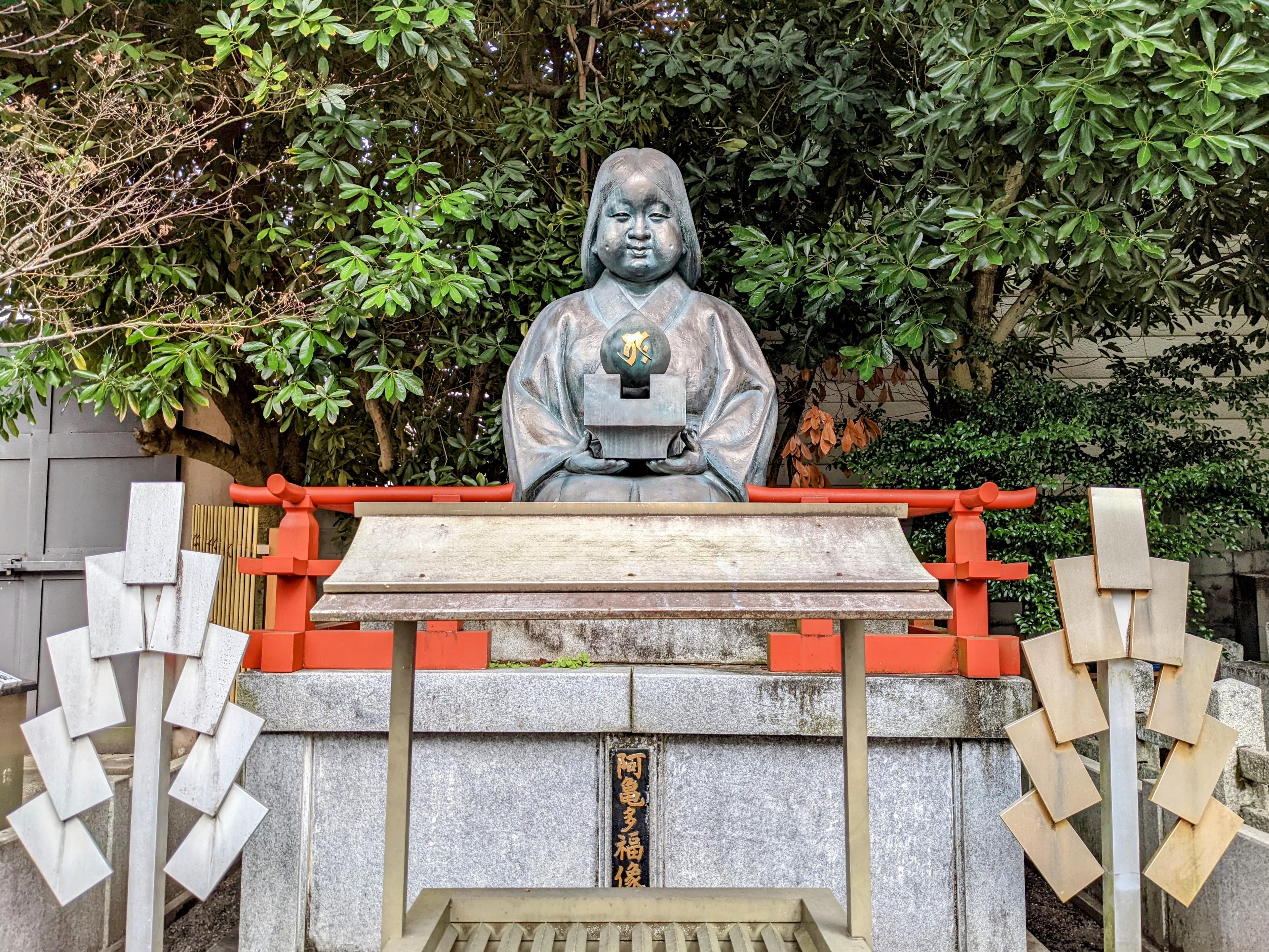
    Statue of Okame at Daihoon-ji.
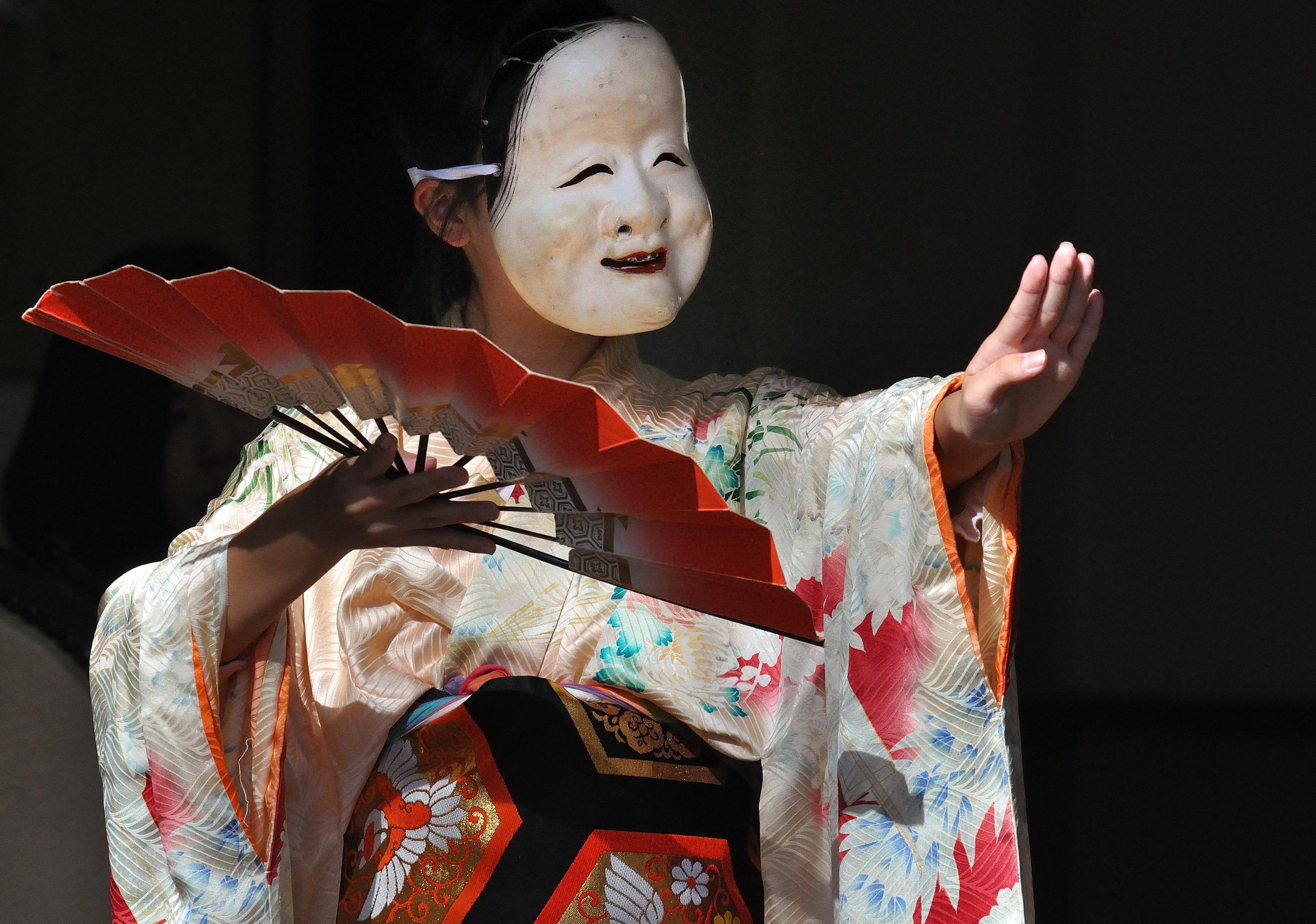
    A performer dresses at Okame.
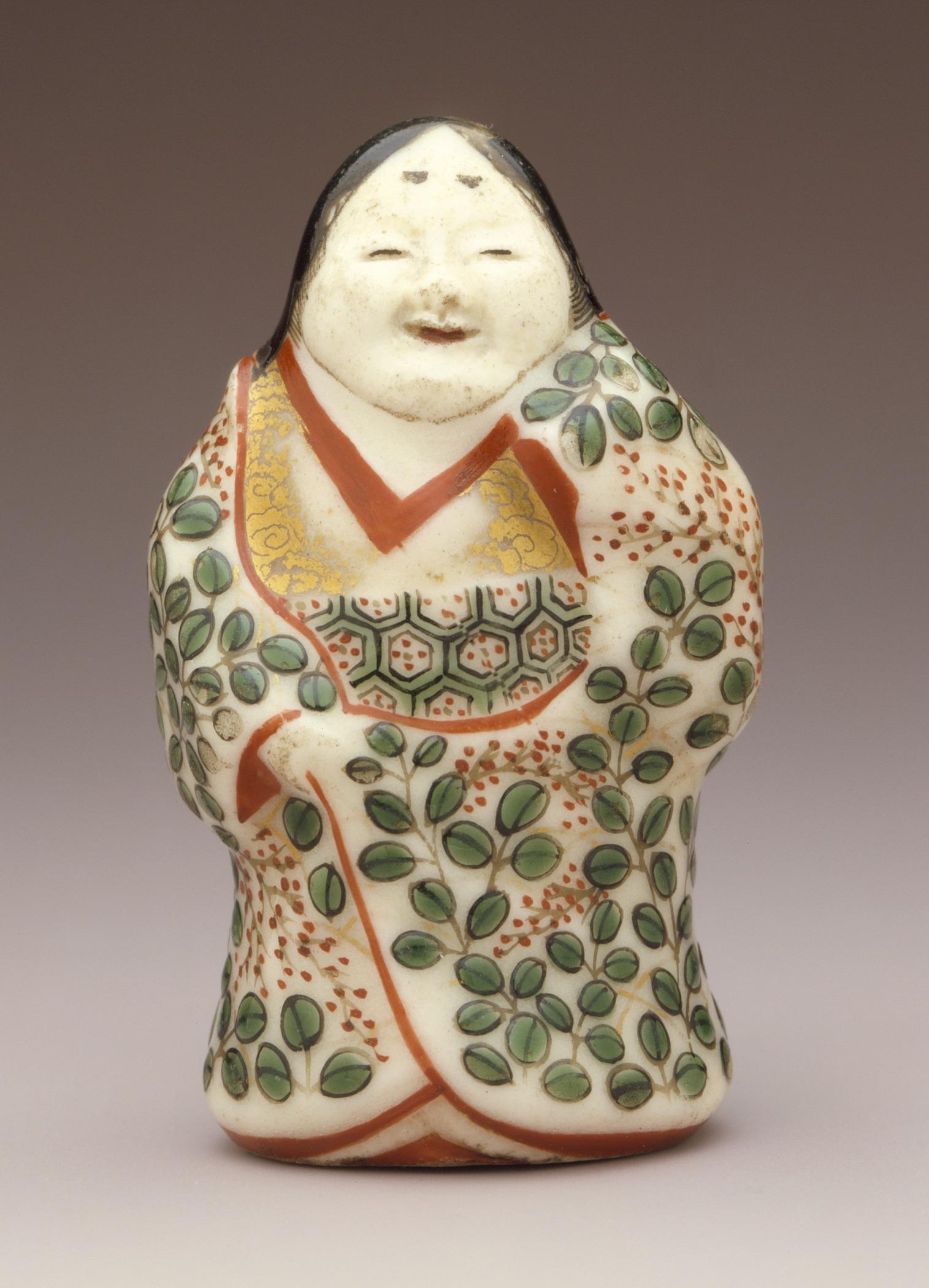
    Ceramic figure of Okame.
    Statue of Okame at Daihoon-ji.
    💬 1🔄 4⭐ 7
  • Nov 5, 2026, 6:53 AM

    Masugumi (斗組), decorative supporting brackets, had been used on external architecture before, but never inside.

    Okame suggested the brackets fill the gap between pillar and roof (the 3 other pillars were cut down to the height of the 4th).

    Construction could be completed.

    Flying brackets sit atop pillars, giving extra height and also spreading the weight of the roof onto the pillar.
    💬 1🔄 2⭐ 6
  • Nov 5, 2026, 7:00 AM

    So what happened to Okame?
    Well she died of course😐😔😡

    To prevent the story ever leaking out that she had saved the day (and her husband's reputation) she killed herself.
    But the story did leak out, and I like to think that Nagai proudly told everyone what his wife had done.

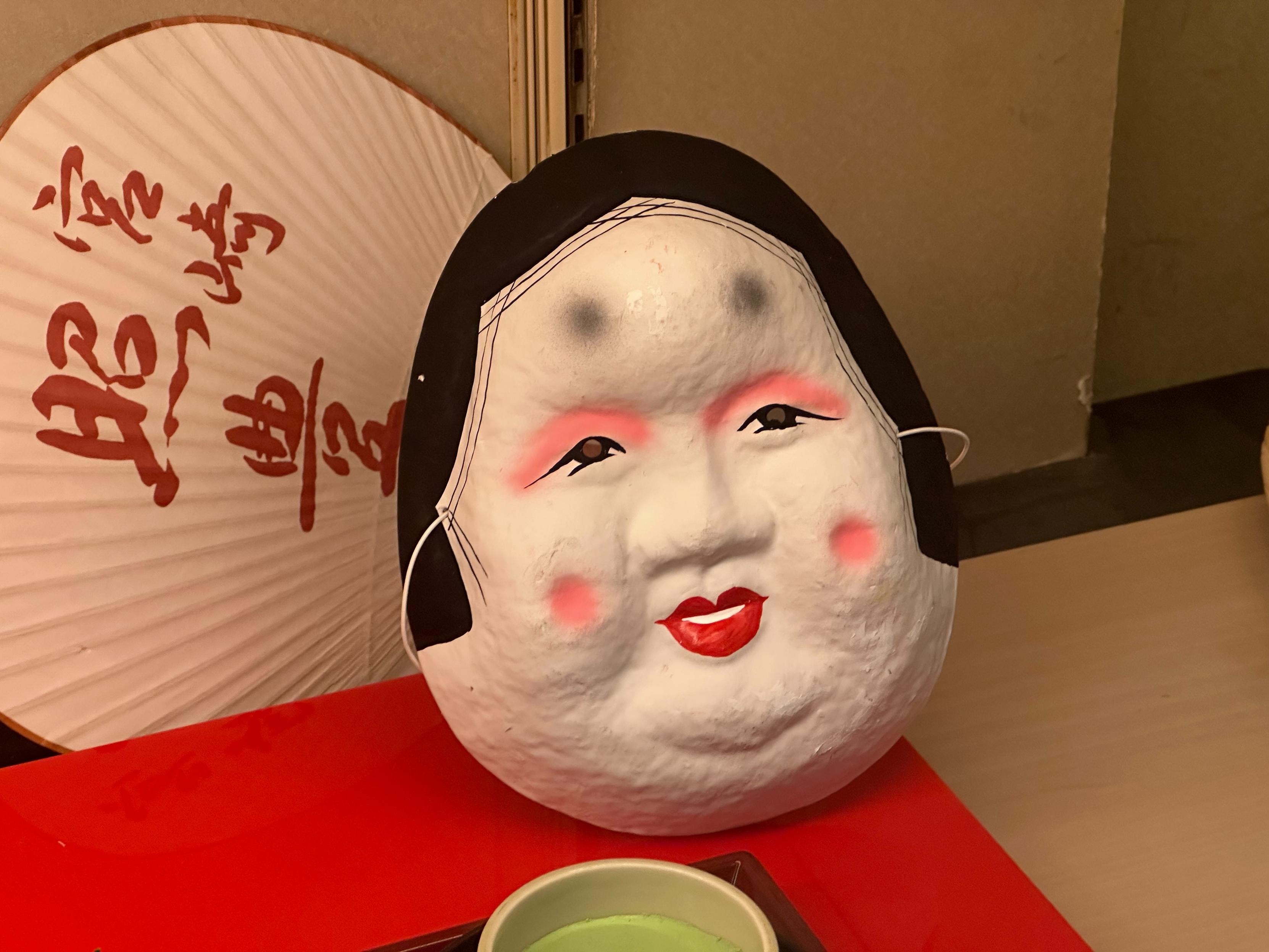
    An Okame mask.
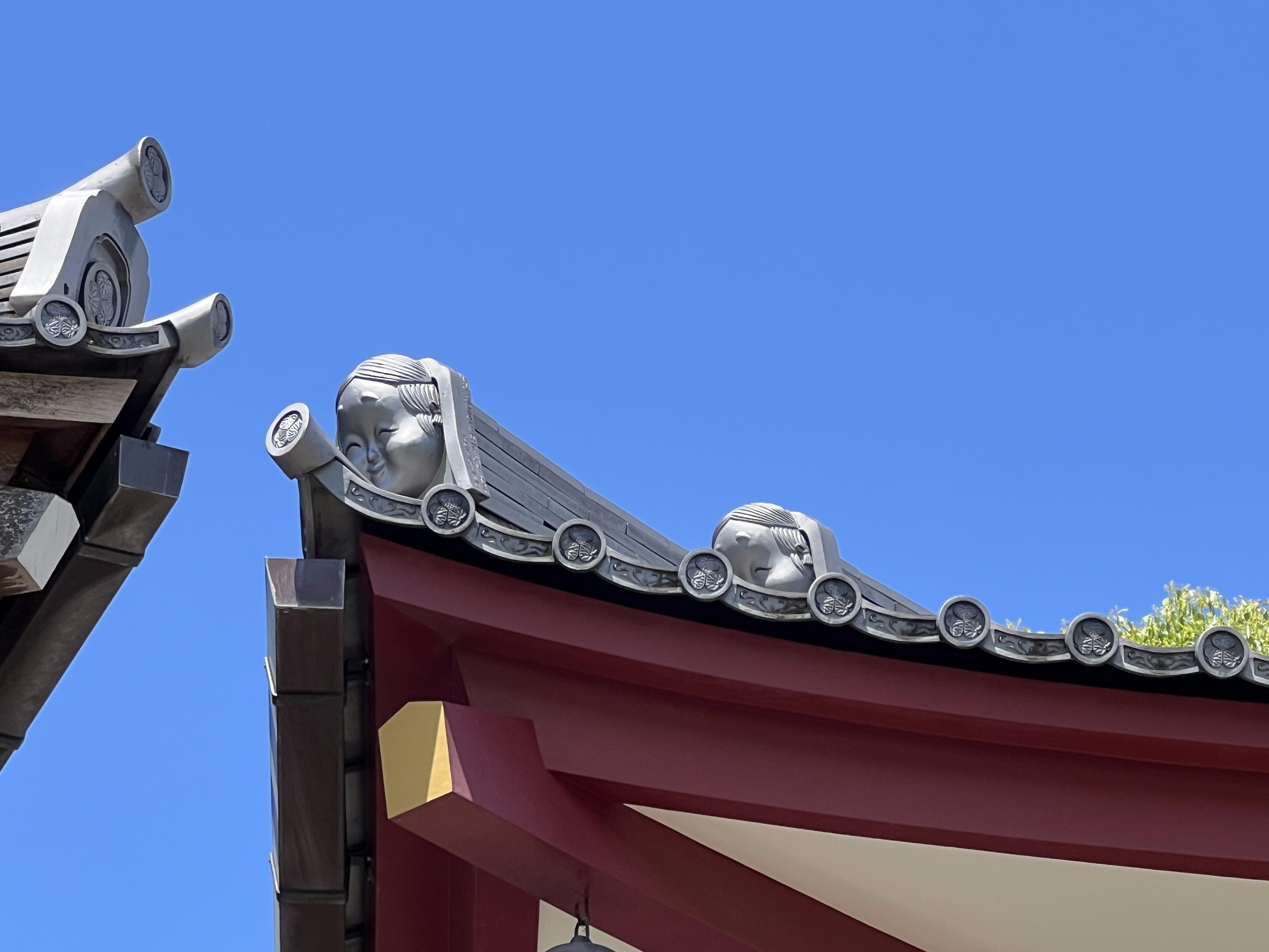
    Ridge tiles depicting an Okame mask.
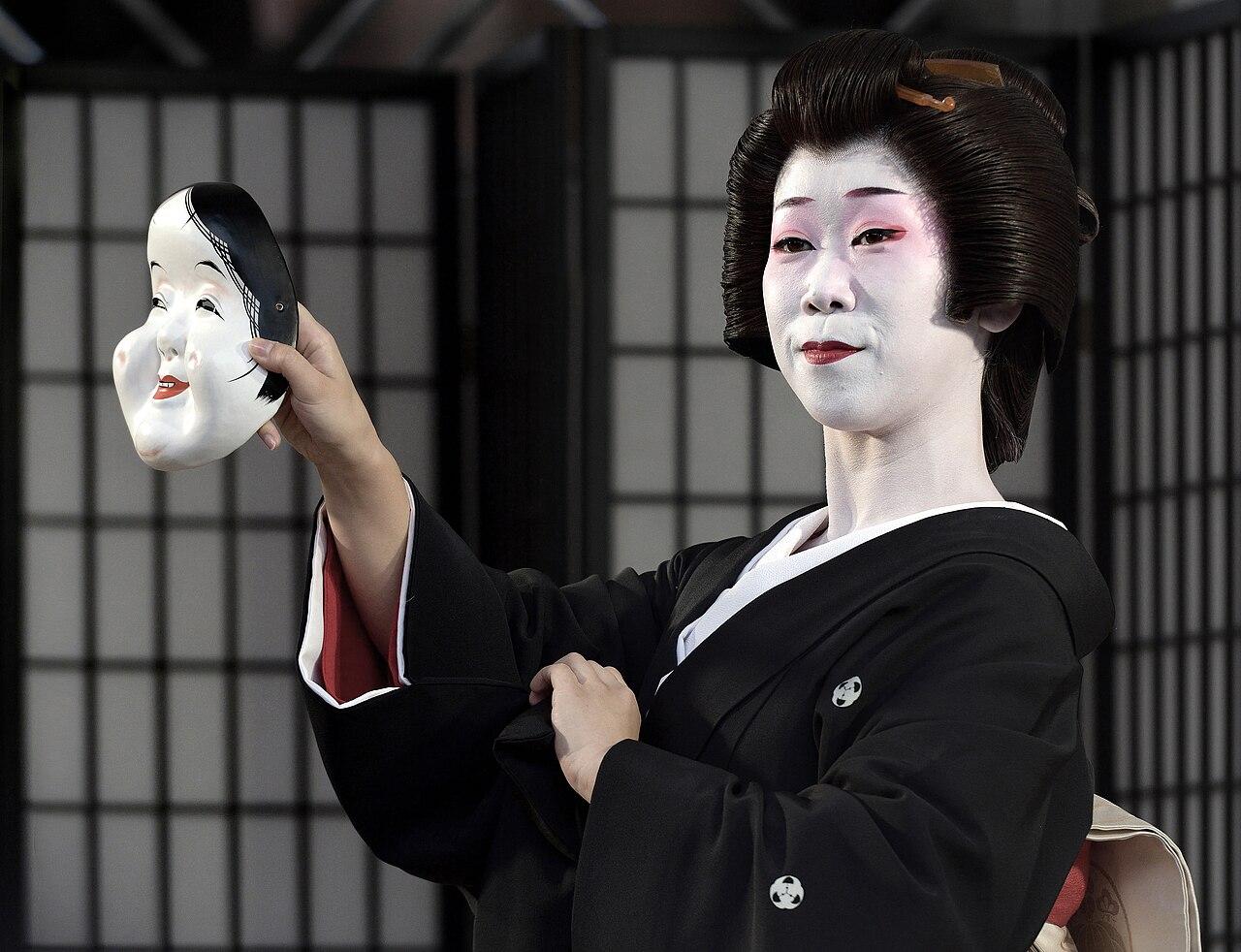
    Performer holding up an Okame mask.
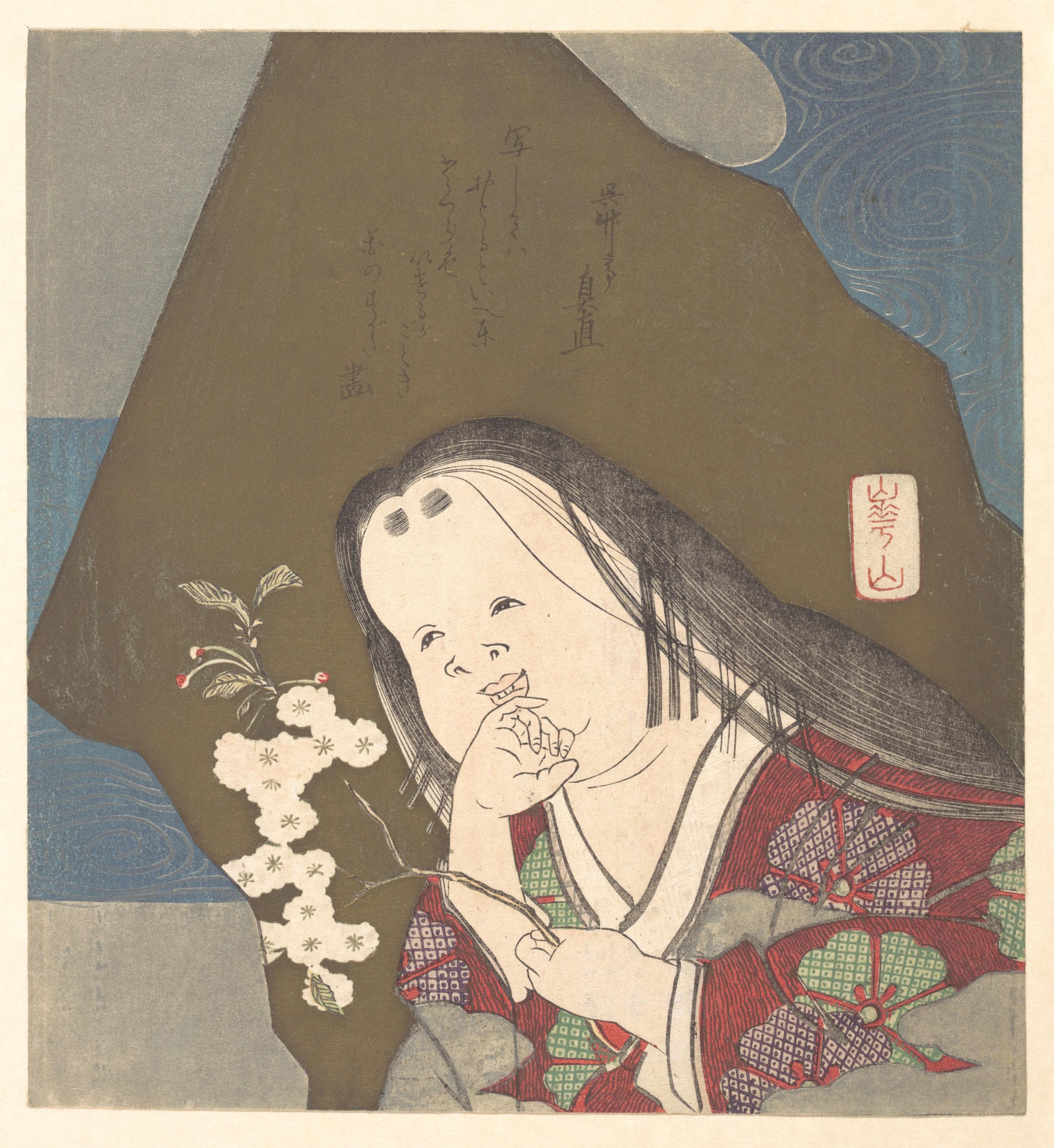
    Painting of Okame admiring cherry blossoms.
    💬 1🔄 1⭐ 11
  • Nov 5, 2026, 7:12 AM

    The Okame Mound (おかめ塚) was created in 1979.

    Considered to be an example of the perfect wife, Okame has become symbol of a harmonious marriage (and feminine beauty). Her mask is used to this day as decoration during the ceremony to mark completion of a building's framework.

    The Okame Mound at Daihoon-ji.
    💬 1🔄 1⭐ 11
  • Nov 5, 2026, 7:37 AM

    It's a miracle that the original hall survived to this day.
    Yamana Sōzen (山名宗全), leader of the Western Camp in the Ōnin War (応仁文明の乱 1467-77), protected the temple (his grandfather was buried here).
    It was one of only a few buildings in Kyōto to survive the conflict.

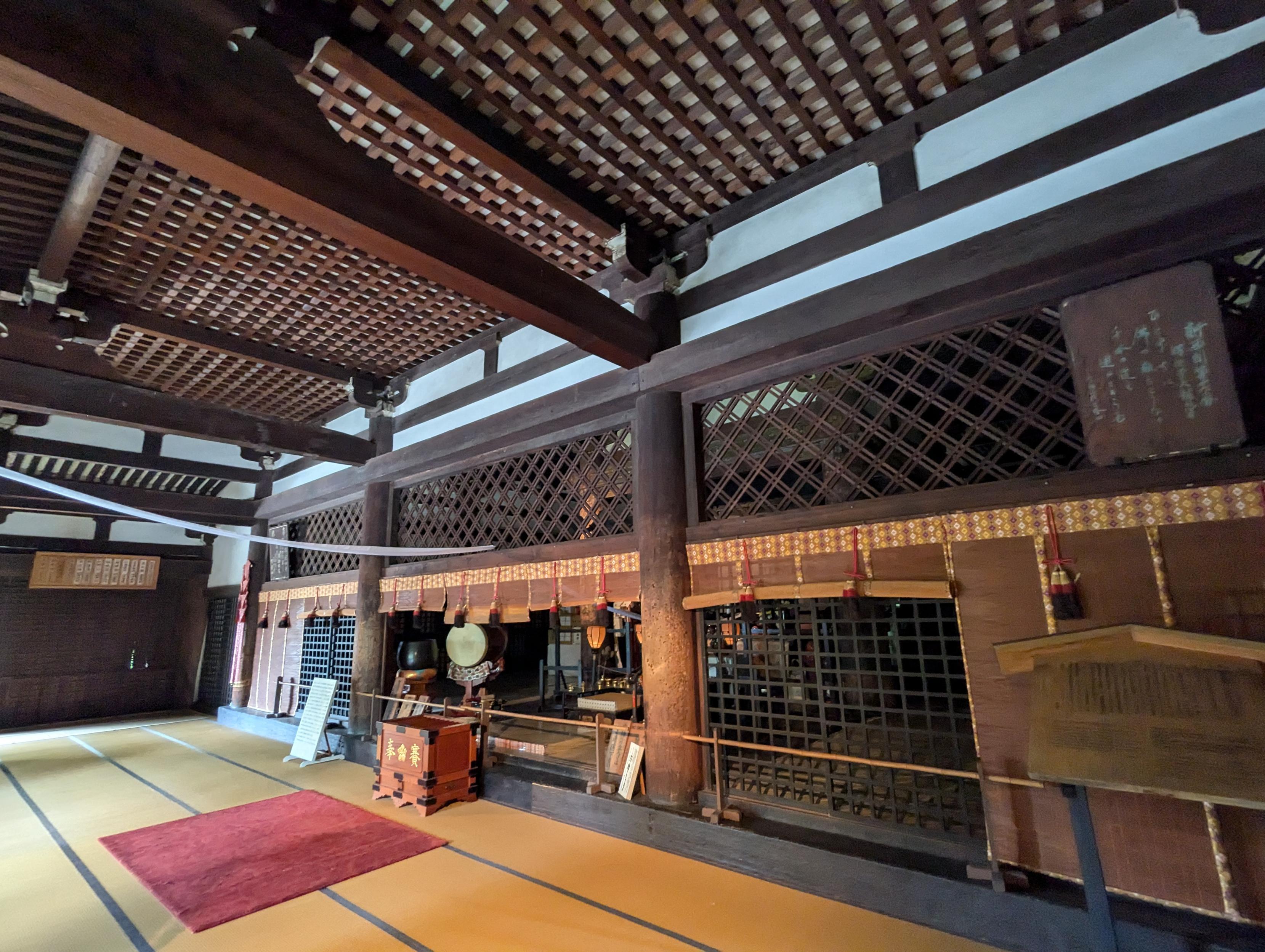
    Daihoon-ji's main hall.
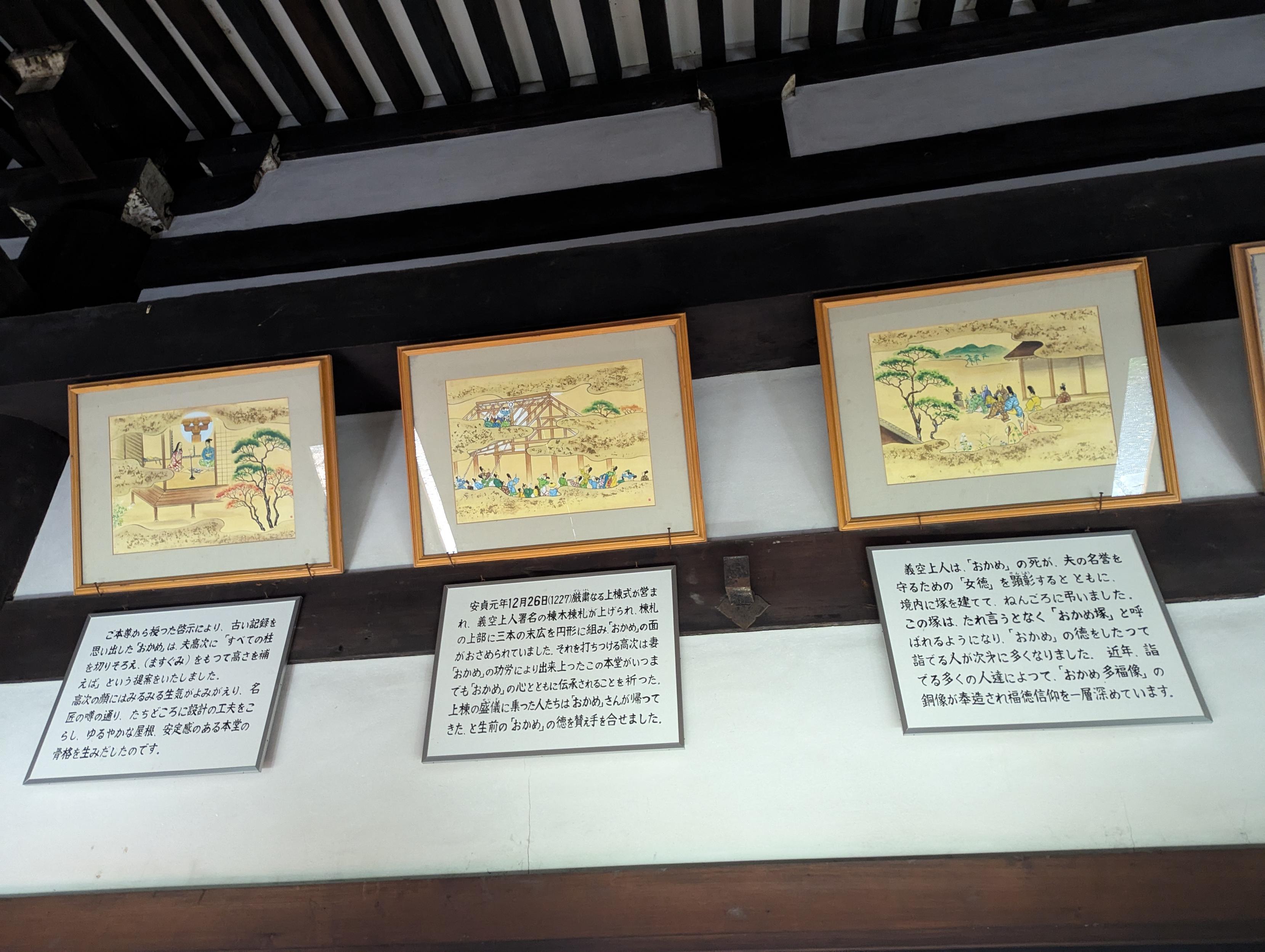
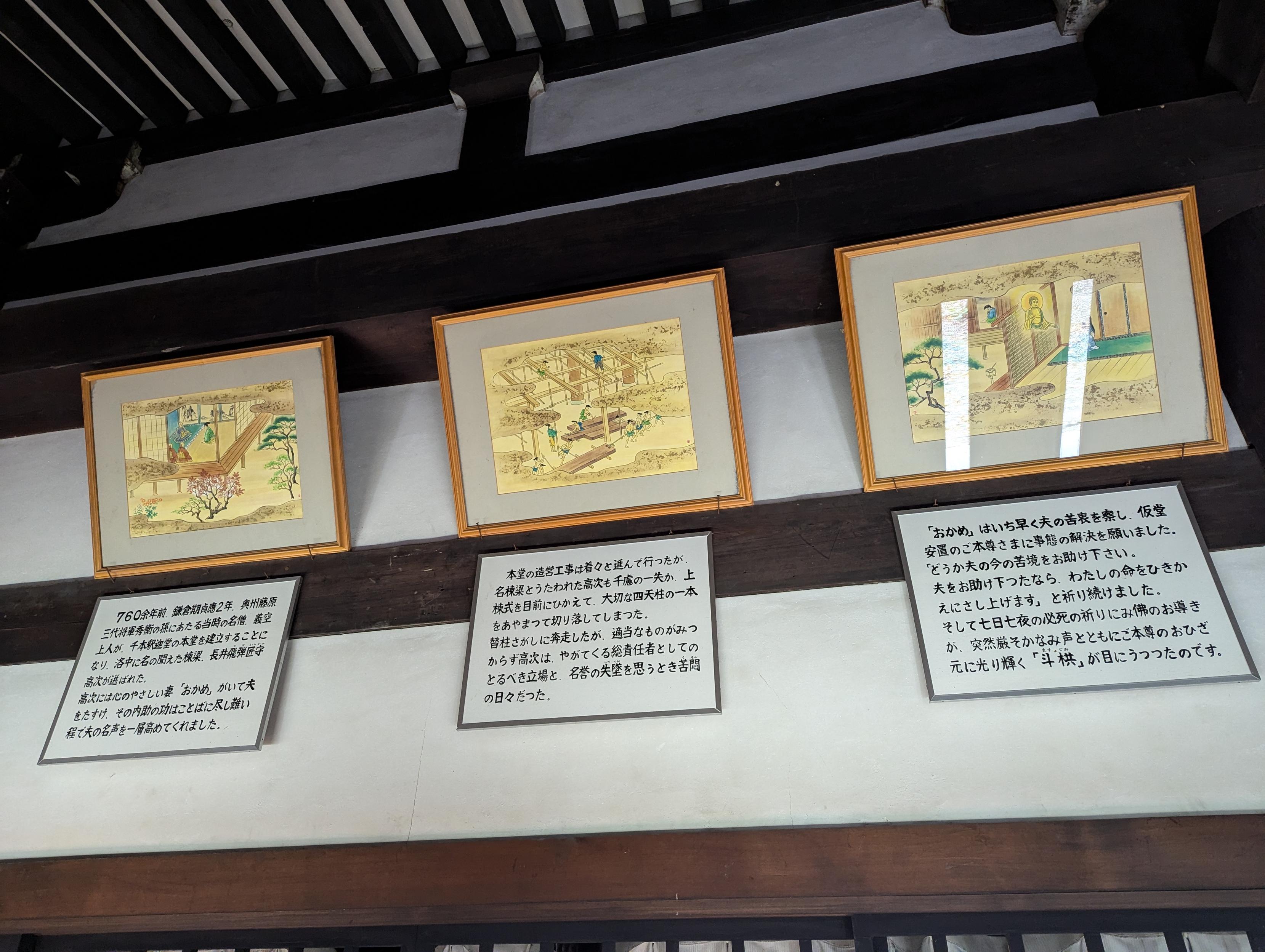
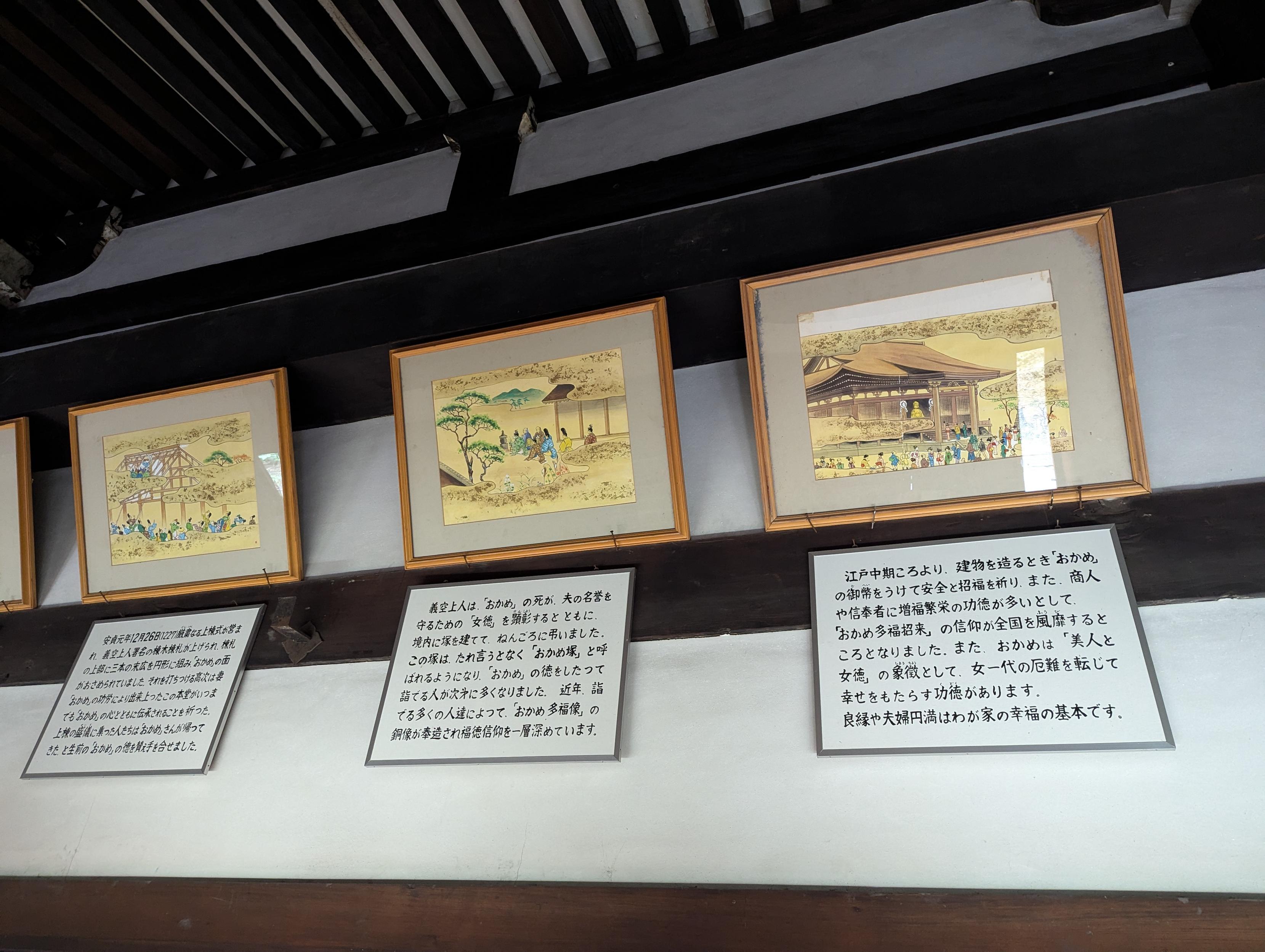
    Illustrations hung in Daihoon-ji's main hall, depicting the story of the temple's founding and how Okame came to save the construction project.
    Illustrations hung in Daihoon-ji's main hall, depicting the story of the temple's founding and how Okame came to save the construction project.
    Illustrations hung in Daihoon-ji's main hall, depicting the story of the temple's founding and how Okame came to save the construction project.
    💬 1🔄 1⭐ 7
  • Nov 5, 2026, 7:46 AM

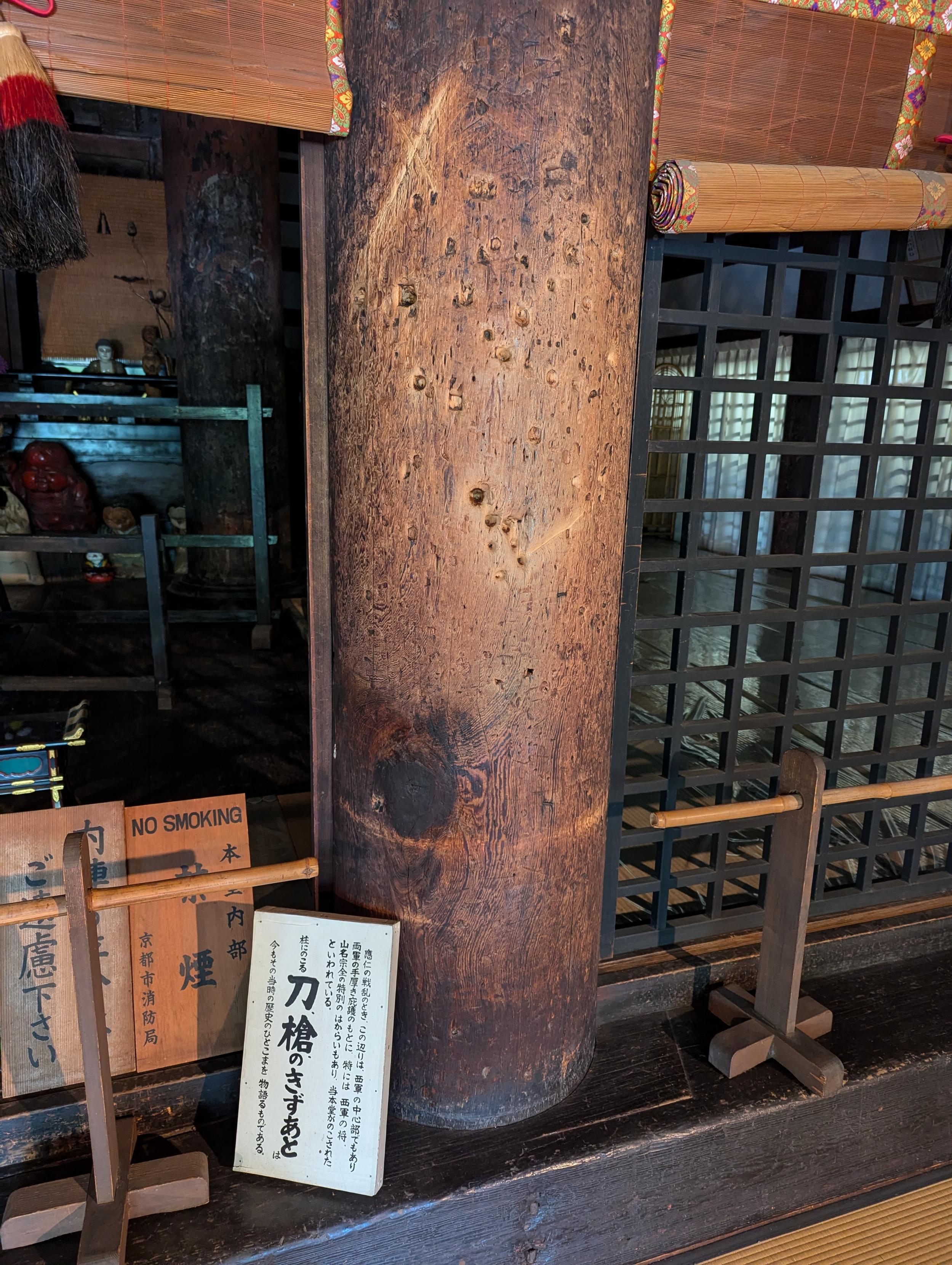
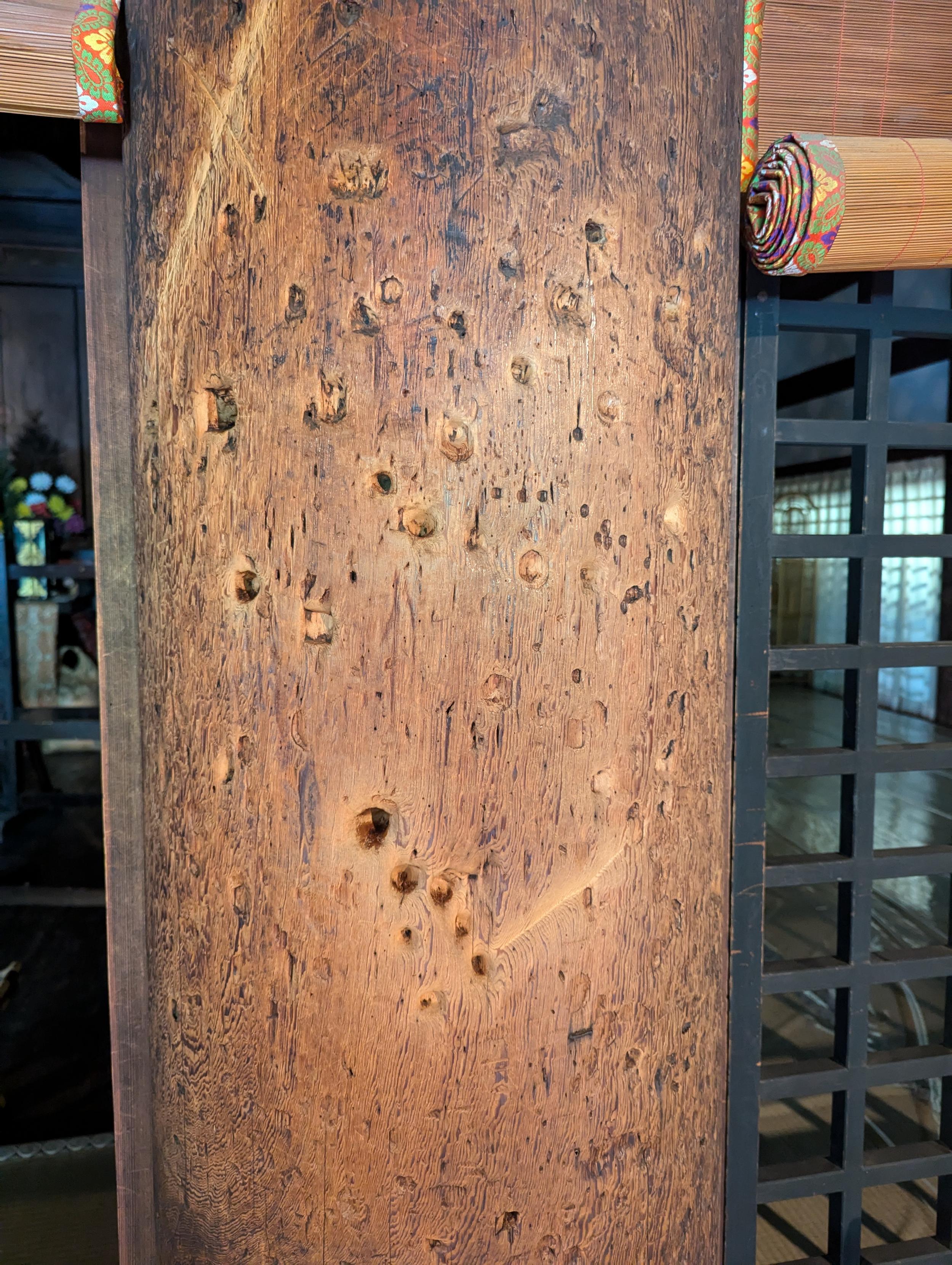
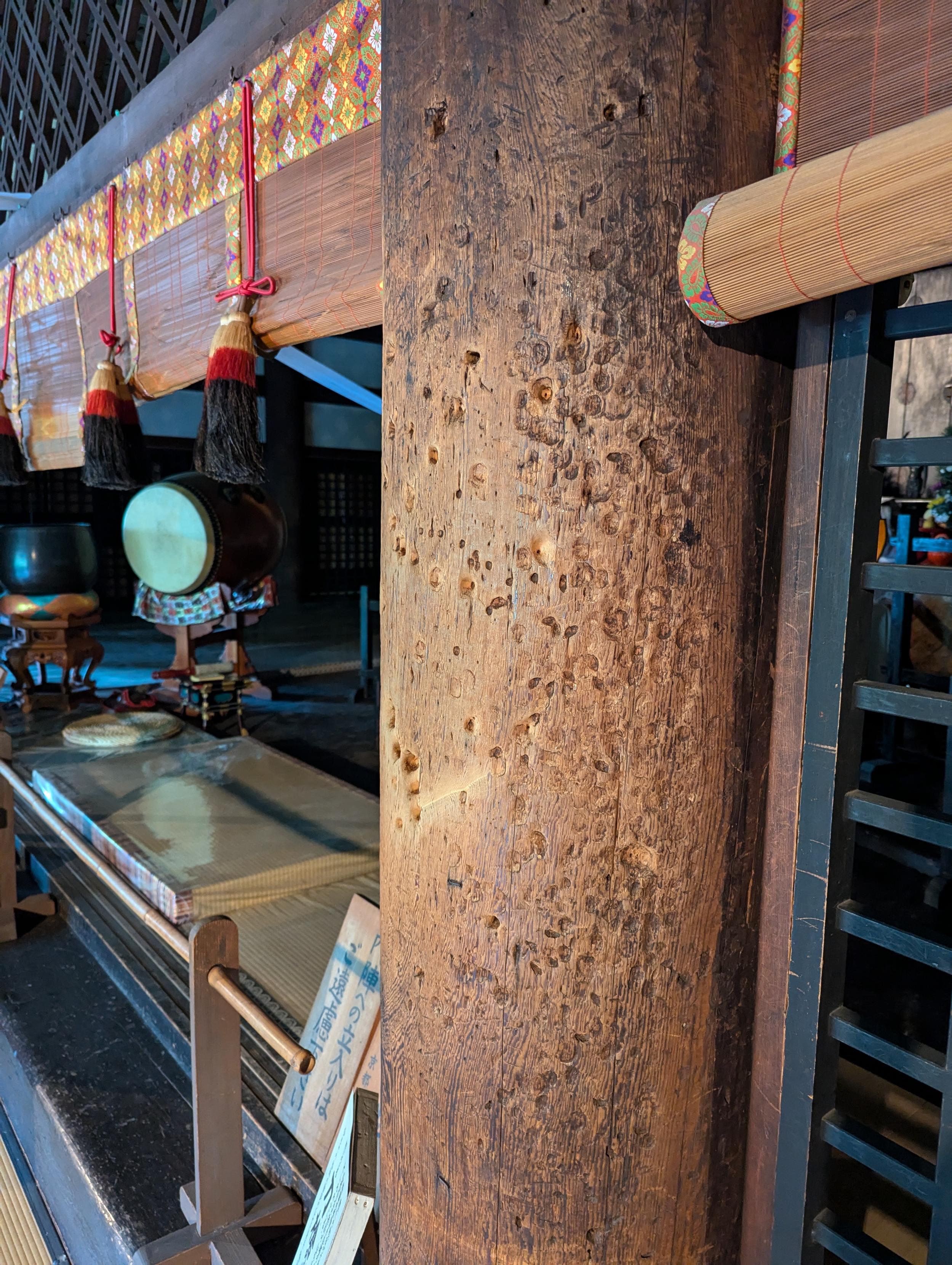
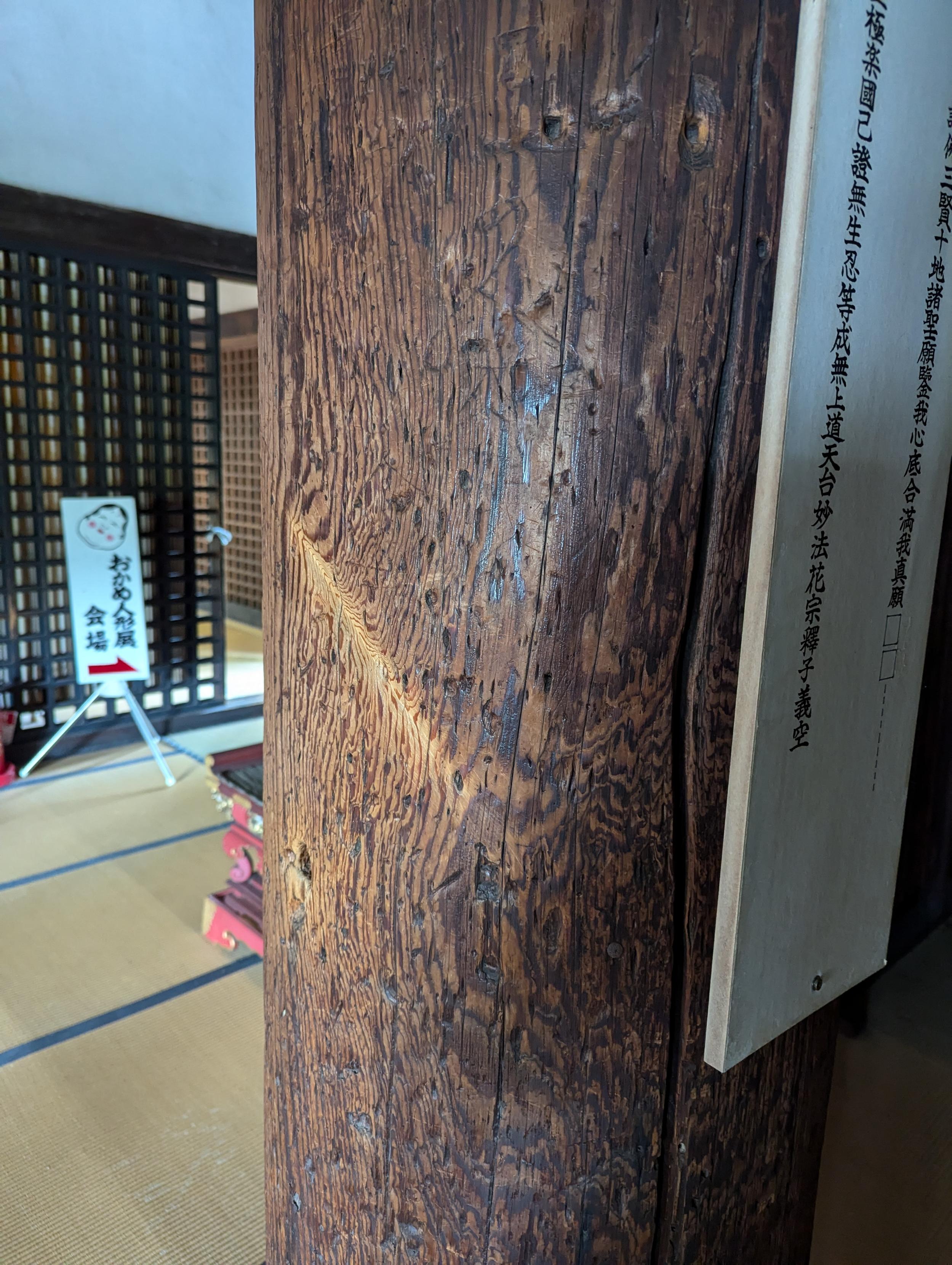
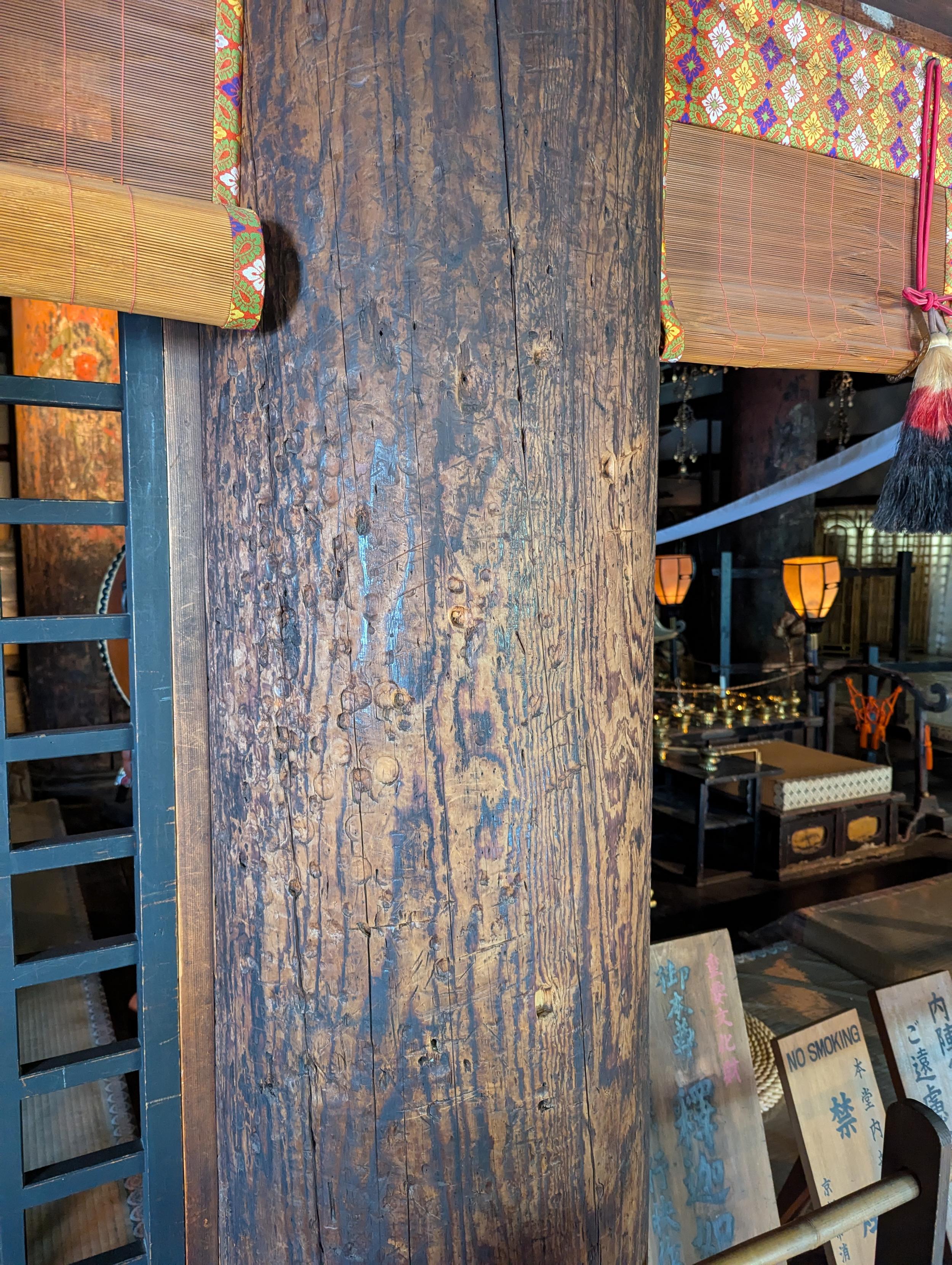
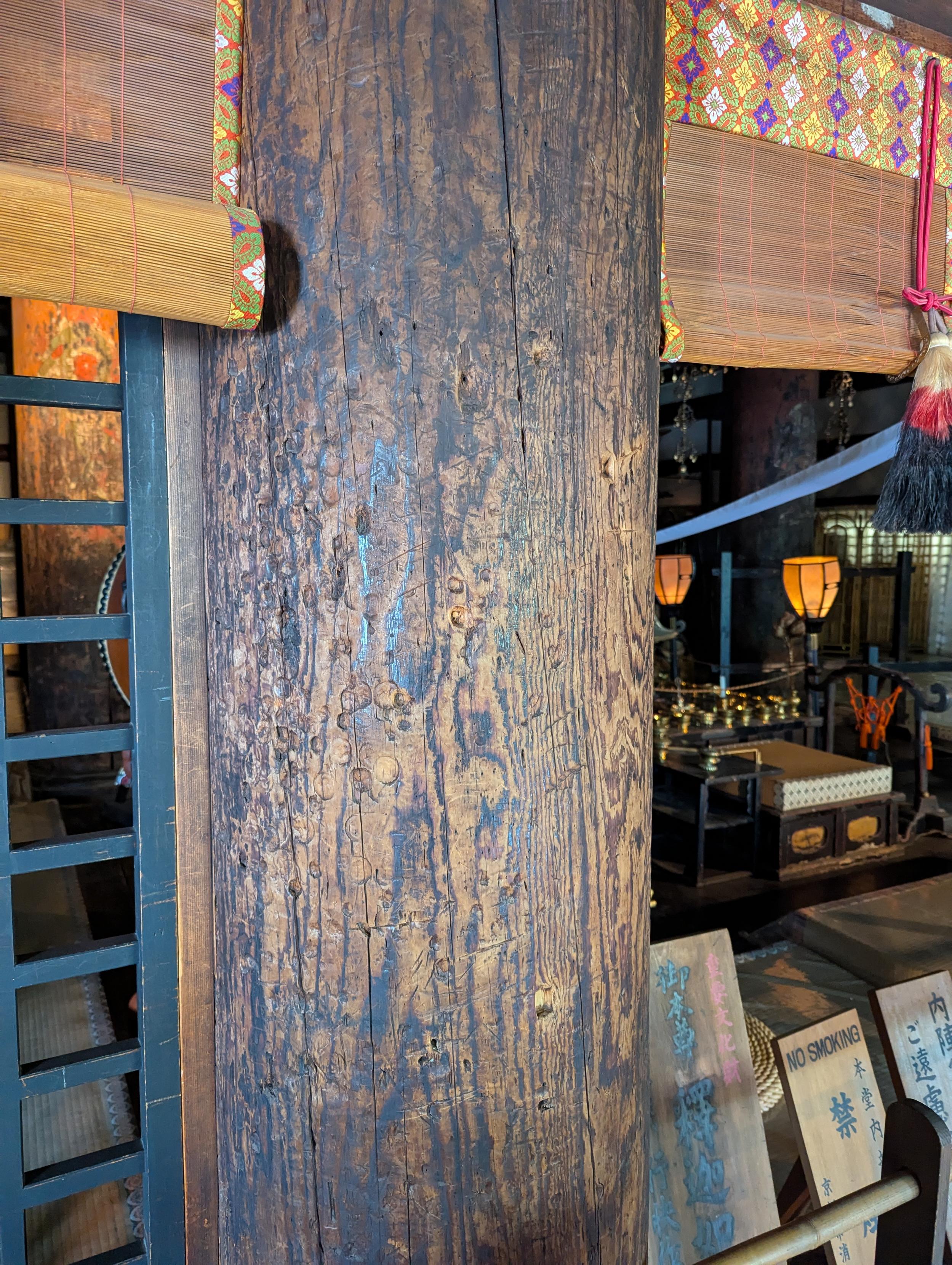
    The hall may have survived the 10 year civil conflict, but inside many of the pillars are scarred with sword marks (still visible).

    It shows how violent fighting was in the Ōnin War. There were running battles not only through the temple grounds, but through its actual buildings!

    Sword marks and bullet holes scar the pillars within the main hall of Daihoon-ji. Fighting in the Onin War and Boshin War saw men clash in the ground of the temple, actually fighting within the temple buildings.
    Sword marks and bullet holes scar the pillars within the main hall of Daihoon-ji. Fighting in the Onin War and Boshin War saw men clash in the ground of the temple, actually fighting within the temple buildings.
    Sword marks and bullet holes scar the pillars within the main hall of Daihoon-ji. Fighting in the Onin War and Boshin War saw men clash in the ground of the temple, actually fighting within the temple buildings.
    Sword marks and bullet holes scar the pillars within the main hall of Daihoon-ji. Fighting in the Onin War and Boshin War saw men clash in the ground of the temple, actually fighting within the temple buildings.
    💬 1🔄 2⭐ 10
  • Nov 5, 2026, 8:25 AM

    You can also see bullet marks from the running battles that haunted Kyoto in the run up to the Boshin War and the Meiji Restoration.
    When you consider how violent this fighting was, it is a surprise that the building is still standing.

    Maybe Okame is protecting the hall still.

    The pillars within the main hall at Daihoon-ji are scarred with sword and bullet marks.
    The pillars within the main hall at Daihoon-ji are scarred with sword and bullet marks.
    💬 0🔄 3⭐ 10