Login
You're viewing the discuss.systems public feed.
  • Oct 8, 2026, 7:44 PM

    i'm genuinely surprised at how well the authors of this history of the ARPAnet strike a balance between careful technical descriptions of hardware and software, useful metaphors for understanding how they work, and the personalities behind them.

    every few pages, i learn something genuinely important about computing history which had direct consequences for how i work and live today.

    in the computer game history world, most people recognize Will Crowther as 'that guy who created ADVENTURE' (which directly led to the entire text adventure genre).

    what no one ever talks about is that before Adventure, Crowther was a chief programmer on the ARPAnet project, and designed the dynamic routing system for packet delivery. the routing software was written entirely in incredibly tight Honeywell 516 assembly, to make intelligent decisions about how to get packets from origin to destination without using a static (deterministic) routing table

    a variation of this concept went into BGP, which is the very foundation of internet routing.

    it's very telling that the wikipedia entry for Crowther is almost entirely about Adventure, and has almost nothing about his major contributions to the ARPAnet.
    #books #bookstodon #worldWideWeb #wikipedia

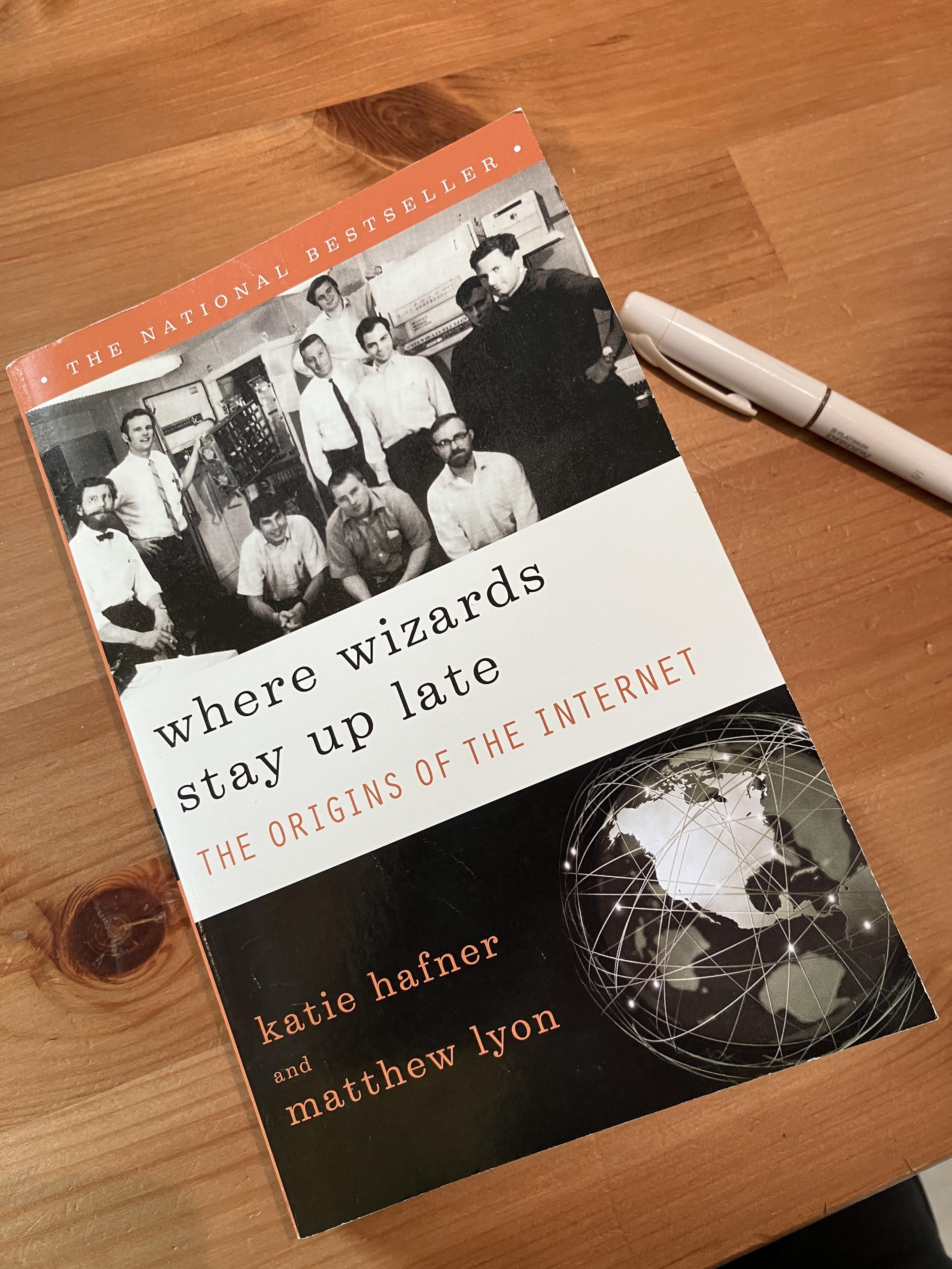
    The front cover of Where Wizards Stay up Late: The Origins of the Internet, by katie hafner and matthew lyon
    💬 3🔄 13⭐ 0

Replies

  • Oct 8, 2026, 7:52 PM

    today's TIL from Where Wizards Stay Up Late was about the origins of the RFC or "Request for Comment". i've seen these kinds of documents dozens of times over the years, but never quite understood their format.

    -----
    To avoid sounding too declarative, he [Steve Crocker] labeled the note "Request for Comments" and sent it out on April 7, 1969. Titled "Host Software." the note was distributed to the other sites the way all the first Requests for Comments (RFCs) were distributed: in an envelope with the lick of a stamp. RFC Number 1 described in technical terms the basic "handshake" between two computers- how the most elemental connections would be handled.

    "Request for Comments," it turned out, was a perfect choice of titles. It sounded at once solicitous and serious. And it stuck.

    "When you read RFC 1, you walked away from it with a sense of, Oh, this is a club that I can play in too,' recalled Brian Reid, later a graduate student at Carnegie-Mellon. "It has rules, but it welcomes other members as long as the members are aware of those rules.

    The language of the RFC was warm and welcoming. The idea was to promote cooperation, not ego. The fact that Crocker kept his ego out of the first RFC set the style and inspired others to follow suit in the hundreds of friendly and cooperative FCs that followed.'
    - p. 144

    ---------

    especially in light of today's instantaneous messaging approach to shooting-from-the-hip-and-who-cares-where-the-bullets-land, i so appreciate that RFCs are intended to be thoughtful, well-laid out, non-argumentative, and inviting.

    you get a real sense for this attitude reading Crocker's RFC #1 -
    rfc-editor.org/info/rfc1/

    #internet #worldWideWeb

    💬 0🔄 1⭐ 2
  • 💬 0🔄 0⭐ 0
  • Oct 9, 2026, 4:32 AM

    @vga256 I just pulled doww my copy from the bookshelf and noticed that that it was printed (and bought) in 1996.

    I remember the thrill of learning what happened so long ago. Wowzers.

    💬 0🔄 0⭐ 0