This is the hero we need. Man builds his own license plate reader that only tracks cop cars. For some reason the cops are now concerned about ALPRs.
https://futurism.com/future-society/police-upset-flock-camera-alpr-surveillance-canada?ICID=ref_fark
This is the hero we need. Man builds his own license plate reader that only tracks cop cars. For some reason the cops are now concerned about ALPRs.
https://futurism.com/future-society/police-upset-flock-camera-alpr-surveillance-canada?ICID=ref_fark
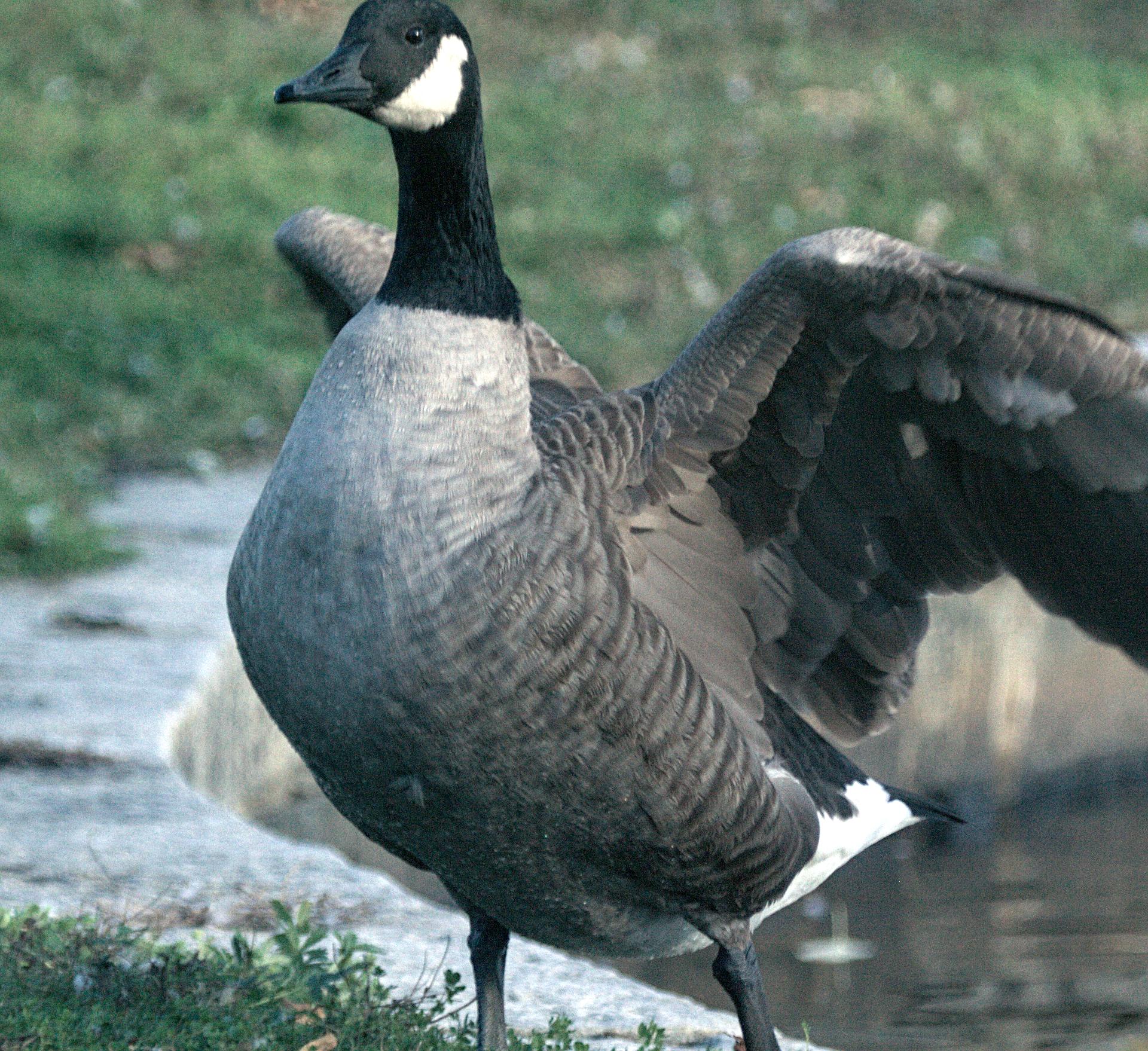
Took photos of geese in the park today. Here's my favorite shot
i woke up this morning at 4:30am to use the bathroom and could not get back to sleep afterwards. As i lay in bed in the pre-dawn dark my mind went down strange pathways and i found myself having a revelation: there is an unmet need in the world for a program that can sort files - at the bit level! Thus, i wrote sortbits.py a simple command line tool to let you sort all of the bits in a file. You can either sort it in ascending order so the zeros come before the ones, or you can sort it in descending order so the ones come before the zeros. Once your file is sorted you will be able to use efficient search algorithms to find the exact bit that you are looking for. So here is the script for all to use and enjoy!
You're welcome.
https://moriels-musings.com/wp-content/uploads/2026/10/sortbits.py
On my Windows 11 laptop for work, i can lock the screen by using Ctrl-Alt-Del then hitting Enter, because Ctrl-Alt-Del brings up a small menu and the lock screen option is selected by default. This has become muscle memory.
On my Kubuntu laptop at home, i can lock the screen by typing Alt-L. This is also muscle memory.
But which combo i actually type at any given time is a bit random now. If my brain is on autopilot i might use Alt-L at work, wonder for a second why nothing happened and then correct myself. But at home, if i accidentally Ctrl-Alt-Del, Enter something does happen, because Ctrl-Alt-Del is a default keyboard shortcut in KDE to bring up the session management menu. Do you know what menu item is selected by default? That's right. Shut down the system. No confirmation dialog. No way to interrupt it.
Accidentally did that again this morning, so i finally looked it up, and yes i can disable the keyboard shortcut entirely in KDE, so that's what i've now done. My system is protected from accidental shutdowns now.
But seriously, KDE devs, what made you decide to have no confirmation dialog when selecting to shut down a running system, and what absolute demon from Hell inspired you to make that the default option so the shortcut is the same as locking the screen on the world's most widely used operating system?
I cannot stress enough how much I feel this in my bones. I have been programming since about 1984, and doing it professionally since 1994 and yet today I would happily walk away from it if I could. The techbro executives and the AI slop demanded by managers makes me hate the industry more every day. This isn't fun anymore and it feels like we are all working towards the downfall of civilization just to make a few people incredibly wealthy.
https://www.baldurbjarnason.com/2026/05-software-developers-are-not-okay/
Enough is enough. OpenAI is responsible for numerous documented hacking attempts against businesses and governments. It is time to bring criminal charges against them. If a teenager launches DDOS attacks against a website, or tries to hack into some company's servers, the law goes after them with full force. Sam Altman and his cronies need to be treated the same way.
https://diff.wikimedia.org/2026/10/05/openai-rogue-agent-activities-found-on-wikimedia-projects/
Heard about the Cornell University gang rape case? Now the victim is getting death threats to try and make her drop her case. This is part of why victims often are reluctant to speak out: they know that many in society will rally around the rapists and try to further harm or attack the victim to make her shut up and accept what happened to her while the perpetrators get off scott free.
https://www.theguardian.com/us-news/2026/oct/04/cornell-jane-doe-rape-allegations
Daily Elvish
Today's date
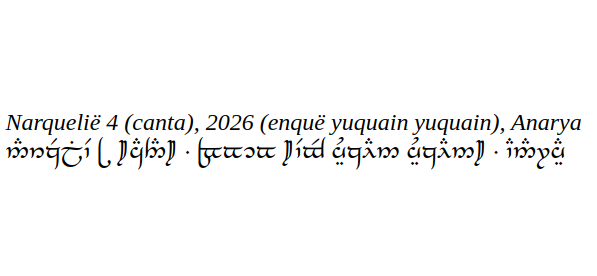
Narquelië 4 (canta), 2026 (enquë yuquain yuquain ), Anarya
Sun-fading [October] 4 (four), 2026 (six twenty twenty), Sun-day [Sunday]
Word of the day
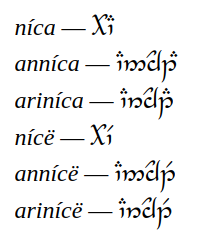
níca — adj: small, little
anníca — comparative adj: smaller, lesser
ariníca — superlative adj: smallest, least
nícë — pl. adj: small, little
annícë — pl. comparative adj: smaller, lesser
arinícë — pl. superlative adj: smallest, least
The Tengwar
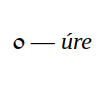
The thirtysixth letter of the tengwar is úrë which is used for consonantal U, such as when it starts a word, for example in the name Uinen.
Hey cis people ever wonder why anyone would transition? Think on this:
Someone who goes through gender transition, and i am going to use a trans woman as my example, since that was my own personsal experience, is someone who took a look at the condition of women generally and saw:
and who looked at trans people and saw
and even after seeing all these negatives, she still decided she had to go through transition because being a woman was something worth being, and it was the right thing for her and would make her life better.
i imagine that trans men go through a similar thought process, though for them they start out with all the negatives in the first list and know that any gains they make by transitioning to manhood are fragile and easily lost if anyone ever finds out about their past.
When i was young my mother told me to be an artist when i grew up. i misheard her, though, and became an autist instead. My bad.
People are always asking me if i have found God, but i honestly i didn't even know he was lost. Why do these people keep losing their god?
Screw it. I'm just going to start saying "Torment Nexus" instead of "AI" just to be blunt about it.
We have reached the point where the Trump regime is literally withholding vaccines from children to prevent them from being vaccinated.
https://www.theguardian.com/us-news/2026/sep/23/covid-vaccines-delay-children
You want to know what the weirdest part of getting diagnosed with a dissociative disorder was? It was being told that it isn't normal to entirely forget things from just a few days ago.
I kind of hate that *gestures at everything* is providing such fertile ground for thinking about @viveksrikumar and C Thi Nguyen's Ethics in AI class (which I'm sitting in on), but it is, so, here I go again.
One of the ideas they've been talking about in class is risk tolerance. Pretty basic in concept, people make decisions about how much risk they are willing to take on. A lot of this is very mundane and implicit (is the second patty worth the cholesterol risk? worth it to dash across the street here instead of going to the corner?) Some of it is explicit in things like investment decisions. The risk tolerance that you take on is a reflection of your values - play it safe? shoot for the moon? Pretty standard stuff.
One way, however, that this shows up in unexpected (to many of us) ways is in things like like science and medicine: it's a value judgement that we don't often acknowledge. A threshold for p-values of 0.05, which most folks use unquestioningly, means (approximately, it's complicated) a tolerance of a 5% chance of being wrong. Is this ... a good amount of risk to tolerate? It's a nice round amount, that's cool. Is it too high? Is it too low? Depends, probably?
Here's a pretty standard illustration of "it depends" that was used in class: risk tolerance in policing. Let's say you've got some technology, totally hypothetical here, that reads license plates with cameras, let's call it Flook. Somebody, somewhere, gets to set thresholds for what's a certain enough match that the cops should roll out and pull over the driver. This might seem like it's just some number, but it's a value judgement about the risk of being wrong.
The cops? They have a pretty high risk tolerance in this situation. Sure, they don't (let's assume, to be generous) want to spend all day pulling over the "wrong" people. But the cost to pulling over the wrong person is just not that high for them. A bit of wasted time, maybe a confrontation with driver that's mad at you, possibly a bit of paperwork. Pretty unlikely to be something that gets you in serious trouble, plus, hey the machine started it. And (I know, assumptions...) they'd like to not let the "right" people get away. So they want that threshold to be pretty loose.
The people being policed? This looks very different for them. Nobody wants to be pulled over when they did nothing wrong. Low risk tolerance. And it definitely isn't uniform. For some, it's a hassle, but a bigger one than it was for the cops - it's the cops' job to hassle people, it's not everyone else's job to be hassled. Pretty low risk tolerance. For others every interaction with the cops carries a *huge* amount of risk. Way more hassling. Higher risk of being detained. Possibly violence. Even if the only thing you did wrong was to have a license plate that looked too blurry from the top of a 10-foot pole, or got typoed when it was entered into a database. Super low risk tolerance. These folks do want the "right" people caught, but they want these thresholds set so low that no cop ever pulls over the "wrong" person - if this means sometimes missing the "right" person, well, they know that the consequences for a bad stop can be super high, so it's worth some risk in the other direction.
So how should Flook set thresholds? How should they balance the risk of incorrect identifications with the desire to not miss correct ones?
Trick question, because Flook has a customer, and the customer is the cops, so they do what the cops want.
This system contains embodied values, and they are a fundamentally un-democratic ones. Only the cops get any direct influence over the secret number that reflects how much "we" value catching criminals vs. surveilling and wrongly pulling over people just trying to have a day. You might see why people are getting increasingly mad at the definitely-made-up Flook.
This is how a number that none of us even know expresses values that ... well, maybe a lot of us strongly disagree with.
And then, one day in early autumn, a Perfectly Normal Guy who's a high-up engineer at Anthropic (the Good Guys of AI, remember), writes this, for everyone to read:
"Jacob is correct here—we really do earnestly believe AI could kill all humans! I personally think it is >10% within the next decade. I believe Anthropic is trying its best, but we do not yet have a plan to solve alignment for superintelligence and are not clearly on track to.
To be clear, as we say in our latest Risk Report [link] I think the risk from present models is low. What I am worried about is superintelligence arising from recursive self-improvement, as we have said is happening faster than we thought [link]"
So THERE'S some risk tolerance for you.
(Sorry for making you read that, but I want to give you the full quote.)
Apparently, it is the calculation of the Good Guys of AI that a 90% chance of survival for all humans is Just Fine and an acceptable risk to take for whatever they think we are getting out of it. We know they think they are getting rich. I guess they think there are other benefits, but damn, you can sure see why they will say literally anything to justify a 10% risk of human extinction. Better be a bigger deal than 10,000 new TODO apps!
I want to pause for a second here to say that I think that number is utter bullshit (the 10% one, the number of TODO apps is probably in the right order of magnitude). I do not think there is a measurable chance that all humans will be dead Because AI by 2030. I have no idea whether they actually believe this or are lying. Doesn't matter. They are telling us, directly, what their values are, or at the very least what values they would like us to think they have.
They are telling us that their risk tolerance is at a deranged, misanthropic level. I'm not excited to use the word "psychotic" but it's really hard to find something else that fits. Because they do, in fact, have the option to Just Not. If you believe that the product you are working on has a 10% chance of killing everyone, and you are, like, a person who gives a shit about - well, anything, really - then what you actually do is turn off the servers, delete all the files you can find, beat the GPU swords into Sweet Gaming Rig plowshares, and save the human race. You do not prepend Google's long-abandoned slogan (you know the one) to all the prompts and keep Doing the Thing.
What about risk tolerance for the rest of us? Where are we at on this? What do you think the benefits are or could be, what do you think the harms are or could be? What risks do you think are appropriate to take for the possible benefits? What's a reasonable way to spread out both the benefits and harms such that ...
HAHA, trick question again! The Good Guys of AI have a customer, that customer is The Future, and The Future demands that maybe we all die, very sad, but that's a risk it's willing to take. Only the Good Guys of AI can possibly make sure that the sacrifices are the right ones (not that they know how, but they'll figure it out), and the only thing that beats A Bad Guy With an AI is a Good Guy With An AI.
I probably don't have to point this out, but this is as nakedly authoritarian as it gets. We all bear the risks, The Good Guys of AI must be the ones to call the shots.
So yeah, these are their values. Doesn't matter if their assessment is wrong (probably is). Doesn't matter if they're lying about what they really believe (who knows). Who cares how many whitepapers and reports they write. They get to set the risk tolerance for everyone. At least the number isn't secret: it's 10%. Flook almost certainly has a tighter threshold for pulling over the wrong car than "we" apparently have for total human extinction.
Who signed up for this?
Who died (only p(10%) though) and made them king?
Are these your values?

Hey news media, and really everyone! Can we stop referring to people as "consumers"? We are not the "American consumers". We are the American people. We don't exist merely to consume goods and services. In fact, the goods and services are supposed to be there to enable us to live better lives, but no one ever seems to use language to emphasize that. We just hear the language of consumption as if people exist solely to buy things and help companies make a profit. i hate it.
Thanks for coming to my Ted Talk.
For what it's worth, the comments on this github page turned out to be useful. The script itself hid too much, but i can possibly use this to tweak things to be acceptable. It's not a user friendly way to have to do things, though.
https://gist.github.com/jimmckeeth/6314cf5c50e225b8954641f8b9df379e
Attention developers of KDE, Gnome, Libreoffice, GIMP, and any and all applications that let you use fonts: We need to talk about font management.
i run Kubuntu and when i am editing a document or an image and need to select a font, i am presented with a single scrolling list of all the fonts installed on the system, which is several hundred and includes fonts not only for every language currently used in the world, it also includes languages such as Linear A, which has not been spoken in more than 3500 years! Now it's great that my system can display all these different things, and it's really useful in a multilingual environment such as the social media services i use, but at the same time when i need to find a font to use for my own languages it becomes and overwhelming task! We need to fix this.
What we need is for font selectors to have a way to filter the fonts displayed to you. Preferably a filter by language, though i can see how that would need a lot of work and cooperation from the font package maintainers since the language isn't really a characteristic stored in a font file as i understand. Being able to filter by other characteristics, such as serif/sans serif would also be useful.
i recognize that this is not a small or easy task, but i think it is one that desperately needs a solution. And no, uninstalling fonts is not a solution since that breaks the display of text in social media by people from other countries. Breaking the ability to communicate across international borders is not the solution to managing the list of available fonts.
i really don't know how to get this message to the right people, so i'm throwing it out into the Fediverse in the hope that someone either knows of a good workaround, or can point me in the direction of who to talk to in order to get the conversation about this issue started among the right people.
i still haven't made up my mind about whether or not i'm indecisive