Ygorygor@floss.social
11/5/2026Ah, back to our regular schedule. I feel like I could have made better guesses on this one, but at the same time, I haven't heard of it 🤷
Framed #1700
🎥 🟥 🟥 🟥 🟥 🟥 🟥
Ah, back to our regular schedule. I feel like I could have made better guesses on this one, but at the same time, I haven't heard of it 🤷
Framed #1700
🎥 🟥 🟥 🟥 🟥 🟥 🟥
I wonder which movie they're going to put when it happens.
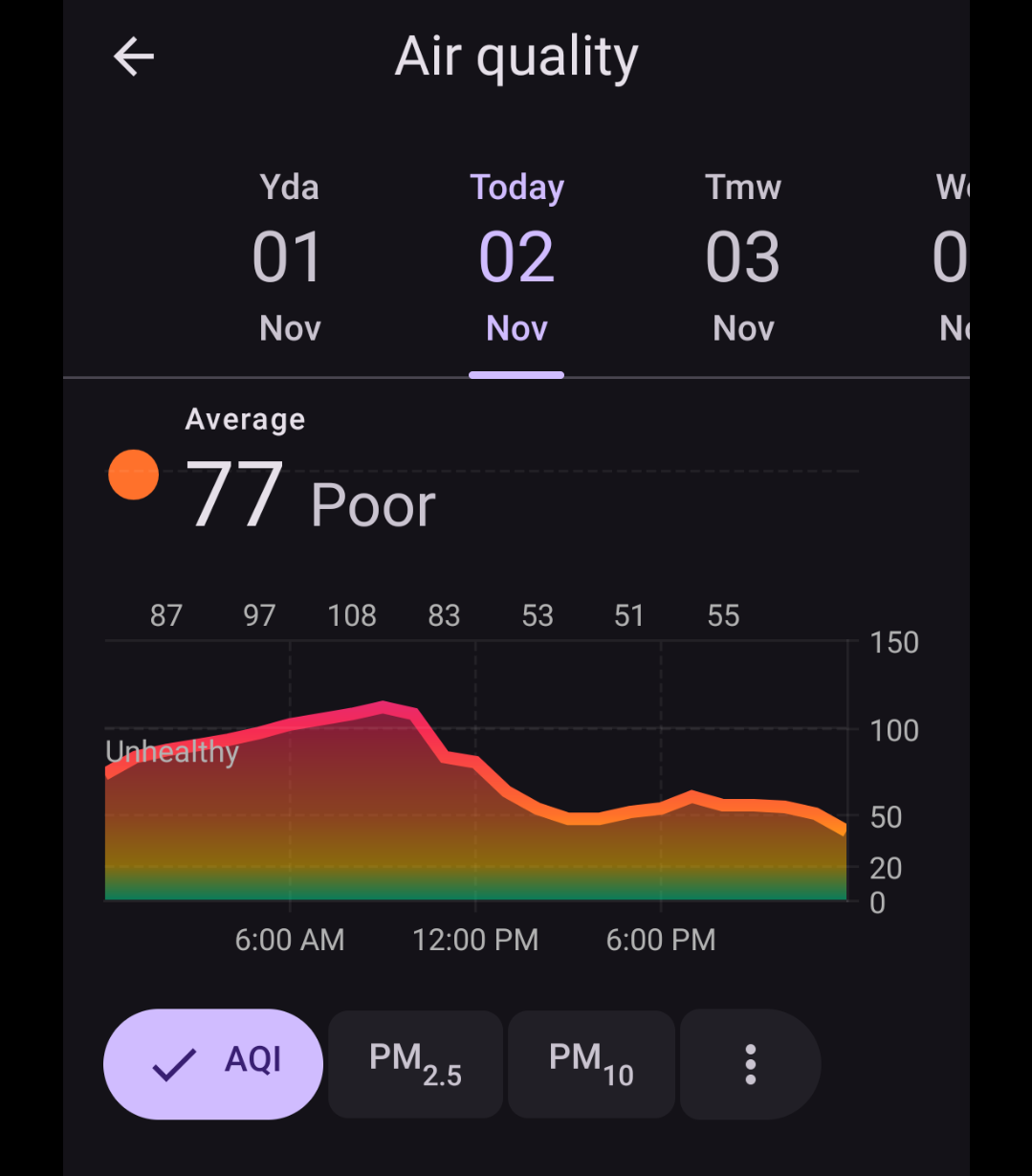
Si vous êtes à Paris et que vous n'avez pas l'habitude de porter un masque FFP2, aujourd'hui serait un bon jour pour faire une exception.
Sinon, bon retour en classe aux élèves...
I looked up the trailer, and I'm reasonably sure I had not heard of it before. It looks like most people failed this one so far, too.
My limited movie culture is showing again. Not sure I had even heard of this one. Maybe I did at some point and forgot about it.
Framed #1691
🎥 🟥 🟥 🟥 🟥 🟥 🟥
Didn't think I was going to get this one. Lots of random guesses of movies I haven't seen and know very little about, and one of them happened to be right by chance 😅
It's always fun to look at the guess distribution and see that some people had the same weird ideas as me.
Framed #1688
🎥 🟥 🟥 🟥 🟩 ⬛ ⬛
My incorrect guess for the first frame was the second most popular guess. I was pretty sure that wasn't it, but decided to try it anyway, since I didn't have any better ideas.
Well, much better than yesterday. I haven't watched this one either, but I saw a video about it once.
Framed #1687
🎥 🟥 🟩 ⬛ ⬛ ⬛ ⬛
RE: https://mastodon.social/@AnnaAnthro/117459574875490319
It seems that a lot of political activists don't understand the importance of free software, and think the Epstein class platforms are just some kind of neutral commons that can be used for anything.
Meanwhile, a lot of free software advocates don't understand the importance of politics, and think it is just pointless virtue-signaling.
We have a lot to learn from each other.
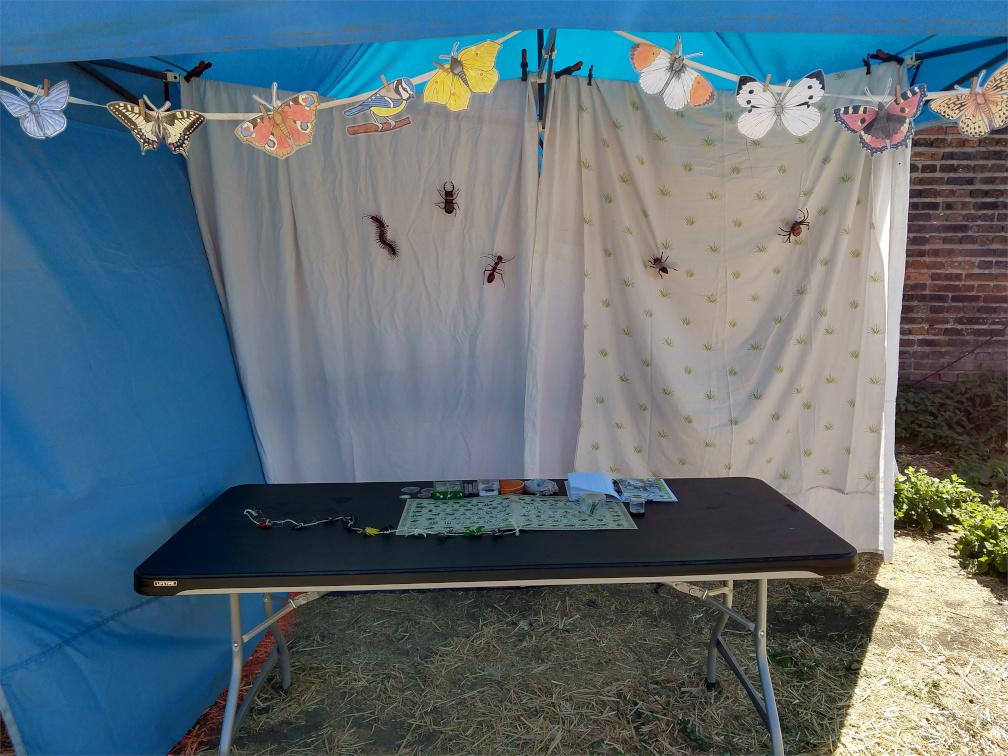
On this day, my friend Sonia (from my previous thread about agroforestry) did an activity for children. She had them listen to a children's story that teaches about bugs we can find in the garden. She put up a makeshift sound barrier so people could hear the story. The music concert didn't start until after her activity was finished, but they had to do some sound tests earlier, and there were other sources of noise.
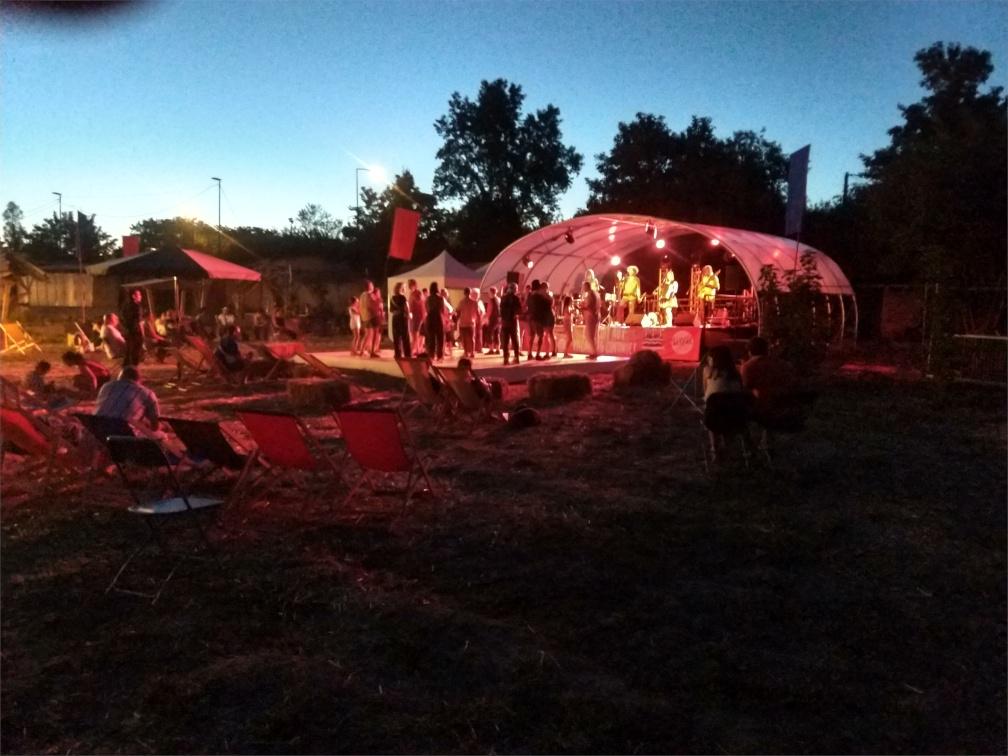
Marion Sanfoneira at the Villejuif urban farm yesterday evening. She played some well-known Brazilian songs, as well as some of her own compositions, and taught the crowd how to party like in the Brazilian northeast. Amazing performance. Everyone had a great time.
Of course, all of this requires a deep understanding of the species of plants, animals, fungi etc that grow in a given place, and how they interact. As well as careful planning accounting for the time, space and other resources available. Ernst Götsch says the main input humans bring to a syntropic forest is knowledge.
Another principle is making the system self-sufficient in water, through plants that can accumulate and distribute it. This part I don't understand as much I think (not that I'm an expert in the other parts). I'll try to read a bit more about it. The presenter said that animals that can be seen as invasive in gardens, such as slugs, are sometimes only coming for the water, and not actually eating anything. It's important to observe and understand what is happening.
RE: https://puntarella.party/@antanicus/117047000002131050
Another principle is creating strata to ensure each plant gets the amount of sunlight it needs. Plants that need more light create shade for plants that need less. When plants find themselves in the wrong stratum, they develop diseases.
This is the part that made me think of what farmers have been doing with solar panels.
Plant very densely, to create an interconnected root system, cover the soil, accumulate organic matter and release hormones that promote even more growth. Then prune heavily, which sends signals for the plants to grow more, and generates more matter to cover the soil. It simulates herbivores eating and stepping on the plants. It's a disturbance that helps the forest grow faster.
One principle of syntropic forestry is understanding the succession of plants. Identifying the pioneer plants, that can grow naturally in harsh conditions and prepare the soil for the secondary plants.
And it turns out that accelerating natural processes like this is something humans have evolved to do. It gives us pleasure, and it has become part of many peoples' cultures. Götsch learned his principles by interacting with Amerindian tribes. When colonizers arrived in South America in the 1500s, what they thought were natural forests were actually complex agricultural systems managed by humans.
To start, I learned that this unusual word "syntropy" is more or less the opposite of "entropy". A tendency towards more complexity. It is a natural tendency of living systems, but humans can greatly accelerate it. Scientists say that the forest Götsch grew in Brazil in the past 40 years would have taken 700 years to grow on its own.