
Small Things ConsideredSTCmicrobeblog@mstdn.science
3/9/20263-Nitropropionic Acid
by Roberto —The Simplest yet Lethal Mycotoxin
https://smallthingsconsidered.blog/schaechter/2026/03/3-nitropropionic-acid/
3-Nitropropionic Acid
by Roberto —The Simplest yet Lethal Mycotoxin
https://smallthingsconsidered.blog/schaechter/2026/03/3-nitropropionic-acid/
Lac operon: Wait… what?! Noise in the basement?
by Christoph — If you've ever come across the topic of 'gene regulation in bacteria' in your biology classes at high school, college or university, you've inevitably learned about a classic: the lac operon of E. coli. Well, this it's not an exam here! Just ask yourself what you remember without the help of an AI.
https://smallthingsconsidered.blog/schaechter/2025/12/lac-operon-wait-what-noise-in-the-basement/
Ray: Just a note to say STC is officially back up and running!! You can view our new home via smallthingsconsidered.blog
Exponential Growth, Ephemeral & Unsustainable
by Roberto — A few months ago, this idea dawned on me: I should write a series of posts on population dynamics. By no means a formal quantitative treatment of the subject. In its stead, a subjective interpretation of a topic that has captured my attention for nearly half a century.
Read more > https://schaechter.asmblog.org/schaechter/2025/08/exponential-growth-ephemeral-unsustainable.html
#microbiology

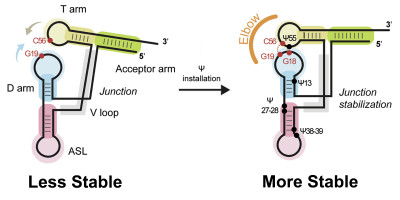
Pseudouridine Stabilizes tRNA
Noteworthy — The modified nucleoside pseudouridine has many reasons to be considered a star among post-transcriptional RNA modifications. It was the first to be identified, in 1960. Incorporating it into mRNA vaccines was a big reason for their success. And it also shows up in numerous antibiotics. Now there's more.
Read more > https://schaechter.asmblog.org/schaechter/2025/05/pseudouridine-stabilizes-trna.html
#microbiology
Anticipating Seasons
Noteworthy — While plants and animals can measure differences in the length of days and nights bacteria, with their short life spans, would not be expected to do so.
Read more > https://schaechter.asmblog.org/schaechter/2025/04/anticipating-seasons.html
#microbiology
Searching for ΦX174
The search for ΦX174 was the task that our fellow blogger naturepoker set himself some time ago. His search was not in some largely forgotten and iced-over box in the back corner of a –80°C freezer. Instead, he searched the literature as to when and where this bacteriophage was first described. Naturepoker has recorded the result of this sleuthing...
Read more > https://tinyurl.com/5y97hp7w
#microbiology
Phage & Bacteria: A Space for Mutual Co-Existence
by Roberto — Phage-bacteria population dynamics can be remarkably complex. This is reflected in the natural history of both; new phage defense systems in bacteria and anti-defense systems in phage seem to be discovered daily. Behind these intricate strategies to help in the reproductive success of each lies the basic problem of any predator-prey relationship.
Read more > https://tinyurl.com/2e9fyj6w
#microbiology
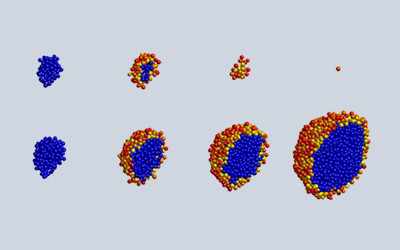
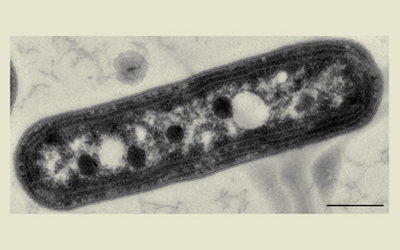
A Whiff of ...Replication – Pendulisporaceae
by Christoph — Just to quote myself here: When microbiologists describe a previously unknown bacterium, they are mainly interested in its lifestyle, metabolism, morphology and cell cycle. And to continue with the self-quotation: For me, "getting to know" newbies always involves finding out how they initiate the replication of their chromosome(s).
Read more > https://tinyurl.com/4twvmhbx
#microbiology
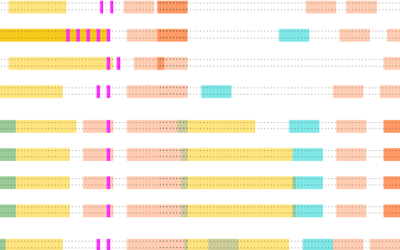
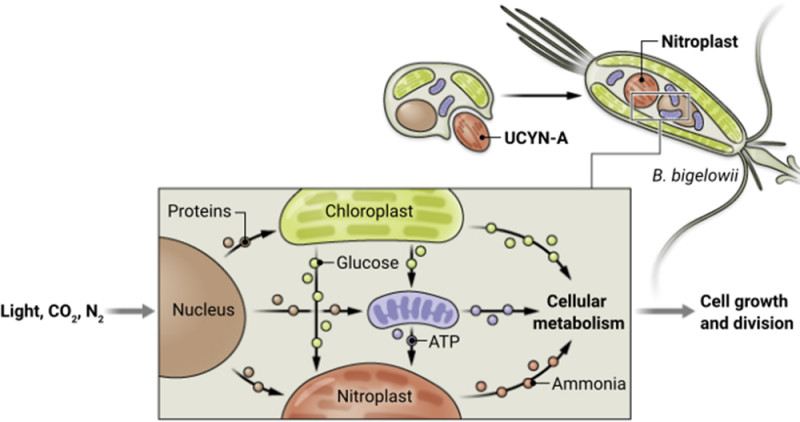
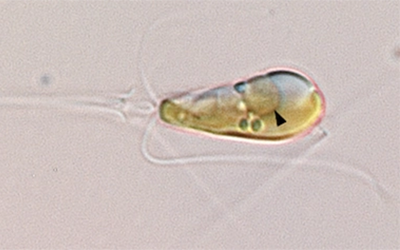
The Nitroplast, a Nitrogen-Fixing Organelle
by Mechas – The ability to fix nitrogen is usually regarded as a property of only a few diazotrophic bacteria and archaea. A new study now shows that some eukaryotes may be capable of fixing nitrogen via the newly described nitroplast, an organelle that has evolved from an endosymbiont.
Read more > https://schaechter.asmblog.org/schaechter/2024/07/the-nitroplast-a-nitrogen-fixing-organelle.html
Phaeovirus
by Janie
"Self" versus "other" delineations in biology are fascinating, from both a biological and conceptual standpoint. The example that probably leaps first into people's minds is the human microbiome: the more that is discovered about important microbes living on and in us, the more the concepts of "me"/"my"/"mine"...
Read more > https://schaechter.asmblog.org/schaechter/2023/09/phaeovirus.html
![Ectocarpus siliculosus, the brown alga host of Phaeovirus [source: https://www.asturnatura.com/fotografia/flora/ectocarpus-siliculosus-2/37726.html]](https://static.mstdn.science/media_attachments/files/111/046/090/889/973/775/original/c33bc882f2342745.jpg)
The Hitchhiker's Guide to... Flagellar Tips
by Christoph
The same frontispiece twice within a few days at STC? No, not quite. It's not about Roberto's hitchhiking phage this time, or the flagellated bacterium, or the hitchhiking spore, but about the tip of the flagellum (black, left). Disclosure: already back in 2020, I talked with Alise, who created the image, and three other passionate science illustrators...
Read more → https://schaechter.asmblog.org/schaechter/2023/05/the-hitchhikers-guide-to-flagellar-tips.html
Phage as Hitchhiker
by Roberto
When I started graduate school at UCSD in the mid-1970s, I sometimes found myself hitchhiking at dawn along the Pacific Coast from Solana Beach to the lab. There were some wild rides! Which is probably why some years later, as they crossed my path, I was attracted both to "The Hitchhiker's Guide to the Galaxy" and (in biology) to the evolutionary and ecological concepts of hitchhiking...
Read more → https://schaechter.asmblog.org/schaechter/2023/05/phage-as-hitchhiker.html
![Detail from: An Illustrated Overview of Microbial Hitchhiking Reports.
[Source: https://doi.org/10.1016/j.tim.2020.10.005]](https://static.mstdn.science/media_attachments/files/110/371/836/557/987/120/original/24c24d12ab18c225.jpg)
Pictures Considered #59: Inside a Choanoflagellate
by Roberto
Choanoflagellates (endearingly referred to as "choanos") are the closest living relative of animals and as such they can provide insights into the evolution of animal multicellularity. Interestingly, at least two choano developmental features are induced by bacterial products.
![Cut-away view through the center of a 70-cell B. monosierra choanoflagellate rosette. 3D reconstruction generated from transmission electron micrographs of serial ultrathin sections. Color code: cell bodies (cyan), microvilli (orange), flagella (green), bacteria (red); ECM (white); intercellular bridges (yellow), filopodia (purple).
[source: https://www.biorxiv.org/content/10.1101/2021.03.30.437421v5]](https://static.mstdn.science/media_attachments/files/110/309/515/851/219/711/original/24b27e007319e7d3.jpg)